TL;DR:
- Choosing the right fencing system is an ongoing safety and compliance priority for businesses.
- Proper installation and regular maintenance are essential to ensure fence effectiveness and legal compliance.
- A shared security culture enhances perimeter safety beyond just installing compliant fencing.
A single security lapse at your commercial property can result in theft, injury, legal liability, and lasting reputational damage. South African businesses face a uniquely demanding security environment, where crime statistics remain elevated and perpetrators continuously adapt their methods to overcome inadequate barriers. Selecting and maintaining the right fencing system is therefore not a passive investment but an ongoing operational priority. This article covers the most critical fencing safety considerations for business owners and facility managers, from understanding regulatory standards to choosing durable solutions and maintaining compliance throughout the life of your fence.
Table of Contents
- Understand your fencing options and safety standards
- Choose robust fencing for your threat profile
- Master installation and compliance to prevent hazards
- Ongoing monitoring and maintenance for maximum safety
- Why effective fencing safety is everyone’s responsibility
- Get expert fencing solutions for safer businesses
- Frequently asked questions
Key Takeaways
| Point | Details |
|---|---|
| Choose the right fencing | Opt for palisade or mesh over precast walls for greater security and durability. |
| Follow compliance standards | Ensure fences, especially electric, meet all SANS 10222-3:2023 requirements. |
| Keep up with maintenance | Regular inspections, testing, and staff vigilance keep fences secure and businesses protected. |
| Train your team | Staff awareness and reporting can prevent small issues from turning into critical security gaps. |
Understand your fencing options and safety standards
Before making any fencing decision, it is essential to understand both what the market offers and the legal framework that governs commercial and industrial fencing in South Africa. The range of business fencing types available to South African businesses includes palisade fencing, clear view mesh fencing, electric fencing, and precast concrete walls. Each option carries a distinct set of benefits, limitations, and regulatory obligations.
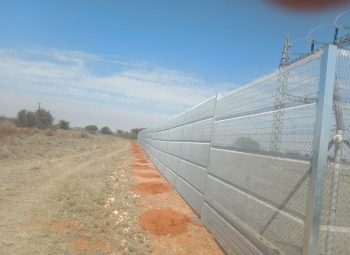
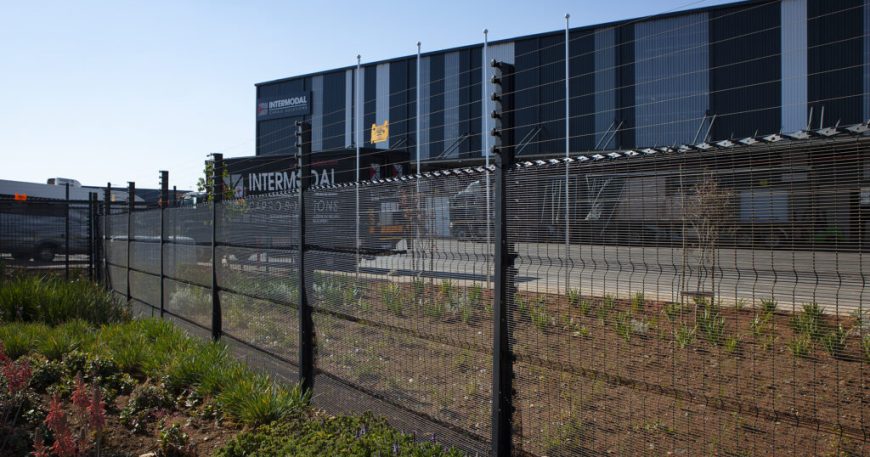
Palisade fencing remains one of the most widely used commercial options. Its vertical steel spikes create a strong physical deterrent, and the open design allows security personnel to maintain sightlines across the perimeter. Clear view fencing, such as ClamberPrufe systems, offers a welded wire mesh panel design that resists cutting and climbing while providing excellent visibility. Electric fencing adds an active deterrent layer, typically mounted atop another perimeter barrier. Precast concrete walls, though historically common, are increasingly regarded as a liability rather than an asset.
Understanding familiar security fencing terms such as high tensile wire, anti-climb profiles, and weatherproof galvanization is necessary before you can accurately compare supplier quotes or evaluate the compliance of an existing installation.
For electric fencing in particular, compliance with SANS 10222-3:2023 is mandatory. SANS 10222-3:2023 requires a Certificate of Compliance issued by a registered Electric Fence System Installer, warning signs every 10 metres in urban areas, proper earthing in conduit every 30 metres, weatherproof materials, and monthly visual plus quarterly voltage tests. Non-compliance carries legal and financial consequences that no business should risk.
Key compliance requirements at a glance:
- Certificate of Compliance issued by a registered EFSI (Electric Fence System Installer)
- Warning signs every 10 metres along urban perimeters
- Earthing intervals no greater than 30 metres, installed in conduit
- All materials must meet weatherproof durability standards
- Monthly visual inspections and quarterly voltage testing are mandatory
“The hidden risk most business owners overlook is not the upfront cost of a non-compliant fence, but the compounded liability when an incident occurs and your CoC paperwork cannot be produced. Insurers and courts treat the absence of documentation as evidence of negligence.”
Pro Tip: Always request a copy of your installer’s EFSI registration certificate before work begins. A registered installer provides accountability and ensures your CoC will be legally valid from day one.
Selecting the wrong fence type, or failing to meet minimum SANS standards, exposes your business to theft risk, personal injury claims from employees or visitors, and regulatory penalties. The decision must therefore be informed by both your threat profile and your legal obligations.
Choose robust fencing for your threat profile
With a clear picture of the available options and the applicable standards, the next step is matching your fencing choice to the specific risks your facility faces. Not all commercial premises share the same vulnerability profile, and a solution that works well for a retail park perimeter may be entirely inadequate for a warehousing operation or a data centre.
Precast walls are not recommended for industrial or commercial use because they can be broken through with relatively simple tools, they block sightlines so intruders can work unseen, and they degrade over time without obvious visible signals. Businesses that still rely on precast walls are carrying an unacknowledged security liability.
The table below summarises the key strengths and limitations of the principal commercial fencing types used in South Africa:
| Fence type | Anti-climb rating | Visibility | Durability | Compliance complexity |
|---|---|---|---|---|
| Clear view mesh | High | Excellent | Very high | Low |
| Palisade | Medium to high | Good | High | Low |
| Electric fence | High (active) | N/A (add-on) | Medium | High |
| Precast wall | Low | None | Medium | Low |
For high-value or high-risk facilities such as manufacturing plants, logistics depots, or secure storage yards, clear view mesh fencing is consistently the preferred option. Its welded panel construction resists both cutting and climbing, and its transparency means security cameras and guards can monitor the full perimeter without obstruction. Reviewing the full range of mesh fencing types available helps facility managers identify the right specification for their building footprint and risk level.
The practical security fencing benefits of modern mesh systems extend beyond intrusion prevention. A well-specified mesh fence integrates with CCTV, lighting, and access control systems far more effectively than solid or precast barriers. This integration is increasingly critical as businesses adopt layered security strategies.
Key considerations when matching fence type to threat profile:
- High-value inventory or equipment: Prioritise anti-cut, anti-climb mesh or heavy-gauge palisade with topping
- Large perimeter, limited guard presence: Clear view fencing with integrated CCTV mounting points
- Known history of forced entry: Electric fence topping combined with rigid mesh panels
- Urban retail or hospitality: Aesthetic clear view options that maintain the appearance of the property while delivering real security
- Temporary or evolving layouts: Modular systems that can be repositioned or extended without full reinstallation
Pro Tip: When budgeting for fencing, factor in the total cost of ownership over a 10 to 15 year period rather than focusing on initial installation cost alone. A cheap, non-modular system that requires full replacement in five years is far more expensive than a robust, correctly specified system installed once. Scalable, modular designs protect your capital investment as your facility grows or changes.
Master installation and compliance to prevent hazards
Choosing the right fence type is only effective if the installation itself is executed to the required standard. Poor installation introduces hazards that can negate the fence’s security value entirely and expose the business owner to legal liability that would not exist with a properly installed system.
Follow these steps when commissioning a new commercial fencing installation:
- Conduct a site assessment: Identify soil conditions, slope variations, drainage paths, and existing underground services before any post is driven. These factors influence post depth, foundation type, and panel alignment.
- Verify installer credentials: For electric fencing, confirm the installer is a registered EFSI. For all fencing types, check trade references and request proof of previous commercial installations.
- Confirm the material specification in writing: The contract must specify gauge thickness, galvanization standard, post spacing, and any topping or anti-climb features. Verbal agreements are inadequate.
- Ensure regulatory signage is fitted at installation: Warning signs must be in place from the first day the electric fence is energised, spaced at the correct intervals.
- Request and retain all documentation: The Certificate of Compliance, installer registration, and material certification must be kept in a secure, accessible location.
- Commission a post-installation inspection: Have an independent registered installer verify that earthing, warning signs, and voltage output all meet the standard before you accept handover.
The following table provides a quick reference for the key technical compliance intervals required under SANS 10222-3:2023:
| Compliance element | Required interval or specification |
|---|---|
| Warning signs (urban) | Every 10 metres |
| Earthing points in conduit | Every 30 metres |
| Visual inspection | Monthly |
| Voltage testing | Quarterly |
| CoC renewal trigger | Any modification to the system |
SANS 10222-3:2023 inspection requirements are not suggestions but legally enforceable obligations. Businesses that allow these intervals to lapse are exposed to claims from injured parties and regulatory action.
The legal dimension of electric fencing extends beyond your own property. Electric fences pose EMI risks to nearby electrical infrastructure and create liability even for businesses that did not install the fence themselves. If your property borders an electric fence, you must verify its CoC status, treat the fence as live at all times, and ensure that any workers operating near the perimeter use appropriate PPE. Ignorance of a neighbouring fence’s status is not a legal defence.
The fencing installation process for commercial premises differs meaningfully from residential work, and your selection of an installer should reflect that. Businesses should also review industrial fencing requirements for their specific sector, as some industries carry additional obligations that go beyond the baseline SANS standard.
Ongoing monitoring and maintenance for maximum safety
Even the most robust, correctly installed fencing system will degrade in effectiveness without a structured maintenance programme. South African conditions, including UV exposure, seasonal rain, dust, and the ongoing risk of deliberate tampering, mean that no fence can be left to operate indefinitely without regular attention.
A disciplined inspection schedule should include the following activities:
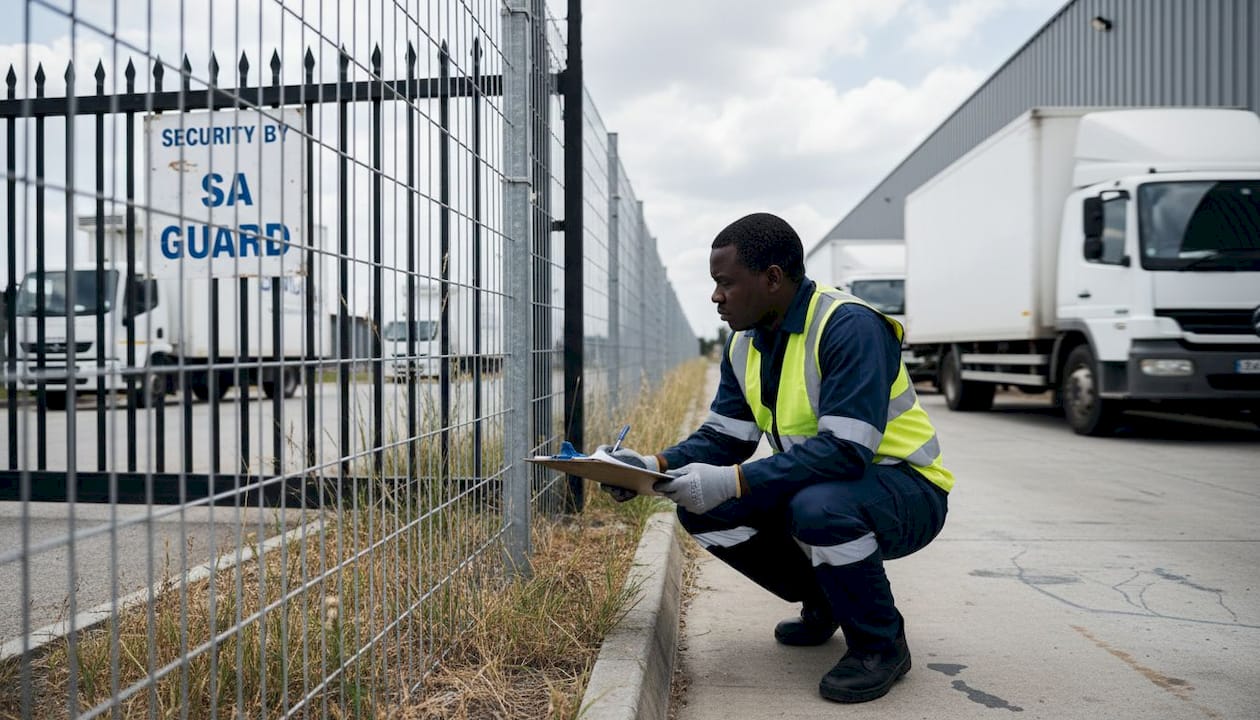
- Monthly visual inspections: Walk the full perimeter and check for bent or displaced panels, corroded fasteners, missing or damaged warning signs, signs of cutting or forced entry attempts, vegetation growth that could compromise visibility or provide climbing assistance, and any structural damage to posts or foundations.
- Quarterly voltage tests: For electric fencing, confirm output levels against the installer’s specification. A drop in voltage can indicate a fault in the earthing system, a wire break, or interference from nearby vegetation.
- Hardware and fastener review: Check that all bolts, clamps, and brackets remain tight and corrosion-free. Fastener failure is a common point of failure in older installations and is easily overlooked during a visual-only inspection.
- Documentation of findings: Every inspection should be recorded in writing with the date, the name of the person who conducted the inspection, and a note of any defects found and corrective actions taken.
Common signs that your perimeter has been tampered with or is beginning to fail include wire strands that are bent outward at the base, unusual gaps between panels, warning signs that have been removed or turned, and post foundations that show signs of movement or cracking. Any of these findings should trigger an immediate investigation and professional assessment, not simply a note in the inspection log.
SANS 10222-3 mandates monthly and quarterly testing cycles, and businesses that cannot demonstrate a record of these checks are in breach of their compliance obligations regardless of the quality of the original installation. Keeping clear records is not administrative formality; it is your primary evidence of due diligence in the event of a legal claim or insurance dispute.
Fencing project management for ongoing maintenance works best when responsibility is clearly assigned. Designate a named individual, whether an internal facility manager or an external service provider, who owns the inspection schedule and is accountable for escalating issues in a timely manner.
Pro Tip: Train your entire on-site team, including cleaning staff, delivery personnel, and security officers, to identify and immediately report the early signs of fence damage or tampering. The fastest way to catch a security breach is to make perimeter awareness a shared responsibility rather than the sole domain of the security department.
Why effective fencing safety is everyone’s responsibility
There is a tempting assumption among business owners that once a compliant fence is installed and a CoC is on file, the security obligation is fulfilled. In our experience, this assumption is precisely where many otherwise well-managed operations become vulnerable. Crime tactics evolve continuously. The methods that a correctly specified fence deterred three years ago may not be the same methods used against it today.
The businesses with the strongest fencing safety records are not necessarily those with the most expensive installations. They are the ones where every member of the team understands that the perimeter is a shared concern. A security officer who reports a bent panel on Monday morning, or a facilities manager who escalates a dropped voltage reading before it becomes a system failure, delivers more practical security value than any passive fence component can on its own.
The return on investment from a proactive, all-hands approach is measurable in reduced incidents, lower insurance premiums, and fewer costly emergency repair callouts. The commercial fencing benefits of a well-maintained system compound over time, but only when the system is actively managed rather than assumed to be self-sufficient.
Meeting the standard is a floor, not a ceiling. The safest operations treat compliance as the minimum baseline and build a culture of vigilance above it.
Get expert fencing solutions for safer businesses
A strong fencing safety culture requires more than good intentions. It needs the right products, correctly specified for your site, installed by registered professionals, and supported by reliable ongoing maintenance. Generic or DIY approaches introduce specification gaps and compliance risks that become expensive problems later.
Jumalu Tech specialises in the manufacturing, supply, and installation of high-security fencing solutions across South Africa, with particular expertise in clear view fencing systems that deliver anti-climb, anti-cut protection with excellent perimeter visibility. Whether you are upgrading an existing installation or starting from scratch, our team can assess your site, recommend the correct specification, and manage the full installation process to SANS compliance standards. Explore the detailed guide to mesh fencing for business or contact us directly for a tailored quotation.
Frequently asked questions
What is the minimum height for commercial security fencing in South Africa?
Most experts recommend a minimum height of 1.8 to 2.4 metres for commercial security fencing, with higher specifications advised for high-risk or high-value facilities where deterrence must be maximised.
What must be included on electric fencing warning signs?
Warning signs for electric fences must indicate the presence of high voltage and must be visible at intervals of every 10 metres in urban areas, as required by SANS 10222-3:2023.
How often should electric fences be inspected?
Electric fences must be visually inspected monthly and have voltage output tested on a quarterly basis to remain compliant and operationally effective.
Are precast walls safe for business security?
Precast walls are not recommended for commercial or industrial security because they can be broken through with basic tools, eliminate perimeter visibility, and do not meet modern security standards for business premises.