{
“@graph”: [
{
“@type”: “Article”,
“image”: {
“url”: “https://csuxjmfbwmkxiegfpljm.supabase.co/storage/v1/object/public/blog-images/organization-6538/1788041027909_High-security-clear-view-fence-at-industrial-perimeter.jpeg”,
“@type”: “ImageObject”,
“caption”: “High-security clear-view fence at industrial perimeter”
},
“author”: {
“url”: “https://jumalutech.co.za”,
“name”: “Jumalu Fencing”,
“@type”: “Organization”
},
“headline”: “Specify ClamberPrufe 358 Clear View Privacy Fence for High Security”,
“publisher”: {
“url”: “https://jumalutech.co.za”,
“name”: “Jumalu Fencing”,
“@type”: “Organization”
},
“inLanguage”: “en-US”,
“description”: “Procurement focused spec for high security fences: 358/SR clear view welded mesh, 4–5mm core wire, galvanized or PVC coated. ClamberPrufe.”,
“dateModified”: “2026-08-29T22:04:57.111Z”,
“datePublished”: “2026-08-29T22:04:57.111Z”
},
{
“@type”: “BreadcrumbList”,
“itemListElement”: [
{
“item”: “https://jumalutech.co.za”,
“name”: “Jumalu Fencing”,
“@type”: “ListItem”,
“position”: 1
},
{
“item”: “https://jumalutech.co.za/what-is-the-best-privacy-fence”,
“name”: “Specify ClamberPrufe 358 Clear View Privacy Fence for High Security”,
“@type”: “ListItem”,
“position”: 2
}
]
}
],
“@context”: “https://schema.org”
}
{
“@type”: “FAQPage”,
“@context”: “https://schema.org”,
“mainEntity”: [
{
“name”: “What is the best privacy fence for a high-security site?”,
“@type”: “Question”,
“acceptedAnswer”: {
“text”: “The best option is a clear-view, anti-climb welded mesh, such as a 358 or SR-rated panel, finished with galvanizing or fused PVC for corrosion resistance. Jumalu Fencing’s ClamberPrufe system is built specifically to this specification.”,
“@type”: “Answer”
}
},
{
“name”: “What wire gauge should a high-security mesh fence use?”,
“@type”: “Question”,
“acceptedAnswer”: {
“text”: “Specify a core wire diameter between 4.0mm and 5.0mm for heavy-duty resistance to cutting and impact, and confirm that the quoted gauge refers to the core wire, not the coated finished measurement.”,
“@type”: “Answer”
}
},
{
“name”: “When should I specify PVC-coated or aluminized fencing over standard galvanizing?”,
“@type”: “Question”,
“acceptedAnswer”: {
“text”: “Upgrade to fused/adhered PVC (ASTM F668 Class 2b) or aluminized steel in coastal, high-humidity, or heavy-industrial environments classified as ESC C3 through C5, where standard galvanizing corrodes faster.”,
“@type”: “Answer”
}
},
{
“name”: “What height should a high-security perimeter fence be?”,
“@type”: “Question”,
“acceptedAnswer”: {
“text”: “Commercial sites typically use 2.4 to 3.0 meters; high-security sites such as mining boundaries or utility substations should specify 3.0 meters or taller with SR-rated panels and topping.”,
“@type”: “Answer”
}
},
{
“name”: “How often should a security mesh fence be inspected?”,
“@type”: “Question”,
“acceptedAnswer”: {
“text”: “Run a visual inspection every three to six months for coating damage and fixing tightness, with a full inspection annually or immediately after severe weather.”,
“@type”: “Answer”
}
}
]
}
For high-security sites, the best privacy fence is a clear-view, anti-climb welded mesh, such as a 358 or SR-rated panel, finished for corrosion resistance in a galvanized or PVC-coated layer. This configuration deters intruders through rigid, small-aperture construction while preserving full sightlines for CCTV and patrols. Jumalu Fencing’s ClamberPrufe system is built to this exact brief, combining anti-climb and anti-cut properties with weather-resistant finishes for coastal, industrial, and mining environments.
TL;DR:
- For coastal or industrial sites, choose welded mesh panels with at least a 4.0mm core wire gauge and aprons around 12.7mm for anti-climb resistance.
- SR-rated panels and fused PVC or aluminized coatings are essential in corrosive environments to prolong fence lifespan beyond standard galvanizing.
- Fence height should be at least 3.0 meters for high-risk sites, with added deterrents like razor wire and integrated CCTV mounting points.
- Proper installation requires deep concrete foundations, sealed joints, stainless steel fixings, and regular inspections every three to six months.
- Buyers should specify detailed standards and request site surveys to verify coil gauge, coating class, and resistance ratings before proceeding.
Table of Contents
- What does “best” mean for a professional perimeter fence?
- What mesh specifications belong in the tender?
- How do you choose the right coating for a corrosive site?
- How do you match fence configuration to site risk?
- How should ClamberPrufe be installed and maintained?
- Why buyers keep underspecifying anti-climb fencing
- Get a site survey for ClamberPrufe clear-view fencing
- Sources
- FAQ
What does “best” mean for a professional perimeter fence?
“Best” in this context has nothing to do with blocking a neighbor’s view. It means the fence that stops an intruder, survives the local climate, and still lets a guard or a camera see what’s happening on the other side. That is a materially different brief from a residential sight-block fence, and this article does not cover the latter.
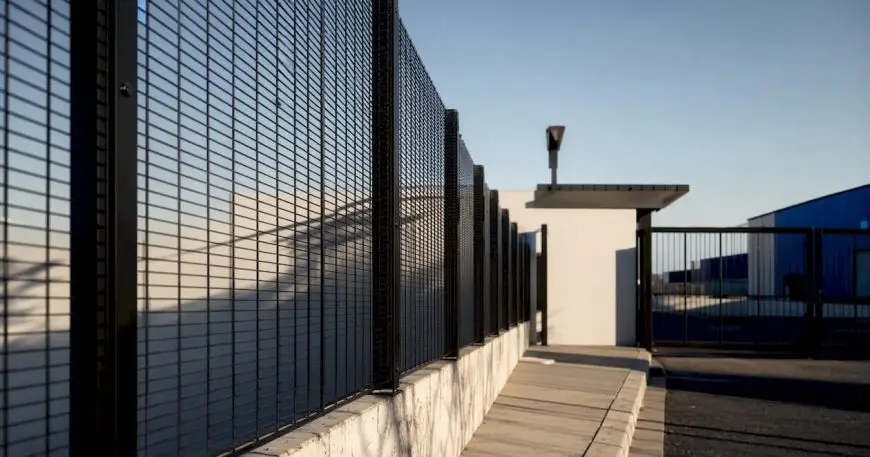
Clear-view anti-climb welded mesh answers that brief directly. Unlike a solid-panel barrier that hides the perimeter from both sides, a small-aperture mesh removes concealment zones where an intruder could hide, cut unseen, or stage equipment. Security professionals favor this approach because it delivers a rigid, difficult-to-climb surface without sacrificing the sightlines that CCTV and patrol staff depend on.
The operational benefits stack up quickly:
- Surveillance continuity: cameras and guards retain a clear line of sight through the mesh, day and night.
- Psychological deterrence: a visibly rigid, tightly-spaced mesh signals a hardened site before an intruder even tests it.
- Hand-tool resistance: welded joints and thicker wire resist bolt cutters and pliers far better than standard chain link.
- Reduced concealment: no blind spots along the fence line for an intruder to hide behind while forcing entry.
Facilities managers protecting substations, mining sites, data centers, and warehouse yards consistently choose this route over solid fencing because visibility is as much a security asset as the barrier itself. For a fuller comparison of how this approach differs from solid-panel options, see this guide to clear-view versus palisade fencing.
What mesh specifications belong in the tender?
A specification that names “security fencing” without numbers invites a race to the cheapest gauge. The details below are what separate a fence that holds up from one that gets tested and fails on day one.
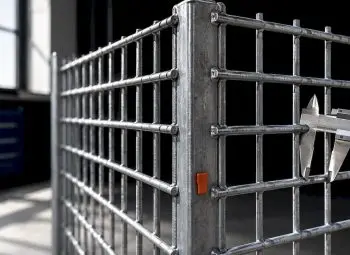
- Aperture and pattern: specify a 358-style panel with roughly 12.7mm vertical spacing and small horizontal apertures. This grid is too tight for a boot toe or fingertip to gain purchase, which is what makes the pattern anti-climb rather than merely difficult.
- Wire gauge: request a core wire diameter in the 4.0 to 5.0mm range for heavy-duty resistance to cutting and impact. Note the difference between core gauge (the steel wire itself) and finished gauge (wire plus coating) when comparing supplier quotes, since a thin coating can inflate a headline number.
- Panel height: 2.4 to 3.0 meters suits most commercial perimeters; high-security sites such as substations or mine boundaries should specify 3.0 meters or more, with SR-rated panels layered on top.
- Security rating: where insurance underwriting or local regulation demands tested performance, request SR-rated panels. Welded mesh systems tested to SR standards give a documented resistance benchmark rather than a supplier’s word.
- Topping: barbed wire is the lowest-cost deterrent addition; concertina razor wire adds a stronger physical and visual deterrent for high-risk perimeters; an integrated anti-climb extension keeps the fence line uniform where razor wire is restricted by local ordinance or site aesthetics.
Pro Tip: Ask suppliers to quote core gauge, not finished gauge, on every line item. A panel advertised as “heavy duty” with a thin core wire under a thick coating will fail an insurance audit even if it looks robust on the invoice.
Heavy-duty BRC and 358 fencing built with 4 to 5mm wire is the standard industrial specification for exactly this reason. It resists both stretching under pressure and cutting under attack, which chain link with a thinner gauge cannot match at the same height.
How do you choose the right coating for a corrosive site?
Coating choice decides whether a fence needs maintenance in year three or year twenty. The Whole Building Design Guide’s corrosion-control framework sorts sites into Environmental Severity Classes, and the guidance is blunt: in ESC C3 through C5 zones, meaning coastal, high-humidity, or heavy-industrial environments, standard zinc-galvanized wire should be upgraded to aluminum-coated steel or fused and adhered PVC.
Three finish options cover most tenders:
- Hot-dip galvanizing: the standard, cost-effective choice for inland, low-humidity sites with moderate corrosion exposure.
- Fused/adhered PVC coating (ASTM F668 Class 2b): specified for industrial and government applications where the fabric must resist seawater and salt spray without delaminating.
- Aluminized steel: an alternative for sites where PVC’s added bulk or color is undesirable but corrosion resistance still needs to exceed standard galvanizing.
A galvanized fence built to ASTM A392 can last decades inland, but on coastal or marine sites, polymer-coated systems extend the time to first maintenance well beyond what standard galvanizing achieves in the same exposure.
The trade-off is upfront cost against lifecycle cost. A fused PVC or aluminized system costs more per meter at installation, but it defers the recoating, patching, and panel-replacement cycle that a standard-galvanized fence faces in a coastal microclimate. Specify the framework to match: Class 2 aluminum or PVC-coated steel posts in corrosive zones, with Grade A pipe for buried sections that see the most persistent moisture exposure. Reference ASTM F668, ASTM A392, and UFC 4-022-03 directly in the tender document rather than a generic “corrosion-resistant” line, which leaves too much room for a supplier to substitute a cheaper coating.
How do you match fence configuration to site risk?
A mining boundary and a suburban commercial yard do not need the same fence, even though both fall under “high-security.” Run a short threat assessment before locking in a spec:
- Asset value: what sits behind the fence, and what does an intruder gain by breaching it?
- Attacker capability: opportunistic trespasser, organized theft crew, or someone with power tools and a vehicle?
- Concealment risk: does the site’s landscaping or terrain already offer cover that the fence needs to compensate for?
- Operational needs: does staff or vehicle traffic require frequent gate cycling that affects wear and access control?
A low-risk commercial yard typically needs a 2.4-meter 358 mesh in standard galvanizing, no topping. A medium-risk industrial site steps up to 3.0 meters, heavier gauge, and barbed wire topping. A high-risk mining or utility perimeter warrants SR-rated panels at 3.0 meters or taller, fused PVC or aluminized coating, and concertina razor wire, often paired with CCTV-ready posts.
Plan the integration points before installation starts, not after, referring to perimeter security guidance for best practice on integrating fence and surveillance systems. Specify posts that accept camera mounts directly, and coordinate gate automation and access control so the gate’s rating matches the fence line rather than becoming the weak point in an otherwise hardened perimeter. Cost drivers to brief stakeholders on upfront include coating grade, wire gauge, height, and topping. Each one moves the price, and each one moves the resistance level, so cutting one to save budget should be a documented decision, not an accident.
How should ClamberPrufe be installed and maintained?
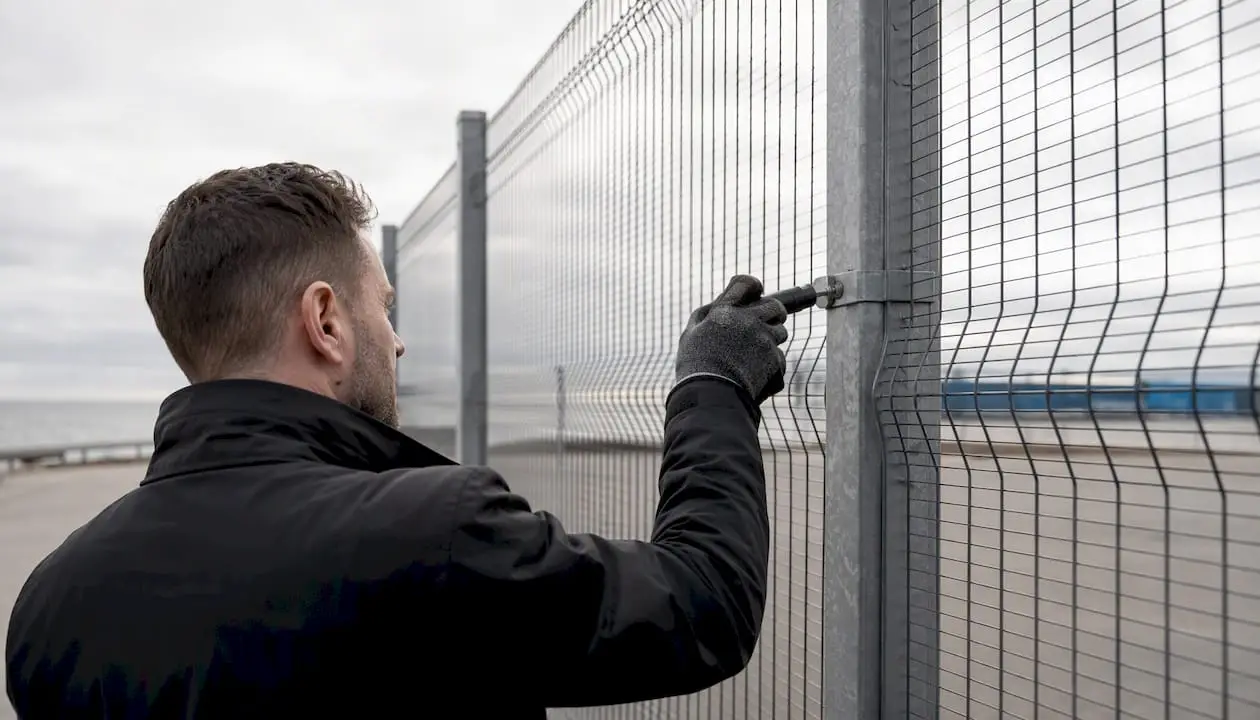
Installation quality determines whether a spec-perfect fence performs like one. A high-security mesh panel is only as strong as the foundation and fixings holding it against impact and lever forces.
- Foundations: concrete-set posts sized to the panel height and local soil conditions, deep enough to resist a vehicle strike or a deliberate lever attempt at the base.
- Cut ends and joints: seal every cut wire end and joint against moisture ingress, since an untreated cut end is where corrosion starts regardless of the coating grade on the rest of the panel.
- Fasteners: stainless steel fixings in corrosive or coastal sites, since a standard fastener rusting through defeats a premium coating on the mesh itself.
- Inspection intervals: a visual check every three to six months for coating damage, fixing tightness, and foundation movement, with a full inspection annually or after any severe weather event.
Jumalu Fencing’s ClamberPrufe system is engineered around these exact principles: anti-climb and anti-cut mesh construction, galvanized or PVC-coated finishes rated for coastal and humid conditions, and expert installation backed by client testimonials from residential, commercial, and industrial sites across South Africa. A step-by-step installation process guide and a dedicated maintenance checklist for ClamberPrufe cover the specifics for teams managing the fence after handover.
Pro Tip: Log every inspection date and finding, even a clean one. When a coating or fixing issue does show up, a maintenance record gives you a baseline to judge how fast it’s progressing.
Why buyers keep underspecifying anti-climb fencing

Most procurement documents I have seen treat “security fence” as a single line item, when it is really four separate decisions: aperture, gauge, coating, and rating. Buyers who skip the coating conversation almost always regret it within five years on a coastal or industrial site, because the visible failure point is never the mesh pattern, it’s the rust creeping up from an unsealed cut end.
My advice is blunt: insist on SR-rated panels for any site with real asset value at stake, and insist on fused-coating or aluminized fabric anywhere near salt air or heavy industrial fallout. Before signing anything, request a site survey, ask for the ASTM and UFC references in writing, and confirm what the warranty actually covers.
— Jaline
Get a site survey for ClamberPrufe clear-view fencing
Jumalu Fencing supplies and installs the ClamberPrufe system precisely to the standard this article describes: welded, small-aperture mesh with anti-climb and anti-cut properties, finished in galvanized or PVC-coated layers built for coastal and humid conditions. Where a generic supplier quotes a coating grade without specifying its ASTM class, Jumalu Fencing builds the spec conversation into the survey itself, so you know exactly what corrosion class you’re paying for before installation starts.
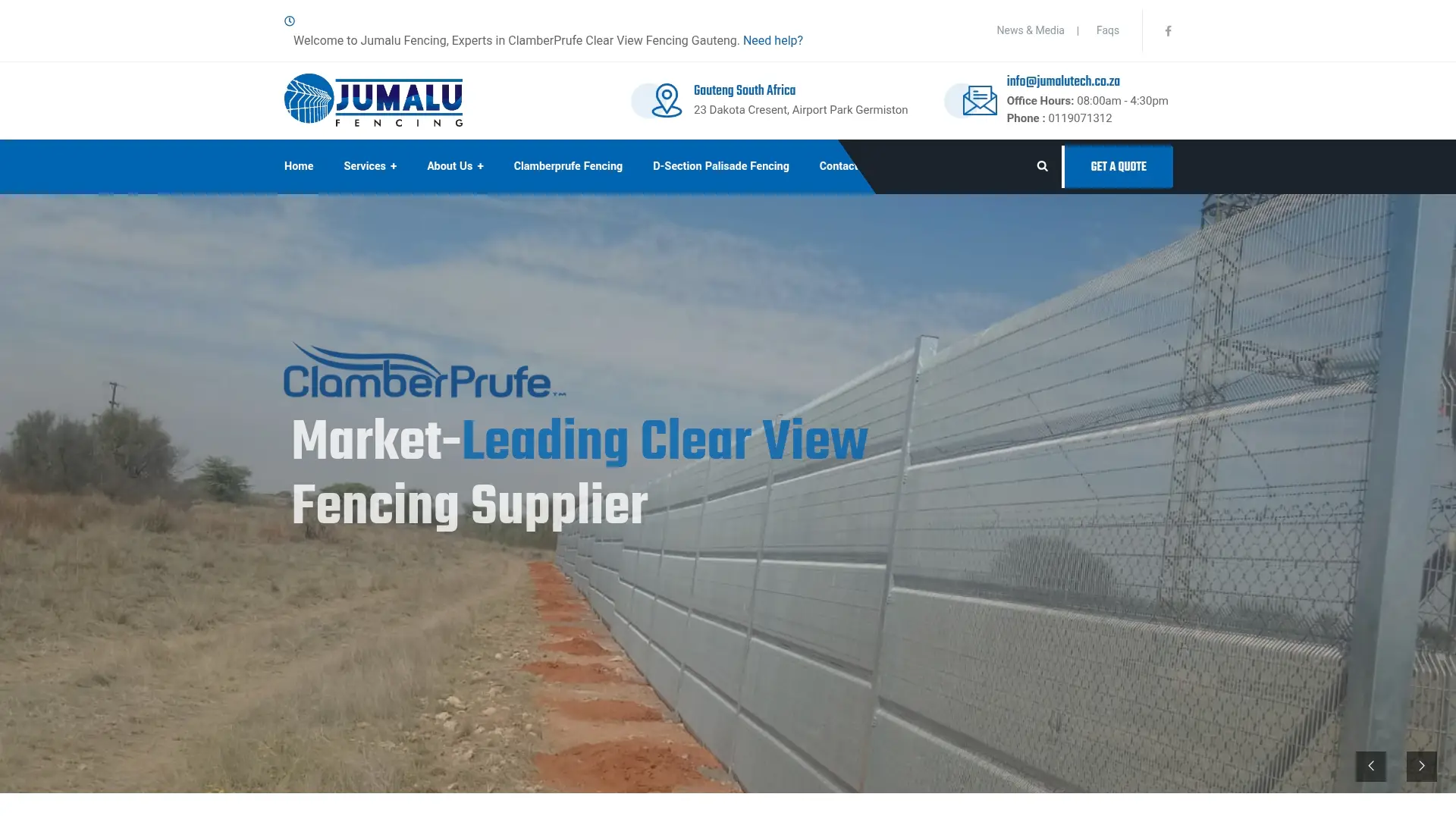
If your site sits in a corrosive zone, carries insurance requirements for tested resistance, or simply needs a perimeter that keeps sightlines open for CCTV, request a site survey and specification sheet directly from the ClamberPrufe clear-view fencing page. Jumalu Fencing’s team will confirm mesh gauge, coating class, and installation timeline against your exact threat profile before a single post goes in the ground.
Sources
- WBDG – Corrosion Prevention & Control (CPC) Fencing Knowledge Area
- Merchants Metals – PVC coated chain link fabric Class 2b specification
- How to choose the right mesh fencing for perimeter security
- Benefits of welded mesh fencing for security and safety
FAQ
What is the best privacy fence for a high-security site?
The best option is a clear-view, anti-climb welded mesh, such as a 358 or SR-rated panel, finished with galvanizing or fused PVC for corrosion resistance. Jumalu Fencing’s ClamberPrufe system is built specifically to this specification.
What wire gauge should a high-security mesh fence use?
Specify a core wire diameter between 4.0mm and 5.0mm for heavy-duty resistance to cutting and impact, and confirm that the quoted gauge refers to the core wire, not the coated finished measurement.
When should I specify PVC-coated or aluminized fencing over standard galvanizing?
Upgrade to fused/adhered PVC (ASTM F668 Class 2b) or aluminized steel in coastal, high-humidity, or heavy-industrial environments classified as ESC C3 through C5, where standard galvanizing corrodes faster.
What height should a high-security perimeter fence be?
Commercial sites typically use 2.4 to 3.0 meters; high-security sites such as mining boundaries or utility substations should specify 3.0 meters or taller with SR-rated panels and topping.
How often should a security mesh fence be inspected?
Run a visual inspection every three to six months for coating damage and fixing tightness, with a full inspection annually or immediately after severe weather.