{ “@type”: “FAQPage”, “@context”: “https://schema.org”, “mainEntity”: [ { “name”: “What makes a corner more vulnerable than a straight fence run?”, “@type”: “Question”, “acceptedAnswer”: { “text”: “A corner combines two approach angles with a potential sightline gap where the two fence lines meet, which is why the SAPS guidance emphasizes clear visibility as a core safety factor. Reinforced posts and correctly placed cameras close that gap.”, “@type”: “Answer” } }, { “name”: “How deep should corner posts be set in concrete?”, “@type”: “Question”, “acceptedAnswer”: { “text”: “Embedment depth depends on soil conditions and post type, and the Public Works perimeter fence specification ties foundation concrete strength to a range between 15MPa and 25MPa depending on the application. A site check before installation confirms the exact figure for your ground conditions.”, “@type”: “Answer” } }, { “name”: “Is clear-view mesh better than palisade fencing for corners?”, “@type”: “Question”, “acceptedAnswer”: { “text”: “Clear-view mesh generally offers better camera compatibility and forces an intruder to cut through wire, which takes longer than spreading palisade pickets according to security fencing comparisons. Palisade can still suit sites prioritizing visual deterrence over sightline surveillance.”, “@type”: “Answer” } }, { “name”: “Does Jumalu Fencing install ClamberPrufe at property corners?”, “@type”: “Question”, “acceptedAnswer”: { “text”: “Yes, Jumalu Fencing manufactures and installs the ClamberPrufe clear-view range, including corner post reinforcement and anti-climb toppings, as part of its standard installation service. Details are available on the ClamberPrufe product page.”, “@type”: “Answer” } }, { “name”: “How often should corner sections be inspected?”, “@type”: “Question”, “acceptedAnswer”: { “text”: “Corners in coastal or industrial settings should be checked more often than straight runs because of higher physical stress, with a quarterly cadence recommended in harsher environments. Seasonal inspection after weather shifts, as outlined in general fence maintenance guidance, also applies to corner anchoring and overhang fixings.”, “@type”: “Answer” } } ] }
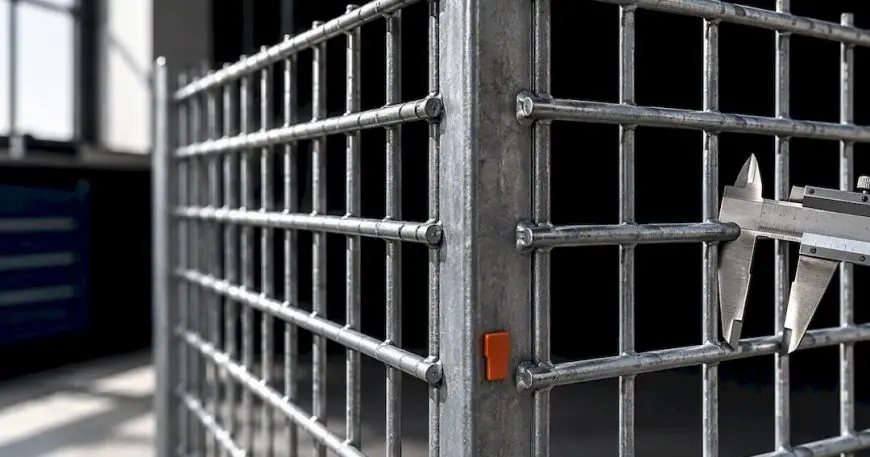
The strongest corner fence configuration pairs clear-view high-security mesh with reinforced corner posts, anti-tunnelling concrete and an anti-climb overhang or razor coil at the top. This combination maximizes visibility while adding real delay against climbing and cutting. Galvanized or PVC-coated finishes protect the structure against corrosion, and the same open mesh design supports camera and detection integration. A clear-view fencing range built around this configuration exists, and a site visit from a qualified installer is the fastest way to confirm what your corners need.
TL;DR:
- Reinforced corner posts with proper foundations and anti-tunneling concrete are crucial to withstand lateral loads and prevent digging under the fence.
- Clear-view high-security mesh panels with small apertures improve visibility and camera integration, but require careful aperture sizing to match threat levels.
- Anti-climb overhangs, razor coils, or angled toppings at corners significantly delay intruders by eliminating footholds and climbing aids.
- Coating choices like galvanized or PVC protect against weathering, with PVC offering longer intervals between maintenance in humid or coastal environments.
- Installing cameras and detection sensors at corner posts enhances surveillance coverage, reduces blind spots, and minimizes false alarms through planned detection zones.
Table of Contents
- Top security-focused corner fence ideas and when to use each
- Materials, coatings and environmental selection for corner fence details
- Corner posts, foundations and anti-tunnelling specifics
- Gates, access control and lock protection for corner gates
- Integration: lighting, cameras, sensors and how corners affect detection
- Installation checklist and common corner mistakes to avoid
- Maintenance, inspection and lifetime checks for corner sections
- What installers rarely get right at corners
- Secure your corners with ClamberPrufe
- Sources
- FAQ
Top security-focused corner fence ideas and when to use each
Corners carry more risk than straight fence runs because they offer two approach angles and, on many sites, a blind spot where two lines of sight fail to overlap. The SAPS safety guidance notes that fences with clear sightlines improve safety by removing hiding spots and enabling surveillance, which makes visibility the starting point for any corner treatment rather than an afterthought.
- Clear-view high-security mesh panels with small apertures give unobstructed sightlines while resisting hand and foot holds, and they pair well with CCTV since there is no solid surface to block the lens.
- Reinforced corner assemblies, using tee or strain posts with corner brackets, absorb the sideways load that a standard line post cannot handle at a direction change.
- Double overhangs, razor coil or angled anti-climb toppings add vertical delay at corners where an intruder might otherwise use the post itself as a foothold.
- Corner gate designs, whether sliding or swing, need overlapping mesh cladding and reinforced lock protection because gates remain the weakest point in any perimeter.
- Palisade or solid barriers suit sites needing a visual deterrent over pure surveillance, though they trade away sightlines and CCTV compatibility.
According to a comparison of clear-view and palisade fencing, mesh fencing typically forces an intruder to cut through wire, which takes longer and is noisier than spreading palisade pickets, a difference that matters most at corners where response time is already stretched. Reviewing essential mesh fencing types before specifying a corner panel helps match aperture size to the threat level of the site.
Materials, coatings and environmental selection for corner fence details
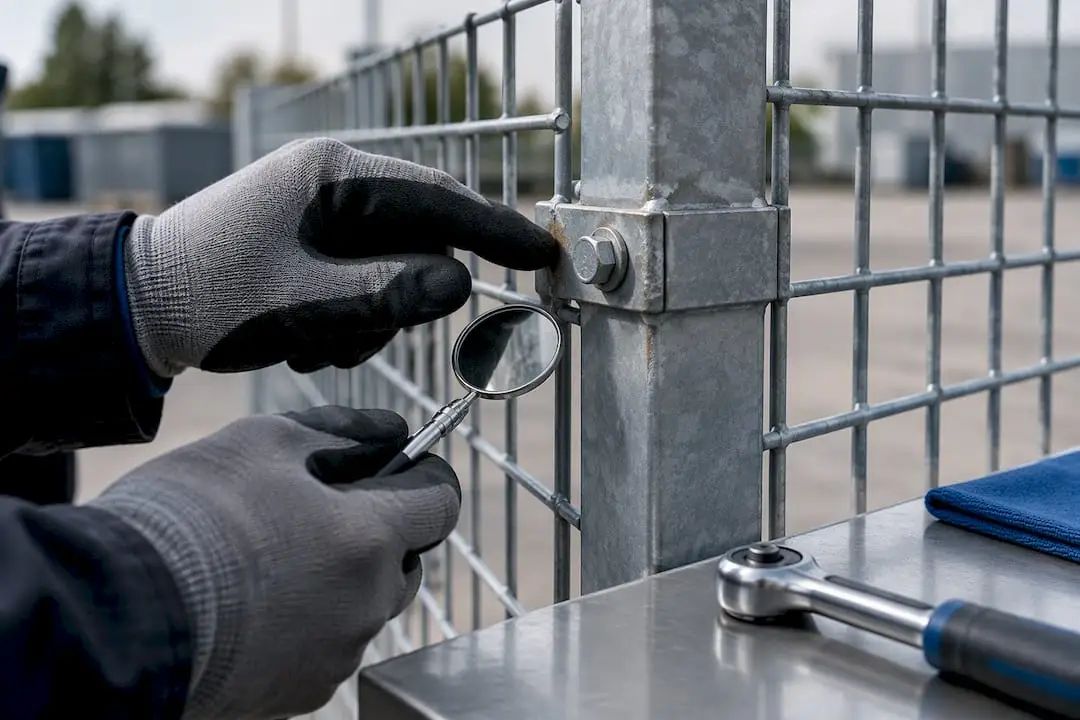
Corner posts and panels face more weathering and physical stress than straight runs, so coating specification matters. Hot-dip galvanizing offers a thicker, more mechanically resistant zinc layer suited to industrial and coastal sites, while PVC coating adds a polymer skin over galvanized wire for extra corrosion resistance in humid climates. The Eskom high-security mesh fencing standard defines category one mesh using 4mm wire with 76.2mm by 12.7mm apertures, a specification that balances hand and cutting resistance with visibility. Specify corrosion-resistant fasteners, and insert nylon washers wherever dissimilar metals meet to prevent galvanic corrosion at brackets and hinges. Coating quality directly affects maintenance frequency: a well-specified PVC or galvanized finish in coastal or industrial environments can extend the interval between recoating or fastener replacement, which helps lower lifecycle costs over the life of the installation.
Corner posts, foundations and anti-tunnelling specifics
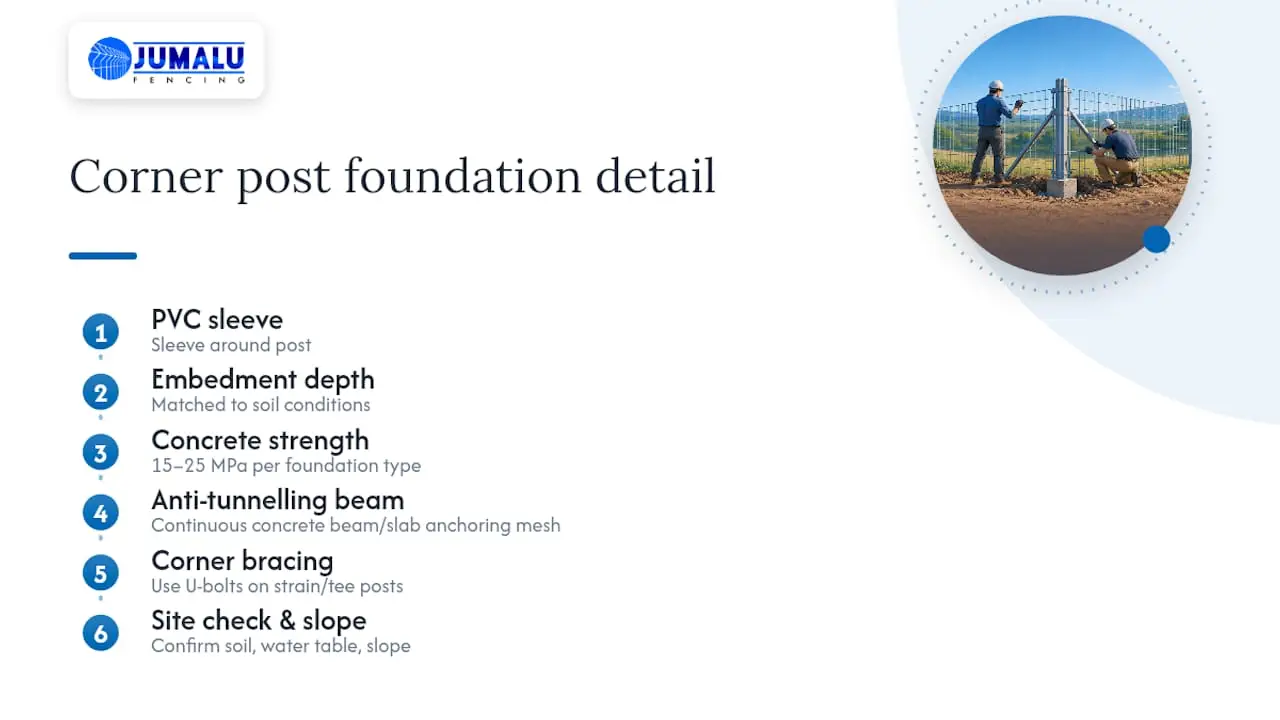
Corner posts take load from two directions, so foundation detail is not optional. The Public Works outer perimeter fence specification calls for PVC sleeves around posts, embedment depths matched to soil conditions and concrete strength between 15MPa and 25MPa depending on the foundation type. Anti-tunnelling protection typically takes the form of a concrete beam or slab cast along the fence line, anchoring the base of the mesh so it cannot be lifted or dug under, a detail the specification ties directly to concrete slab construction at high-risk sites. Strain or tee posts at corners should be braced with corner U-bolts rather than protruding bolts that create climbing aids. Soil type, water table and slope all change the foundation spec, so a pre-install site check should confirm these before concrete is poured. On sloped ground, stepping the fence line and adjusting post spacing, a method also used in general fence installation on sloped sites, keeps the corner assembly properly aligned.
Gates, access control and lock protection for corner gates
Corner gates need a decision on sliding versus swing early, since sliding gates suit tight corners with heavy traffic while swing gates work better where space allows a full arc. Whichever type is chosen, the gate frame should be clad with the same mesh as the adjoining panels, with a bottom gap kept tight enough to prevent crawling underneath, procurement guidance for secure gates cites limits around 50mm. Lock protection matters as much as the gate itself: recessed locks, shield plates over the strike area and electric locks with tamper alerts all reduce the risk of forced entry at the hinge and lock side. Where vehicle traffic is expected, the gate motor must be rated for the gate’s weight and daily cycle count, a detail worth confirming against gate manufacturing specifications before ordering.
Integration: lighting, cameras, sensors and how corners affect detection
Clear-view mesh removes the blind spots that solid fencing creates, which improves both camera coverage and beam detection accuracy at corners. Corner posts are the natural mounting point for cameras and detection beams, since they cover two fence lines from a single position. Detection zones should be planned around the corner geometry itself, and kinematic or vibration-based sensors help reduce false alarms triggered by wind or wildlife rather than an actual climb attempt. Conduit runs and junction boxes should be planned into the corner post design from the outset, since retrofitting cable routes after installation is far more disruptive than building them in.
Installation checklist and common corner mistakes to avoid
Getting a corner right depends on sequencing as much as material choice.
- Confirm drawings, site conditions and soil test results, and get written client sign-off before any excavation begins.
- Install PVC sleeves and set corner posts to the specified embedment depth and concrete strength.
- Allow concrete to cure fully before attaching panels or applying load to the post.
- Fix mesh panels and anti-tunnelling anchors, checking alignment across the corner.
- Fit overhang or razor coil toppings last, confirming fixings can withstand wind loading.
The most common corner failures are insufficient post embedment, fasteners left exposed where they can be used as climbing aids, gate gaps wide enough to crawl under and overhang brackets fixed with hardware too light for the coil’s weight and wind load.
Pro Tip: Ask your installer for the anti-tunnelling beam dimensions in writing before concrete is poured, not after.
Maintenance, inspection and lifetime checks for corner sections
Corners take more physical stress than straight runs, so inspection should happen more often there. In coastal or industrial environments, check quarterly for coating loss, loose fasteners and gate misalignment; in milder inland settings, a biannual check is usually sufficient, a cadence supported by seasonal fence maintenance guidance recommending inspection after seasonal weather shifts. Razor coil and overhang anchoring should be checked for loosening, since a failed anchor undermines the entire climb-delay function of the topping. Keep records of every inspection and repair for warranty purposes and for handover to site managers. A repair becomes a full panel or post replacement once corrosion reaches structural wire or the post foundation itself has shifted. A 2026 qualitative study on CPTED principles in urban environments found that consistent maintenance was one of the deciding factors in whether natural surveillance benefits held up over time.
What installers rarely get right at corners
The single most cost-effective corner upgrade is not a taller fence, it is fixing the sightline gap where two runs meet. Installers often treat corner posts as a structural afterthought rather than a detection point, which means cameras and beams end up fighting a blind spot that better post placement would have solved. Before signing off on a supplier, ask for site drawings, anti-tunnelling details and a written installation method statement.
— Jaline
Secure your corners with ClamberPrufe
A clear-view fencing range with anti-climb and anti-cut properties, finished in galvanized or PVC coatings suited to harsh or coastal conditions, is manufactured and installed by a fencing company.  Corner sections benefit from the same reinforced post detailing and overhang options covered above, applied by an installer who works to those specifications on site. Request drawings, a site visit or a formal quotation through the ClamberPrufe clear-view fencing product page to see which configuration fits your corners.
Sources
- Be Alert | Safety Awareness | SAPS (South African Police Service)
- HIGH SECURITY MESH FENCING standard (Eskom / controlled disclosure)
- Security standard technical specification for an outer perimeter fence (Public Works)
- Application of CPTED in urban environments (Univen study, 2026)
FAQ
What makes a corner more vulnerable than a straight fence run?
A corner combines two approach angles with a potential sightline gap where the two fence lines meet, which is why the SAPS guidance emphasizes clear visibility as a core safety factor. Reinforced posts and correctly placed cameras close that gap.
How deep should corner posts be set in concrete?
Embedment depth depends on soil conditions and post type, and the Public Works perimeter fence specification ties foundation concrete strength to a range between 15MPa and 25MPa depending on the application. A site check before installation confirms the exact figure for your ground conditions.
Is clear-view mesh better than palisade fencing for corners?
Clear-view mesh generally offers better camera compatibility and forces an intruder to cut through wire, which takes longer than spreading palisade pickets according to security fencing comparisons. Palisade can still suit sites prioritizing visual deterrence over sightline surveillance.
Does Jumalu Fencing install ClamberPrufe at property corners?
Yes, Jumalu Fencing manufactures and installs the ClamberPrufe clear-view range, including corner post reinforcement and anti-climb toppings, as part of its standard installation service. Details are available on the ClamberPrufe product page.
How often should corner sections be inspected?
Corners in coastal or industrial settings should be checked more often than straight runs because of higher physical stress, with a quarterly cadence recommended in harsher environments. Seasonal inspection after weather shifts, as outlined in general fence maintenance guidance, also applies to corner anchoring and overhang fixings.