{ “@graph”: [ { “@type”: “Article”, “image”: { “url”: “https://media.babylovegrowth.ai/blog-images/organization-6538/1791251065820_Clear-view-mesh-side-gate-at-commercial-property.jpeg”, “@type”: “ImageObject”, “caption”: “Clear-view mesh side gate at commercial property” }, “author”: { “url”: “https://jumalutech.co.za”, “name”: “Jumalu Fencing”, “@type”: “Organization” }, “headline”: “Avoid Costly Rework: Clear View Side Gate Ideas for Specifiers”, “publisher”: { “url”: “https://jumalutech.co.za”, “name”: “Jumalu Fencing”, “@type”: “Organization” }, “inLanguage”: “en-US”, “description”: “Engineering-first guidance for specifiers on ClamberPrufe style clear view high security side gates. Includes site survey checklist, procurement controls…”, “dateModified”: “2026-10-06T01:44:57.707Z”, “datePublished”: “2026-10-06T01:44:57.707Z” }, { “@type”: “BreadcrumbList”, “itemListElement”: [ { “item”: “https://jumalutech.co.za”, “name”: “Jumalu Fencing”, “@type”: “ListItem”, “position”: 1 }, { “item”: “https://jumalutech.co.za/side-gate-ideas”, “name”: “Avoid Costly Rework: Clear View Side Gate Ideas for Specifiers”, “@type”: “ListItem”, “position”: 2 } ] } ], “@context”: “https://schema.org” }
{ “@type”: “FAQPage”, “@context”: “https://schema.org”, “mainEntity”: [ { “name”: “What makes a side gate “high-security” rather than standard?”, “@type”: “Question”, “acceptedAnswer”: { “text”: “A high-security side gate matches the anti-climb and anti-cut specification of its perimeter fence, using small-aperture mesh or clear-view panels, vandal-proof locking, and foundations and hardware built to the same engineering standard as the fence line it interrupts. Standard gates typically skip the shielded lock detail and the tight gap tolerances that distinguish a high-security build.”, “@type”: “Answer” } }, { “name”: “Do side gates need to be motorisation-ready even without a motor fitted now?”, “@type”: “Question”, “acceptedAnswer”: { “text”: “Yes, specifying motor-ready runners, wheels and earthing points at installation avoids an expensive retrofit later, since underrated hardware often cannot support a motor added after the fact. This is standard guidance across perimeter fencing specifications for sliding gates.”, “@type”: “Answer” } }, { “name”: “How much does a high-security side gate cost?”, “@type”: “Question”, “acceptedAnswer”: { “text”: “Jumalu Fencing’s ClamberPrufe clear-view and mesh gate panels do not carry published pricing, as cost depends on configuration, mesh grade, finish and motorisation; readers can request a technical quote for an itemised, site-specific figure.”, “@type”: “Answer” } }, { “name”: “Can a side gate be both secure and accessible for pedestrians?”, “@type”: “Question”, “acceptedAnswer”: { “text”: “Yes, a pedestrian leaf can be sized and hinged for accessible passage while still meeting an anti-climb, anti-cut specification, provided accessibility and emergency egress requirements are written into the design brief from the outset rather than added afterward.”, “@type”: “Answer” } }, { “name”: “Should a side gate be integrated with cameras and detection sensors?”, “@type”: “Question”, “acceptedAnswer”: { “text”: “Yes, mounting vibration sensors on the gate’s mesh panel and positioning CCTV to cover the approach brings the gate into the same alarm zone and monitoring standard as the rest of the perimeter, which is how campus and institutional perimeter upgrades are commonly specified.”, “@type”: “Answer” } } ] }
A professionally manufactured clear-view or high-security mesh side gate, matched precisely to the anti-climb and anti-cut specification of the surrounding perimeter fence, is the only reliable option for securing side access at a property that takes security seriously. The gate requires a formal site survey, engineered installation, vandal-proof locking and commissioning testing before handover. Suppliers such as Jumalu Fencing manufacture gate systems built to this standard.
TL;DR:
- High-security mesh gates must be custom manufactured, installed, and tested to exact engineering standards, with site surveys and stakeholder sign-offs before fabrication.
- Sliding gates are ideal for vehicle throughput and limited space, while swing gates suit pedestrian access where bi-directional egress is required.
- Material choices like galvanizing and PVC coating improve corrosion resistance, especially in coastal or humid environments, with certified galvanizing thickness crucial before installation.
- Hardware such as locks, hinges, and motorisation components must be vandal-proof, flush-mounted, and specified with written details to prevent security failures and costly retrofits.
- Integration with perimeter detection, cameras, and access control systems enhances overall security, with sensors and CCTV positioned to monitor gate approach and response to tampering.
Table of Contents
- When should you choose swing, sliding or pedestrian gate configurations?
- Choosing materials and finishes for anti-climb and anti-cut side gates
- Specifying locks, hinges, runners and motorisation features
- Installation engineering: posts, sleeves, foundations and commissioning
- How do you integrate side gates with detection, cameras and access control?
- Procurement checklist: questions to ask a gate manufacturer and installer
- Why site survey and stakeholder alignment come before gate design
- Safety considerations: child safety, pinch points and emergency exit
- Cost estimates and budgeting guidance for side gate options
- Accessibility features and regulatory compliance
- Materials comparison: wood, metal and composite for style and durability
- Aesthetic design ideas that complement your property’s architecture
- A practitioner’s note on common specification mistakes
- Get a site survey for a ClamberPrufe-style side gate
- FAQ
- Sources
When should you choose swing, sliding or pedestrian gate configurations?
Side gate selection starts with the access pattern, not the aesthetic. Each configuration solves a different combination of throughput, clearance and emergency egress, and mismatching the format to the site is one of the more common specification errors we see repeated across commercial and residential projects.
- Swing gates suit personnel access points where bidirectional egress matters, but they need clear swing arc space on both sides and are less practical where vehicles need frequent through-access.
- Sliding gates work best where vehicle throughput is regular or swing clearance is limited; they also accept motorisation more readily than swing leaves.
- Hybrid arrangements, a motorised sliding leaf paired with a separate personnel gate, let vehicle and pedestrian traffic move independently without compromising the locking sequence on either.
- Emergency egress requirements, including fire escape routes, often dictate that at least one leaf opens without motor assistance or electronic release failure.
Approach geometry, the width of the access road, turning radius for delivery vehicles, and the number of daily pedestrian movements through the same opening should all be documented before a gate type is finalized, not decided after fabrication drawings are already in production. Readers comparing mesh configurations in detail can review essential types of mesh fencing for how aperture size interacts with gate format.
Choosing materials and finishes for anti-climb and anti-cut side gates
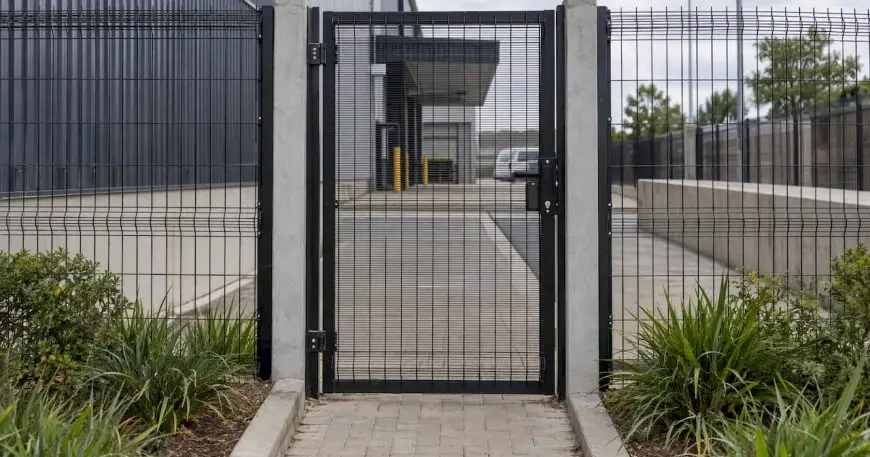
Material selection is where a side gate either matches the perimeter’s security rating or quietly undermines it. High-security mesh fencing standards treat mesh as a distinct category from standard chain link, specifying smaller apertures, defined wire diameters and matching gate options such as sliding, swing and pedestrian leaves to go with it, according to the high security mesh fencing standard. Clear-view panels, the ClamberPrufe-style category, keep sightlines open for surveillance while holding the same anti-climb and anti-cut profile as high-security mesh; the trade-off is purely one of visibility preference, not security grade.
Fabrication sequencing matters as much as material choice: panels should be manufactured, then hot-dip galvanized, then assembled, with closed box sections avoided so water cannot pool inside tubing and accelerate corrosion from within.
Pro Tip: Ask your fabricator for the galvanizing certificate before installation, not after, since coating thickness is far easier to verify on flat stock than on an assembled gate.
PVC-coated finishes add a further corrosion barrier in coastal or humid sites and extend inspection intervals when combined with galvanizing underneath. Expect a documented inspection schedule, not a one-time warranty claim, as part of any lifecycle plan.
Specifying locks, hinges, runners and motorisation features
Hardware choices determine whether a well-built gate holds up under a determined attempt at forced entry. A gate panel rated for anti-cut performance is only as strong as the lock protecting it.
- Vandal-proof locking calls for a recessed lock case paired with an external shield plate, so bolt cutters and pry bars cannot reach the mechanism directly.
- Hinges and fasteners should sit flush with no protruding bolt heads that could be used as climbing aids, and should be stainless or hot-dip galvanized to resist corrosion at the pivot point.
- Motorisation readiness means specifying runner and wheel robustness for sliding gates even when a motor is not fitted on day one, since retrofitting underrated hardware later is expensive and often impossible without replacing the leaf.
- Sweepers fitted to the base of sliding gates stop debris from interrupting the running clearance and causing nuisance faults in motorised systems.
Earthing is frequently overlooked on motorised sliding gates. Public works perimeter guidance specifies earthing points for the gate motor in both its open and closed positions, treating this as a safety requirement rather than an optional extra, according to the outer perimeter fence security specification.
Pro Tip: Request a written hardware schedule listing lock type, hinge grade and fastener finish before approving fabrication drawings, since verbal specifications tend to drift once manufacturing begins.
Installation engineering: posts, sleeves, foundations and commissioning
Civil installation detail is where many otherwise well-specified gates fail in practice. The same perimeter security standard that governs fencing also treats gate commissioning as a discrete milestone equal in rigor to perimeter detection testing, under the public works perimeter specification.
- Set posts in concrete footings using PVC sleeves to allow fine alignment adjustment, and allow the concrete its full setting time before the gate leaf is hung or trafficked.
- Anchor against tunnelling by tying mesh or panel bases into a concrete beam or footing rather than leaving a gap an intruder could dig under.
- Hold gap tolerances tightly, keeping the bottom clearance within the specified limit and confirming the gate-to-fence overlap leaves no gap wide enough to exploit at the hinge or latch side.
- Sequence galvanizing before assembly and avoid any protruding fastener that creates a foothold or a weak point for corrosion to start.
- Commission before handover: test motor operation through a full open-close cycle, verify gate-area detection against the same standard applied to the rest of the perimeter, confirm earthing continuity, and record sign-off against written acceptance criteria.
Detailed civil requirements for posts, concrete sleeves and foundation depth are covered further in the industrial fencing installation guide. Sites running major civil works alongside fencing, grading, drainage or new vehicle approaches, often coordinate that scope with a specialist earthworks contractor; the parking lot construction guide for developers covers how that civil planning is typically sequenced.
How do you integrate side gates with detection, cameras and access control?
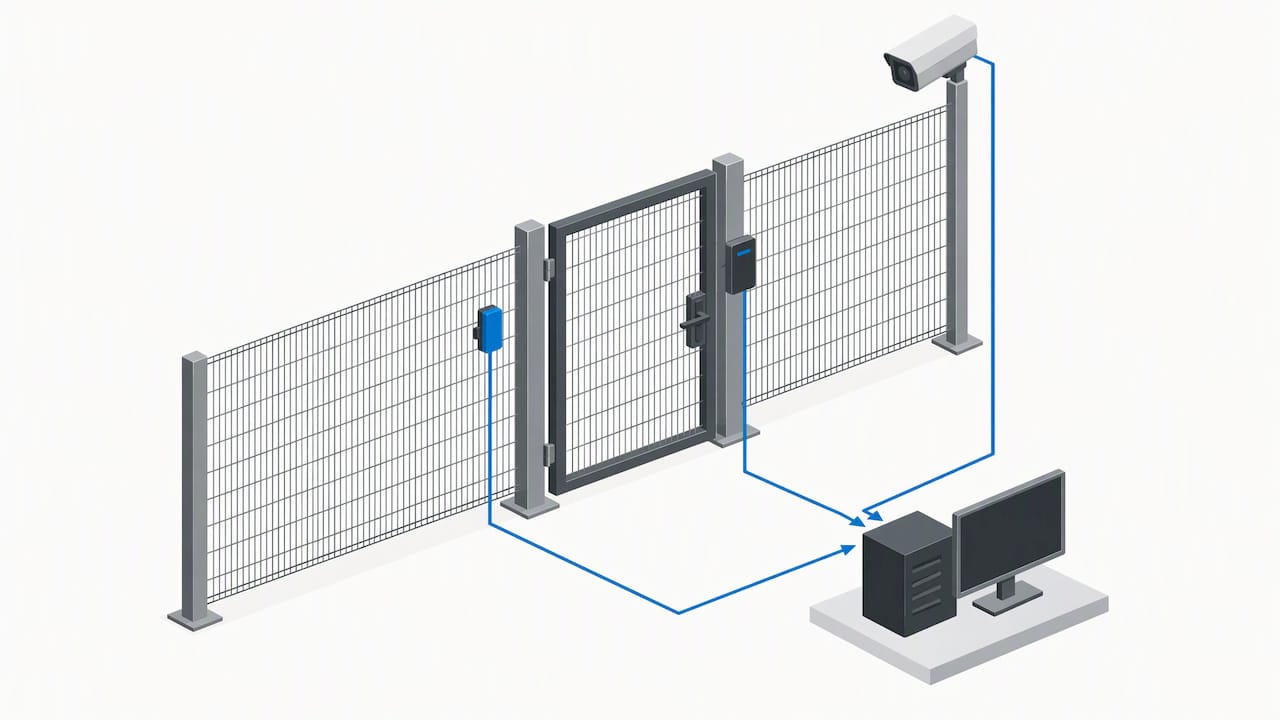
A gate left as a standalone mechanical barrier is a weak point in an otherwise monitored perimeter. CSIR request-for-proposal documents for campus perimeter upgrades routinely specify clear-view fencing paired with CCTV coverage at gates and electronic detection integration, treating the gate as part of the monitored boundary rather than a gap in it, based on CSIR perimeter upgrade RFPs.
Vibration sensors mounted directly on mesh panels near the gate can be mapped into the same alarm zone as the adjoining perimeter run, so an attempted cut or climb at the gate triggers the identical response as an attack anywhere else on the fence line. CCTV coverage should be positioned to capture the approach to the gate and, where identification matters, the face or number plate of anyone passing through. Electric strikes, magnetic locks and card or biometric readers at pedestrian gates need to report into the same security management platform as the rest of the site, not run as an isolated system. Clear-view panels assist this integration directly, since unobstructed sightlines give cameras a cleaner field of view, a point covered in more detail in the advantages of anti-climb fences. Cabling routes, earthing and camera power all need coordinating with the civil installation plan rather than retrofitted after the gate is hung.
Procurement checklist: questions to ask a gate manufacturer and installer
Tendering for a high-security side gate works best as a structured evaluation, not a price comparison alone. A supplier capable of both manufacturing and installing to specification removes the coordination risk that comes with splitting those roles across two contractors.
- Demand a formal site survey and stakeholder sign-off before any fabrication drawings are issued, covering mesh type, post positions, locking detail and earthing points.
- Require material declarations, including steel grade and galvanizing or PVC coating thickness, documented in writing rather than described verbally.
- Insist on commissioning tests covering gate-area detection, motor operation and earthing verification, with written acceptance criteria signed off on completion.
- Check warranty terms and references, and confirm the supplier can produce ClamberPrufe-style clear-view panels alongside professional installation, not just one or the other.
| Checklist item | What to request |
|---|---|
| Site survey | Written survey report with stakeholder sign-off |
| Fabrication drawings | Mesh detail, post layout, locking and earthing detail |
| Material declaration | Steel grade and galvanizing/PVC thickness |
| Commissioning | Gate-area detection, motor test, earthing verification |
| Warranty and references | Written terms and prior installation references |
Why site survey and stakeholder alignment come before gate design
Gate design that skips the site survey tends to produce a technically sound panel that solves the wrong problem. A proper survey records every stakeholder’s access requirement, facilities staff needing vehicle throughput, security teams needing a specific detection standard, and occupants needing a usable pedestrian route, before a single drawing is produced.
Aligning these requirements early avoids the common scenario where a gate is fabricated to the fencing contractor’s default specification and then needs retrofitting once facilities management raises an access pattern nobody asked about during design. Practitioner guidance on secure installations treats the site survey with all relevant stakeholders as a prerequisite for aligning gate design with both access management and delay objectives, not an optional courtesy step.
The survey should capture approach geometry, existing perimeter specification (so the gate matches rather than creates a weak point), power and cabling availability for motorisation, and the sign-off authority for final acceptance. Recording this in writing, rather than relying on a site visit’s informal notes, gives the fabrication team a single reference document and gives the client a basis for the commissioning acceptance criteria referenced earlier. Skipping this step is consistently where avoidable rework originates on commercial and industrial gate projects.
Safety considerations: child safety, pinch points and emergency exit
A high-security gate still has to be a safe gate for everyone who passes through it daily. Pinch points at the hinge side of swing leaves and at the leading edge of sliding gates are a recognized hazard, particularly where children or pedestrians share the same access route as vehicles.
Sliding gates in particular need a sweeper and a properly maintained running clearance so a foot or hand cannot be drawn into the gap between the leaf and the fixed post as the gate closes. Motorised gates should include a safe-edge or obstruction sensor that halts the closing cycle on contact, and the motor’s earthing in both open and closed positions, specified under public works perimeter guidance referenced earlier, also covers part of this safety requirement.
Emergency egress needs separate consideration from day-to-day access control. At least one leaf, or the dedicated pedestrian gate in a hybrid arrangement, should be operable without power or a coded release during a fire or other emergency, since a fully electronic lock-down that cannot fail open creates a life-safety risk. Where a side gate forms part of a designated fire escape route, that requirement should be written into the specification from the outset rather than discovered during a fire drill. Balancing child safety, bolt-cutter resistance and emergency operability in a single gate design is achievable, but only when all three are specified together rather than treated as separate afterthoughts.
Cost estimates and budgeting guidance for side gate options
Budgeting for a high-security side gate depends on configuration, material grade and motorisation, more than on any single headline figure. A pedestrian swing gate in clear-view mesh will generally sit at the lower end of a project’s gate budget, while a motorised sliding gate rated to match an anti-climb, anti-cut perimeter carries additional cost for runners, motor, earthing and commissioning testing.
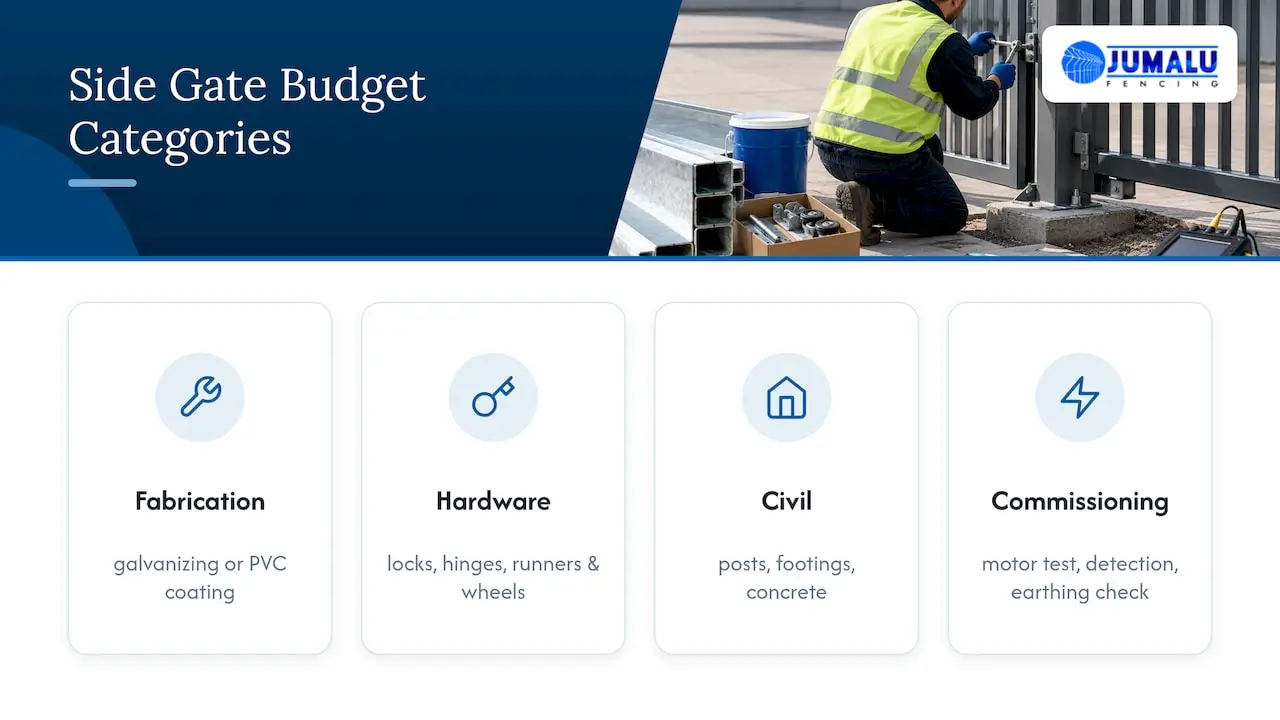
Rather than budgeting against a market-wide average, which varies by region, mesh grade and site civil conditions, a more reliable approach is to request itemized quotes covering four cost categories: panel fabrication and finish (galvanizing or PVC coating), hardware (locks, hinges or runners and wheels), civil installation (posts, footings, concrete), and commissioning (motor testing, detection integration, earthing verification). Comparing suppliers item by item against this structure surfaces where one quote has omitted a cost category, commissioning is a frequent omission, rather than genuinely priced the work lower.
Sites planning motorisation should budget for motor-ready hardware even if the motor itself is deferred to a second phase, since underrated runners and wheels specified to save cost initially are expensive to replace once a motor is added later. A written, itemized quote against the checklist outlined earlier in this guide is the most reliable way to compare suppliers on a like-for-like basis rather than on a single bottom-line number.
Accessibility features and regulatory compliance
Side gates serving pedestrian routes need to account for accessibility alongside security. A pedestrian leaf width sufficient for wheelchair or mobility-aid passage, a threshold free of trip hazards, and hardware that does not require excessive grip strength to operate are practical accessibility considerations that belong in the design brief from the start.
Compliance requirements vary significantly by jurisdiction and by whether the site is private, commercial or institutional, so a gate specification should reference the applicable local building and access regulations for the specific property rather than assume a single universal standard. Where a site falls under institutional or public-sector compliance, the public works perimeter specification referenced earlier offers a useful technical reference point for gate and detection standards, though local building codes and accessibility regulations should always take precedence for the jurisdiction in question.
Motorised gates intended for pedestrian use also need a manual override or a clearly accessible emergency release, both for accessibility and for the emergency egress considerations addressed earlier in this guide. Confirming these requirements with a qualified building control or accessibility consultant for the specific property remains the reliable route to compliance, since generic guidance cannot substitute for a jurisdiction-specific review.
Materials comparison: wood, metal and composite for style and durability
Beyond the anti-climb, anti-cut specification, side gate material choice also affects day-to-day appearance and long-term upkeep. Timber gates offer a traditional appearance and blend easily with garden landscaping, but they need regular treatment against rot and warping, and timber alone does not meet the cut-resistance profile that a high-security specification demands.
Metal gate panels, whether clear-view mesh, palisade or solid steel, offer the strongest baseline for both durability and security, particularly once hot-dip galvanized or PVC-coated against corrosion. A galvanized finish resists coastal humidity and general weathering far better than untreated steel, and a PVC-coated layer on top extends that resistance further while also allowing colour options that suit a property’s architecture. More detail on how coating types compare is covered in the galvanized fencing guide.
Composite materials, combining a metal core with a synthetic cladding, offer a middle ground: lower maintenance than timber, with some of timber’s visual warmth, though typically at a higher cost than galvanized steel alone and without matching steel’s cut resistance. For a property that genuinely needs an anti-climb, anti-cut rating, metal clear-view or mesh gates remain the only material category that satisfies both the security specification and a reasonable maintenance burden over a multi-year lifecycle.
Aesthetic design ideas that complement your property’s architecture
Security specification and visual design are not opposing goals on a modern clear-view gate. Clear-view panels keep sightlines open across the gate line, which suits contemporary architecture that favors openness and natural surveillance over solid screening, and the panel colour can typically be matched to window frames, roofing or existing perimeter fencing through the PVC coating option.
For properties wanting a more traditional appearance, panel spacing and post detailing can echo the proportions of an existing boundary wall or gate pillar without compromising the mesh aperture that delivers the anti-cut rating. Pedestrian gates integrated into a hybrid swing-and-slide arrangement can also be finished differently from the main vehicle gate, allowing a feature entrance at the personnel access point while keeping the primary vehicle gate purely functional.
Customisation within a high-security specification generally means working within the approved mesh and post dimensions rather than departing from them, since altering aperture size or wire diameter to achieve a different look directly affects the anti-cut rating. The gate manufacture service page covers how security and finish customization are typically balanced on a project basis. A well-finished high-security gate should read as a deliberate architectural feature, not as an obvious retrofit bolted onto an otherwise attractive frontage.
A practitioner’s note on common specification mistakes
The recurring failure on side gate projects is not weak material, it is mismatched mesh grade against the rest of the perimeter, locks left exposed without a shield, and foundations poured without proper sleeving or setting time. These gaps rarely show up on a spec sheet; they show up during an attempted breach. A supplier who manufactures the panel and installs it to the same engineering standard removes the coordination risk that splits responsibility, and accountability, between two separate contractors.
— Jaline
Get a site survey for a ClamberPrufe-style side gate
We manufacture ClamberPrufe clear-view fencing and high-security mesh gate panels in galvanized or PVC-coated finishes, and we install and commission every gate to the engineering detail covered throughout this guide, posts set in sleeved footings, vandal-proof locking, earthing verification and gate-area detection testing included.
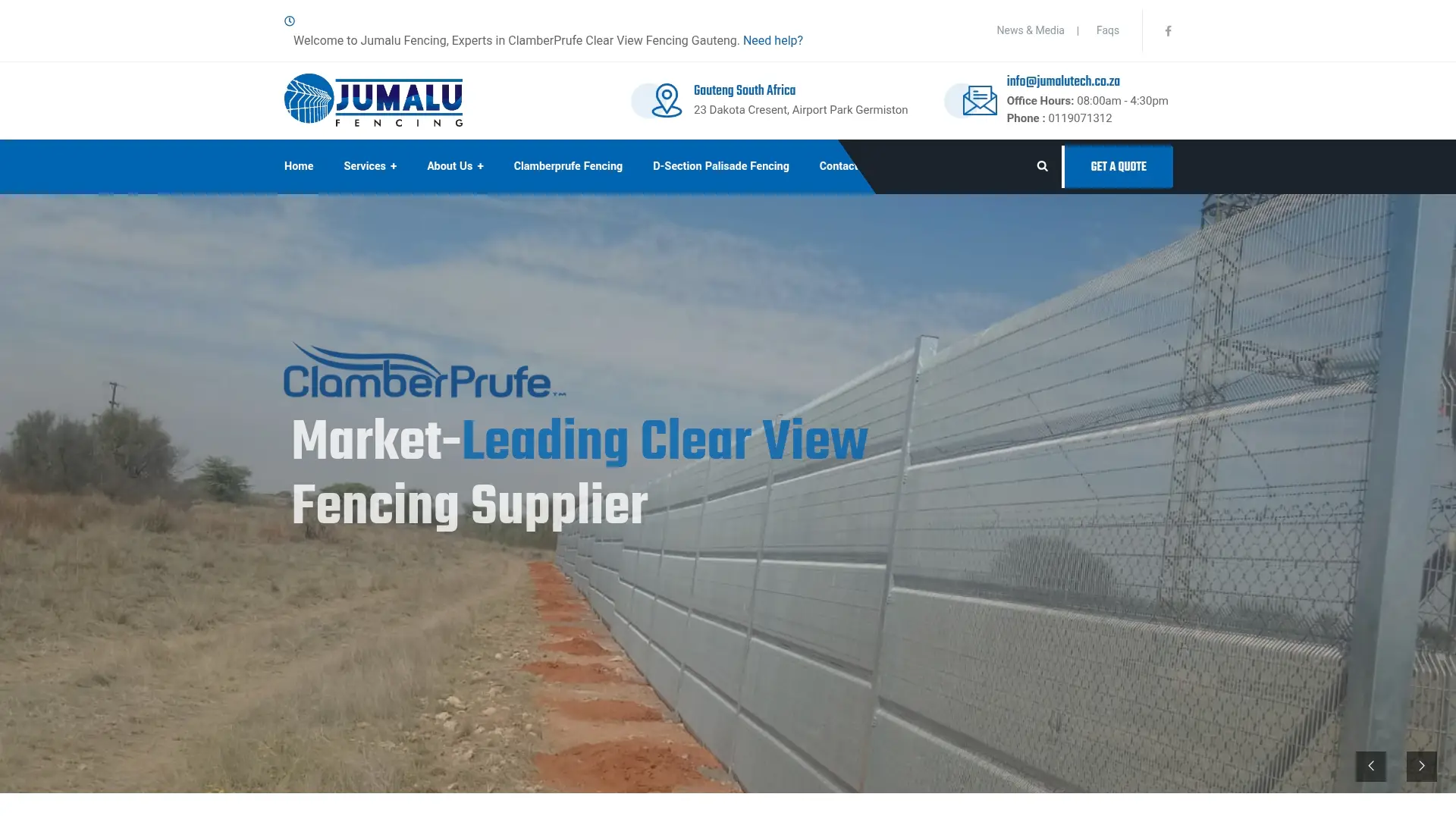
- We survey your site and align the gate specification with every stakeholder before fabrication begins.
- We supply clear view fencing and panel variants to match your existing perimeter.
- We handle civil installation, motorisation readiness and commissioning sign-off as a single, accountable scope.
Request a site survey or a technical quote through our services page to get your side gate specified and installed to the same standard as the rest of your perimeter.
FAQ
What makes a side gate “high-security” rather than standard?
A high-security side gate matches the anti-climb and anti-cut specification of its perimeter fence, using small-aperture mesh or clear-view panels, vandal-proof locking, and foundations and hardware built to the same engineering standard as the fence line it interrupts. Standard gates typically skip the shielded lock detail and the tight gap tolerances that distinguish a high-security build.
Do side gates need to be motorisation-ready even without a motor fitted now?
Yes, specifying motor-ready runners, wheels and earthing points at installation avoids an expensive retrofit later, since underrated hardware often cannot support a motor added after the fact. This is standard guidance across perimeter fencing specifications for sliding gates.
How much does a high-security side gate cost?
Jumalu Fencing’s ClamberPrufe clear-view and mesh gate panels do not carry published pricing, as cost depends on configuration, mesh grade, finish and motorisation; readers can request a technical quote for an itemised, site-specific figure.
Can a side gate be both secure and accessible for pedestrians?
Yes, a pedestrian leaf can be sized and hinged for accessible passage while still meeting an anti-climb, anti-cut specification, provided accessibility and emergency egress requirements are written into the design brief from the outset rather than added afterward.
Should a side gate be integrated with cameras and detection sensors?
Yes, mounting vibration sensors on the gate’s mesh panel and positioning CCTV to cover the approach brings the gate into the same alarm zone and monitoring standard as the rest of the perimeter, which is how campus and institutional perimeter upgrades are commonly specified.
Sources
- High Security Mesh Fencing Standard (Eskom/spec)
- Security standard technical specification for outer perimeter fence (public works)
- CSIR RFPs for perimeter upgrades (examples of gate and detection specs)