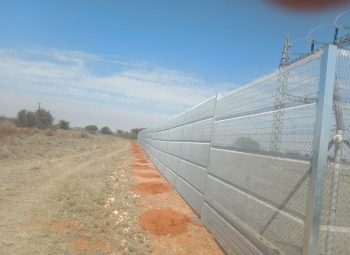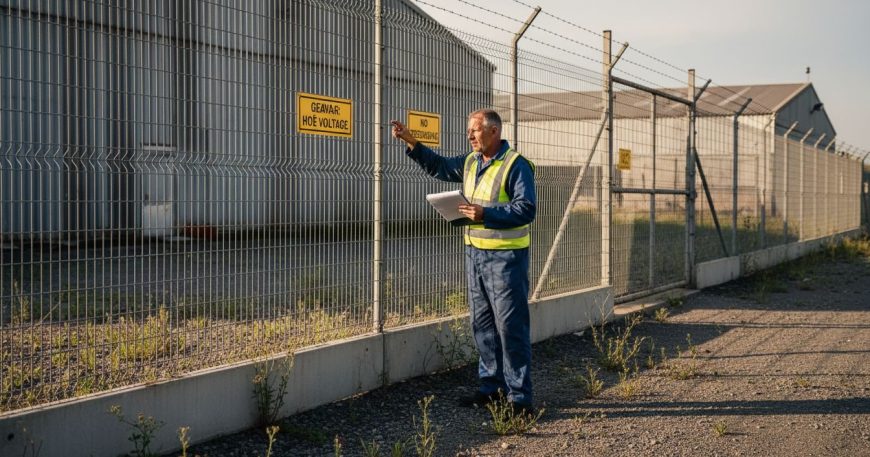
Protecting valuable assets in Gauteng’s industrial zones calls for more than just a boundary line. Facility managers across South Africa know all too well how industrial threats and rapid urban development make robust perimeter fencing a necessity, not a luxury. With options ranging from high-security mesh to electric barriers, understanding physical barrier systems and legal compliance can transform your perimeter from a weak point into your facility’s strongest line of defence.
Table of Contents
- Perimeter Fencing In Industry Explained
- Industrial Fencing Types And Key Differences
- Essential Features For Industrial Security
- Legal Compliance And South African Standards
- Common Pitfalls And Maintenance Challenges
Key Takeaways
| Point | Details |
|---|---|
| Importance of Perimeter Fencing | A robust perimeter fence is essential for industrial security, preventing unauthorised access and enhancing response time against intrusions. |
| Layered Defence Approach | Using multiple fencing types and integrated security systems creates a multilayered defence that better protects facilities. |
| Compliance with Standards | Adhering to South African legal and safety regulations is crucial to avoid liabilities and ensure the reliability of your fencing solutions. |
| Regular Maintenance | Establishing a strategic maintenance plan is vital to prolong the lifespan of your fencing and prevent security breaches. |
Perimeter Fencing In Industry Explained
Perimeter fencing is the backbone of industrial security in South Africa. It’s a physical barrier system designed to prevent unauthorised access, detect intrusions, and delay anyone attempting to breach your facility boundaries.
At its core, perimeter fencing serves multiple critical functions beyond simply marking property lines. A robust perimeter fence system typically combines high-security mesh with integrated detection capabilities, creating layers of protection that work together seamlessly.
What Makes Industrial Perimeter Fencing Different
Industrial perimeter fencing differs fundamentally from residential or commercial fencing. Your facility faces specific threats that demand engineered solutions rather than basic barriers.
Key differences include:
- Height and strength: Industrial fences typically stand 2.4 to 3 metres tall, with some security-critical facilities requiring 4.5 metres or higher
- Material specifications: Heavy-gauge welded mesh or steel construction rather than timber or lightweight materials
- Anti-climb and anti-cut features: Designed to resist cutting tools and prevent scaling
- Integration with security systems: Connection points for CCTV cameras, alarm systems, and lighting
- Weather resistance: Galvanised or powder-coated finishes to withstand Gauteng’s harsh conditions
A properly designed perimeter fence delays intruders long enough for your security team to respond effectively, turning detection into actionable time.
The Multi-Layer Approach
Effective industrial security relies on layered defences, not single solutions. Your perimeter fence is the outermost layer, but it works alongside other systems.
Most secure industrial facilities employ:
- An outer perimeter fence at the property boundary
- An inner perimeter fence around critical assets
- Lighting systems to eliminate blind spots
- Detection systems integrated into the fence structure
- Access control gates with security measures
When properly installed by experienced professionals, these components create a cohesive security environment rather than isolated barriers.
South African Industrial Context
Facility managers in Gauteng face unique security challenges. Industrial theft, copper cable theft, and unauthorised access remain persistent threats across the region. Your perimeter fencing must account for local conditions and criminal tactics.
Consider these local factors:
- Extreme heat and UV exposure affecting fence durability
- Soil conditions in Johannesburg and Pretoria areas
- Compliance with local security standards
- Integration with Eskom and municipal infrastructure
The investment in quality perimeter fencing directly reduces your insurance premiums, operational losses, and security incidents over time.
Pro tip: When planning perimeter fencing upgrades, assess your entire boundary for weak points—gates, corners, and areas with limited visibility often require additional security layers beyond basic fencing.
Industrial Fencing Types And Key Differences
Not all fencing serves the same purpose. Industrial facilities in South Africa require specific fencing types designed for security, liability, and operational needs. Understanding the differences helps you select the right solution for your site.
The South African legal framework distinguishes between various fencing types under property and security regulations. Your choice depends on your facility’s threat profile, budget, and aesthetic requirements.
High-Security Mesh Fencing
High-security mesh fencing remains the gold standard for industrial sites across Gauteng. It combines visibility with proven security performance.
Key characteristics:
- Clear view design: You see through the fence, eliminating hiding spots
- Welded mesh construction: No cut points or climbing assists
- High tensile wire: Resists cutting tools and prolonged impact
- Flexible installation: Adaptable to uneven terrain common in Johannesburg and Pretoria
- Minimal maintenance: Galvanised coating handles extreme heat and UV exposure
Clear view fencing prevents the psychological security gap where intruders hide behind obscured fencing, creating operational blind spots for your security team.
Palisade and Solid Fencing
Solid fencing options provide complete visual obstruction, useful when you need privacy alongside security. However, they come with trade-offs.
Palisade fencing offers:
- Prevents external observation of your operations
- Creates physical and psychological barriers
- Requires more maintenance in harsh weather
- Limits sightlines for your own security monitoring
These work well for facilities storing sensitive materials or equipment where external visibility creates liability concerns.
Electric Fencing Systems
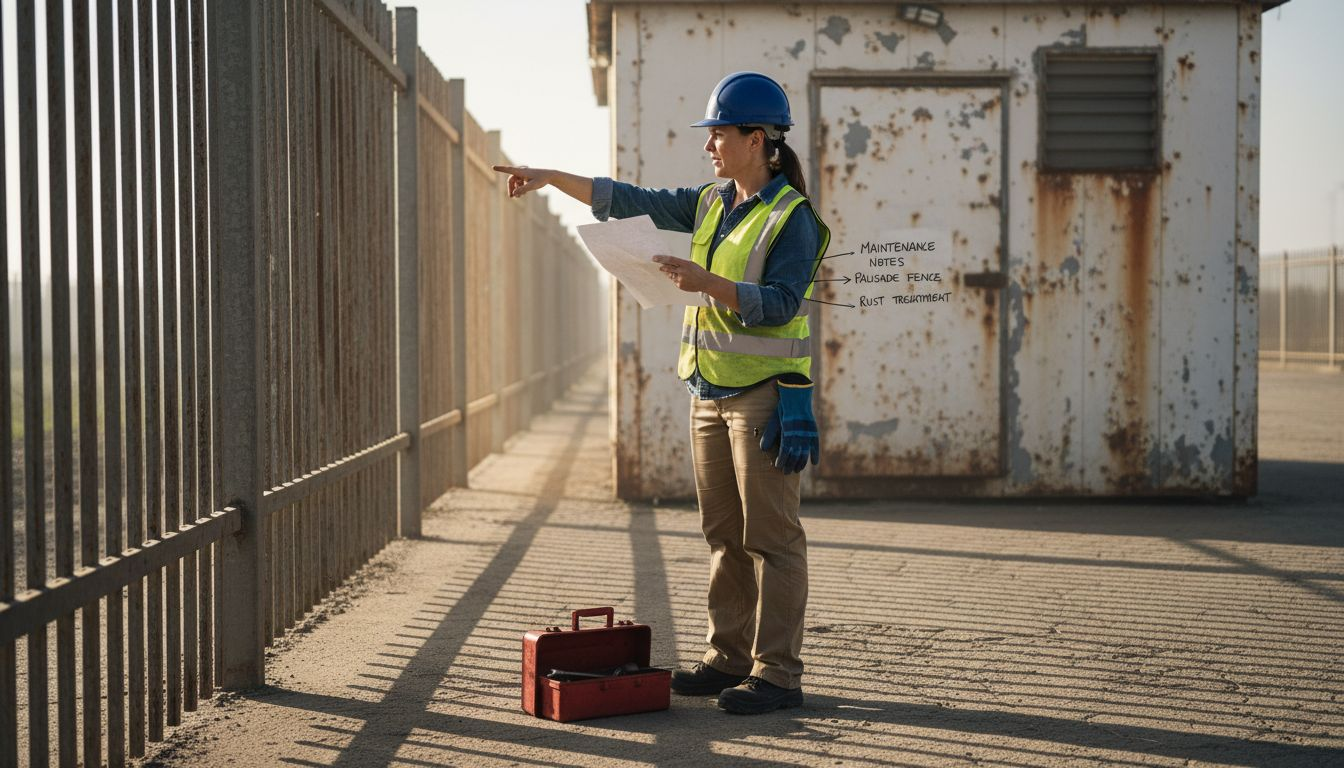
Electric fencing adds active deterrence to passive barriers. Understanding electric fencing safety requirements is critical for South African compliance.
Electric fencing serves:
- Perimeter deterrence—shock discourages casual intruders
- Alarm integration—breaks in the circuit trigger alerts
- Cost-effective supplementation to mesh fencing
- Agricultural and industrial dual-purpose use
However, electric fencing alone is insufficient for industrial security. It functions best as a layer within your overall perimeter strategy.
Combination Approaches
Most effective industrial security combines multiple fencing types. Your outer boundary might feature welded mesh fencing options, while inner perimeters use palisade fencing around critical assets.
Combination benefits:
- Layered defence defeats single-point failures
- Addresses different security challenges
- Balances visibility with privacy needs
- Accommodates site topography and infrastructure
The investment in mixed solutions typically costs less than upgrading to higher-security single systems later.
The main types of industrial fencing each have unique security roles and advantages:
| Fencing Type | Primary Security Role | Best Used For | Key Limitation |
|---|---|---|---|
| High-Security Mesh | Deterrence and visibility | Large perimeters and camera sites | Less privacy |
| Palisade/Solid | Privacy and physical obstruction | Sensitive and hidden operations | Higher upkeep, reduced view |
| Electric Fencing | Immediate deterrence and alerts | Supplementing other fences | Relies on power and upkeep |
| Combination Systems | Integrated, multilayer defence | Sites with complex threat profiles | More planning, higher initial cost |
Pro tip: Select your primary fencing type based on threat assessment first, then add supplementary fencing types for layered protection rather than assuming one fence type handles all security requirements.
Essential Features For Industrial Security
Industrial fencing alone doesn’t stop determined intruders. Your perimeter security must incorporate specific features that work together to delay, detect, and deter unauthorised access. The right combination transforms basic fencing into an effective security system.
Effective industrial security starts with hazard identification and risk assessment. Understanding your facility’s vulnerabilities shapes which features you prioritise.
Height And Visibility
Fencing height directly impacts security effectiveness. Too short, and intruders vault over easily. Too tall without visibility, and your security team works blind.
Optimal characteristics include:
- Minimum 2.4 metres: Meets standard industrial security height requirements
- Clear view design: Your team sees threats before they breach perimeter
- No climbing assists: Smooth surfaces and angled tops prevent scaling
- Unobstructed sightlines: Eliminates hiding spots outside your boundary
Height combined with visibility creates the security advantage—intruders face both physical and psychological barriers.
Material Strength And Durability
Weak materials fail when tested. Your fencing must resist cutting, climbing, and weather damage across multiple seasons.
Essential material features:
- High tensile welded mesh: Resists cutting tools and prolonged impact
- Galvanised or powder-coated finish: Withstands Gauteng’s extreme heat and UV exposure
- No sharp edges or gaps: Prevents accidental injuries and unauthorised entry points
- Weather-resistant composition: Maintains integrity through rain, heat cycles, and humidity
Superior materials transform fencing from a boundary marker into a genuine security asset that functions reliably for 15 to 20 years without significant degradation.
Detection And Integration Capabilities
Modern industrial security requires fencing that integrates with your broader security ecosystem. Passive barriers gain active capability through detection systems.
Integration features include:
- CCTV mounting points: Securely attach cameras without additional infrastructure
- Alarm integration: Connection points for vibration sensors and breach detection
- Lighting compatibility: Designed for integration with perimeter lighting systems
- Gate security mechanisms: Proper anchor points for access control integration
Your fencing becomes the foundation for layered security rather than an isolated barrier.
Anti-Climb And Anti-Cut Design
Specific design elements eliminate common breach tactics. Experienced intruders know how to climb standard fencing or cut through weak mesh.
Anti-climb features prevent:
- Horizontal climbing rails or footholds
- Diagonal bracing that aids scaling
- Curved or spiked tops that discourage hand placement
Anti-cut measures include welded construction that eliminates cut points and high-grade materials resistant to bolt cutters and angle grinders.
Access Control Points
Gates and entry points represent your fencing system’s weakest elements. Proper design secures these critical vulnerabilities.
Essential gate features:
- Heavy-duty locking mechanisms
- Reinforced frames matching fence strength
- Restricted key access or electronic controls
- Clear visibility through gates (where appropriate)
Pro tip: Conduct a formal risk assessment of your facility before selecting fencing features, identifying specific threats your site faces, then prioritise features that directly address those documented risks rather than adopting generic high-security specifications.
Legal Compliance And South African Standards
Ignoring South African legal requirements for industrial fencing creates liability, operational disruptions, and financial penalties. Your facility must comply with national standards and regulations that govern fencing installation, materials, and safety.
Compliance isn’t optional—it protects your business, your employees, and your security investment. Understanding these requirements prevents costly mistakes during installation or disputes with neighbouring properties.
South African National Standards (SANS)
The South African Bureau of Standards (SABS) maintains SANS standards for fencing materials and installation practices. These standards specify technical requirements for durability, safety, and performance.
Key SANS requirements include:
- Material specifications: Galvanising thickness, wire gauge, and mesh sizing
- Installation standards: Post spacing, foundation depth, and structural integrity
- Safety requirements: Electrical safety for electric fencing installations
- Testing and certification: Third-party verification of product compliance
Fencing that meets SANS standards performs predictably and provides documented proof of compliance for insurance and legal purposes.
Occupational Health And Safety Act Compliance
Your fencing must protect employees and visitors from hazards. The Occupational Health and Safety Act requires secure perimeter barriers that prevent accidental escape or unauthorised entry.
Compliance obligations include:
- Risk assessments identifying fencing-related hazards
- Proper installation eliminating sharp edges and climbing risks
- Regular maintenance preventing deterioration
- Warning signage where electrical fencing is present
- Training for staff near perimeter security systems
Failure to maintain safe fencing exposes your facility to prosecution and civil liability claims.
Local Municipality And Land Use Requirements
Local authorities in Gauteng enforce building regulations and land use policies affecting fencing. Boundary fences must comply with municipal bylaws regarding height, materials, and setback distances.
Municipality considerations:
- Height restrictions: Maximum permitted fence heights in residential and commercial zones
- Setback requirements: Distance from property lines or public roads
- Material approval: Some municipalities restrict certain materials or require aesthetic standards
- Boundary agreements: Shared fences may require neighbour consent
Before installing industrial fencing, obtain written approval from your local municipality to prevent forced removal or legal disputes.
Electrical Safety Standards For Electric Fencing
If your industrial security includes electric fencing, compliance with electrical regulations is non-negotiable. The Electrical Machinery Regulations under the Occupational Health and Safety Act govern installation, maintenance, and safety.
Electric fencing compliance requires:
- Certified electricians performing installations
- Proper earthing and surge protection systems
- Safety signage in English and other appropriate languages
- Regular testing and maintenance by qualified personnel
- Isolation switches and emergency cut-off points
Non-compliance with electrical standards exposes your facility to worker injuries, prosecution under occupational health laws, and substantial fines from the Department of Labour.
Documentation And Certification
Maintain comprehensive documentation of your fencing compliance. This protects your facility during insurance claims, regulatory inspections, or legal disputes.
Essential documentation includes:
- Installation certificates from qualified contractors
- SANS compliance certificates for materials
- Municipal approval letters
- Risk assessment reports
- Maintenance records and inspection logs
- Electrical safety certificates (where applicable)
Stored documentation demonstrates good faith compliance efforts and protects your facility from liability claims.
Pro tip: When engaging fencing contractors, verify their compliance certifications and request written confirmation that installations meet all applicable SANS standards, local municipality requirements, and electrical safety regulations before project commencement.
Common Pitfalls And Maintenance Challenges
Many facility managers install quality fencing, then watch it deteriorate through neglect. Poor maintenance planning transforms secure fencing into an aesthetic liability that fails when you need it most. Understanding common pitfalls prevents costly failures.
Industrial fencing requires strategic maintenance planning tailored to South African conditions. Without structured approaches, your security investment erodes faster than you realise.
Neglecting Regular Inspections
Fencing deterioration accelerates when undetected. Corrosion, mesh damage, and structural weakness develop silently until breach attempts succeed.
Inspection pitfalls include:
- No inspection schedule: Reactive maintenance costs 3-5 times more than preventive approaches
- Untrained inspectors: Staff miss early warning signs of degradation
- Weather-damage blindness: Gauteng’s heat and rain damage fencing faster than temperate regions
- Documentation gaps: No records mean repeated failures at identical locations
Establish monthly inspections during peak summer and quarterly reviews during winter. Document every finding photographically and maintain inspection logs for compliance purposes.
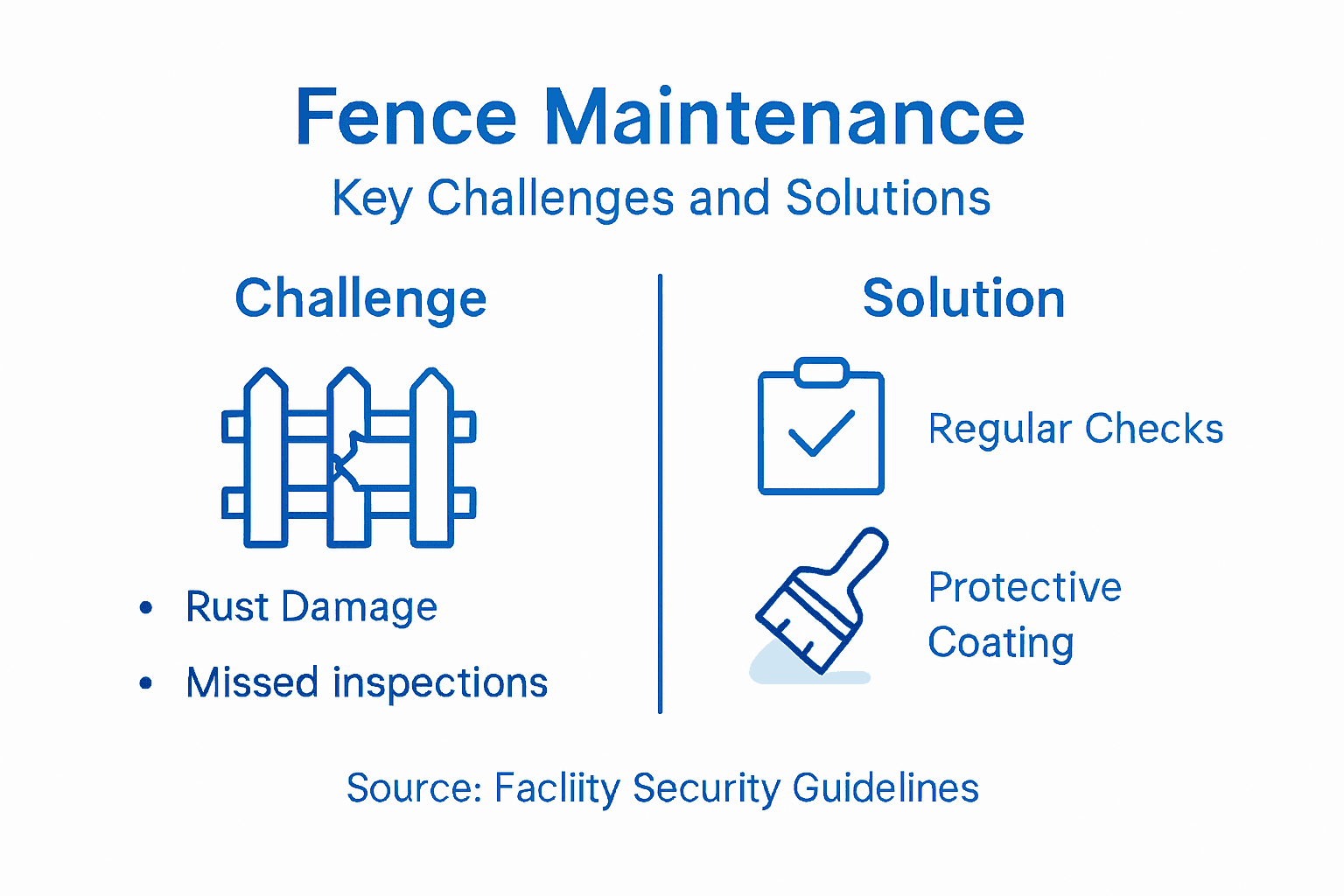
Corrosion And Weather Damage
South Africa’s industrial climate accelerates corrosion. High temperatures, UV exposure, and occasional heavy rainfall conspire against unprotected fencing.
Common weather-related failures:
- Galvanising failure exposing bare steel to rust
- Weld point corrosion at mesh intersections
- Post foundation degradation from water pooling
- Bolt and fastener rust creating weak points
Galvanised fencing requires periodic inspection of coating integrity. Rust spots demand immediate remediation before spreading. Repainting or recoating extends fencing lifespan significantly.
Inadequate Documentation Systems
Facilities without maintenance records lose institutional knowledge. Staff turnover leaves no record of previous repairs, identified weaknesses, or seasonal patterns.
Documentation challenges:
- Maintenance history lost when personnel change
- Repeated repairs at same locations without root-cause analysis
- Insurance claims hindered by missing maintenance records
- Difficulty proving due diligence during liability incidents
Facilities with documented maintenance systems experience 40 to 60 percent fewer security breaches than those relying on informal, undocumented approaches.
Resource Constraints And Scheduling Conflicts
Budget limitations and operational demands create maintenance delays. Your facility can’t shut down for fencing repairs, yet maintenance windows remain limited.
Resource pitfalls include:
- Limited budget allocations prioritising other infrastructure
- Staff availability conflicts with maintenance scheduling
- Delayed repairs compounding minor damage into major failures
- Contractor availability limiting repair timing options
Budget 2 to 3 percent of fencing installation cost annually for maintenance. Schedule repairs during low-activity periods to minimise operational disruption.
Environmental Impact Underestimation
Your fencing location determines maintenance demands. Industrial facilities near roads, railways, or mining operations experience accelerated damage from vibration, dust, and chemical exposure.
Environmental stressors:
- Vibration damage: Heavy vehicle traffic weakens welds and fasteners
- Dust and chemical exposure: Airborne contaminants accelerate corrosion
- Soil movement: Unstable ground foundation displacement
- Vegetation growth: Root systems destabilise posts and mesh
Assess your site’s specific environmental challenges and adjust maintenance frequency accordingly. High-vibration areas require quarterly inspections rather than annual reviews.
Proper maintenance strategies significantly extend your fence’s lifespan and performance. Common maintenance challenges are compared below:
| Maintenance Challenge | Effect on Security | Prevention Strategy |
|---|---|---|
| Lack of inspections | Missed damage and breaches | Monthly checks and documentation |
| Ignoring weather impact | Rust, structural weakness | Regular coating and prompt repairs |
| Weak documentation systems | Loss of repair history | Maintain detailed maintenance logs |
| Budget and timing conflicts | Delayed critical repairs | Allocate yearly repair budget |
Pro tip: Establish a condition-based maintenance schedule documenting inspection dates, findings, and repairs performed, reviewing the data quarterly to identify emerging patterns and adjust maintenance intensity before minor issues become expensive failures.
Elevate Your Industrial Security With Expert Perimeter Fencing Solutions
Industrial facilities in South Africa face growing challenges—from theft to harsh weather conditions—that demand more than just a basic fence. Your perimeter fencing must combine anti-climb and anti-cut features, clear view designs, and weather resistance to create a secure, visible barrier that detects and delays intruders. Jumalu Tech specialises in manufacturing and installing high-security fencing systems tailored to these exact needs, ensuring your perimeter is a strong line of defence.
Discover how our ClamberPrufe Clear View Fencing and comprehensive services including gate manufacturing and mesh fencing can transform your property security while meeting local standards and improving operational safety. Experience durable, professional fencing solutions designed specifically for Gauteng and South African industrial environments.
Ready to protect your facility with fencing that truly performs? Get tailored advice and quotations today by visiting Jumalu Tech and explore our expert high-security fencing solutions.
Secure your perimeter now with trusted experts who understand your industrial security challenges. Contact Jumalu Tech at https://jumalutech.co.za to request a consultation and start building your secure boundary today.
Frequently Asked Questions
What are the main functions of perimeter fencing in industrial security?
Perimeter fencing serves to prevent unauthorized access, detect intrusions, and delay any attempts to breach facility boundaries. It creates a physical barrier while also integrating detection technologies for enhanced security.
How does industrial perimeter fencing differ from residential fencing?
Industrial perimeter fencing is usually taller (2.4 to 4.5 metres), constructed with durable materials like heavy-gauge welded mesh or steel, and features anti-climb and anti-cut designs. It also integrates with security systems like CCTV and alarms, addressing specific threats faced by industrial facilities.
What types of industrial fencing are best suited for security?
High-security mesh fencing is considered the gold standard for industrial sites, providing visibility and resistance to cutting tools. Other types include palisade fencing for privacy and electric fencing for active deterrence. Many facilities benefit from a combination of these systems to create layered security.
How can I ensure my perimeter fencing remains effective over time?
Regular maintenance and inspections are crucial to prolonging the lifespan of perimeter fencing. This includes checking for corrosion, ensuring material integrity, and documenting repairs. Creating a maintenance schedule helps address issues before they compromise security.
Recommended
- Industrial Fencing Installation Guide for Secure Sites – Jumalu Fencing
- Security Fencing Terminology Explained: Complete Guide – Jumalu Fencing
- Security Fence Installation Process for Maximum Protection – Jumalu Fencing
- Industrial Fencing Requirements in South Africa – Jumalu Fencing
- Top Strategies for Effective Industrial Pest Control | Ensure Safety & Compliance – BioWise Pest Control London
- Private Security Screening – Why Compliance Matters