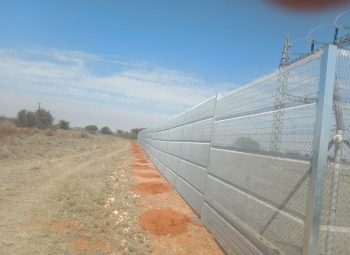
Many property owners believe smaller mesh openings automatically deliver superior security. This assumption overlooks critical trade-offs between anti-climb protection and visibility for surveillance. Fence mesh aperture, the size of gaps in security fencing, fundamentally shapes how well your perimeter performs both defensive and monitoring roles. Understanding how aperture dimensions affect security outcomes helps you select fencing that genuinely protects your Gauteng property without compromising essential sight lines.
Table of Contents
- Understanding Fence Mesh Aperture: Definition And Basics
- How Mesh Aperture Influences Security And Visibility
- Materials And Durability: Maintaining Effective Apertures Over Time
- Anti-Climb And Anti-Cut Mesh Aperture Standards And Practices
- Balancing Environmental Factors: Wind Resistance And Visibility
- Common Misconceptions About Fence Mesh Aperture
- Choosing The Right Mesh Aperture For Your Property
- Explore High-Security Mesh Fencing Solutions With Jumalu Fencing
- Frequently Asked Questions
Key takeaways
| Point | Details |
|---|---|
| Fence mesh aperture defines opening sizes in fencing mesh, directly impacting security and visibility. | Apertures typically range from 12mm to 50mm, with smaller sizes enhancing anti-climb features. |
| Smaller apertures enhance anti-climb security but reduce surveillance visibility. | Apertures ≤12.5mm eliminate footholds while larger openings improve monitoring capabilities. |
| Material choices like galvanized steel and PVC coatings preserve aperture integrity over time. | Proper coatings prevent rust and deformation, maintaining security effectiveness. |
| Balanced aperture selection depends on property security requirements and environmental conditions. | Wind resistance, visibility needs, and climate factors influence optimal aperture size. |
| Compliance with South African anti-climb standards ensures effective perimeter protection. | Standards specify aperture dimensions that meet recognized security benchmarks. |
Understanding fence mesh aperture: definition and basics
Fence mesh aperture refers to the size of openings or gaps within the fencing material itself. These dimensions are measured in millimeters and fundamentally determine how your fence performs its core security and visibility functions. When you examine security fencing, you’re essentially evaluating how aperture size balances keeping intruders out while maintaining clear sight lines for monitoring.
Common aperture dimensions in security applications typically fall within these ranges:
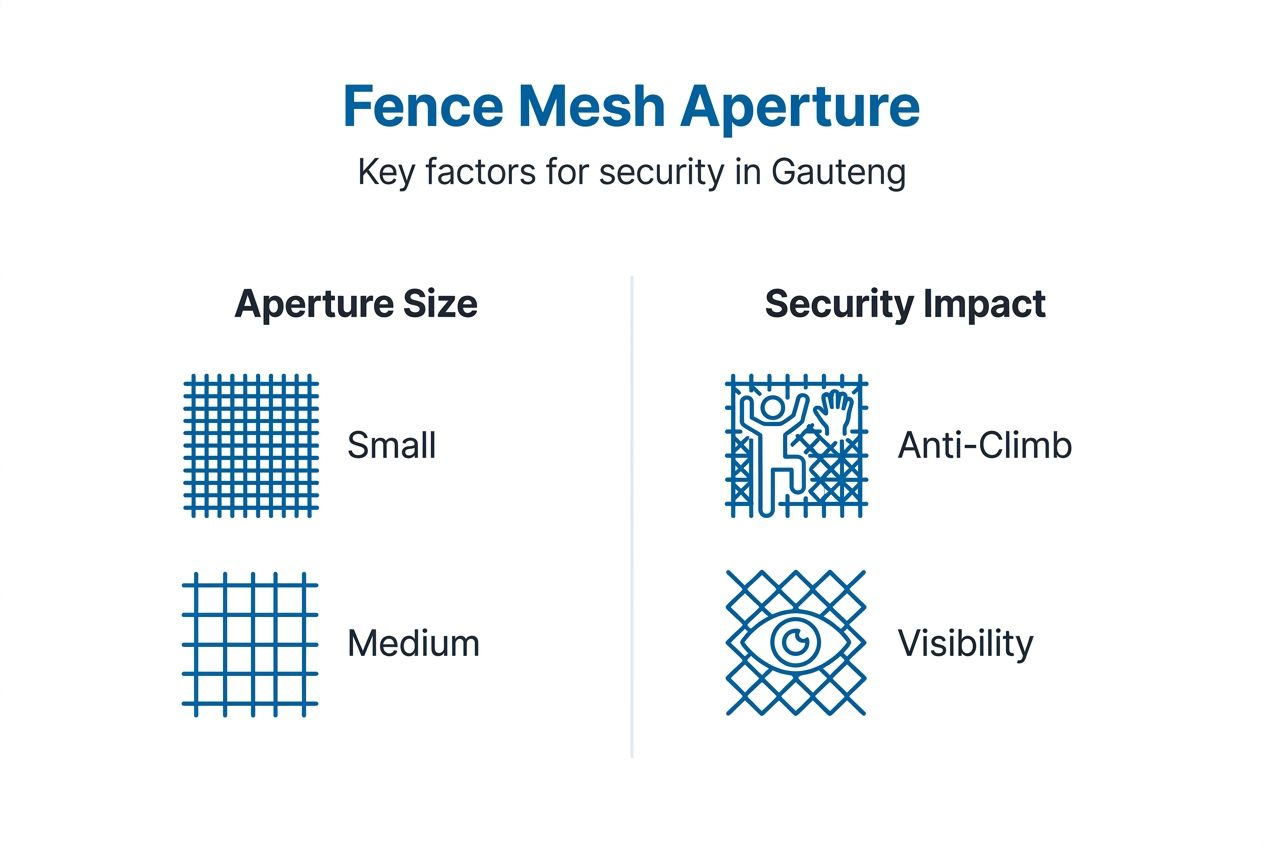
- Small apertures: 12mm to 12.5mm for maximum anti-climb protection
- Medium apertures: 20mm to 30mm balancing security with visibility
- Large apertures: 40mm to 50mm prioritizing surveillance over climb resistance
The aperture size you select establishes the foundation for your fence’s anti-climb capabilities and surveillance properties. Smaller openings physically prevent intruders from gaining handholds or footholds, making climbing attempts significantly more difficult. Conversely, larger openings allow security personnel or cameras to monitor activity through the fence more effectively.
Understanding these baseline concepts helps you recognize why understanding the definition of mesh fencing involves more than just selecting attractive materials. The aperture dimension fundamentally shapes whether your perimeter effectively deters unauthorized access while supporting your surveillance strategy.
How mesh aperture influences security and visibility
Aperture size creates an inherent tension between two critical fencing objectives: preventing climbing and enabling surveillance. Small mesh apertures reduce handholds, making fences exceptionally difficult to scale. When openings measure 12.5mm or less, intruders cannot insert fingers or toes to gain purchase, effectively eliminating the climbing threat.
Larger apertures exceeding 30mm tell a different security story. These openings provide excellent visibility for monitoring, allowing security personnel to observe activities clearly through the fence. However, they simultaneously create potential footholds that determined intruders might exploit during climbing attempts.
Medium apertures between 12.5mm and 30mm represent compromise territory. They maintain reasonable anti-climb characteristics while preserving adequate sight lines for surveillance purposes. This balanced approach works well for properties requiring both perimeter defense and visual monitoring capabilities.
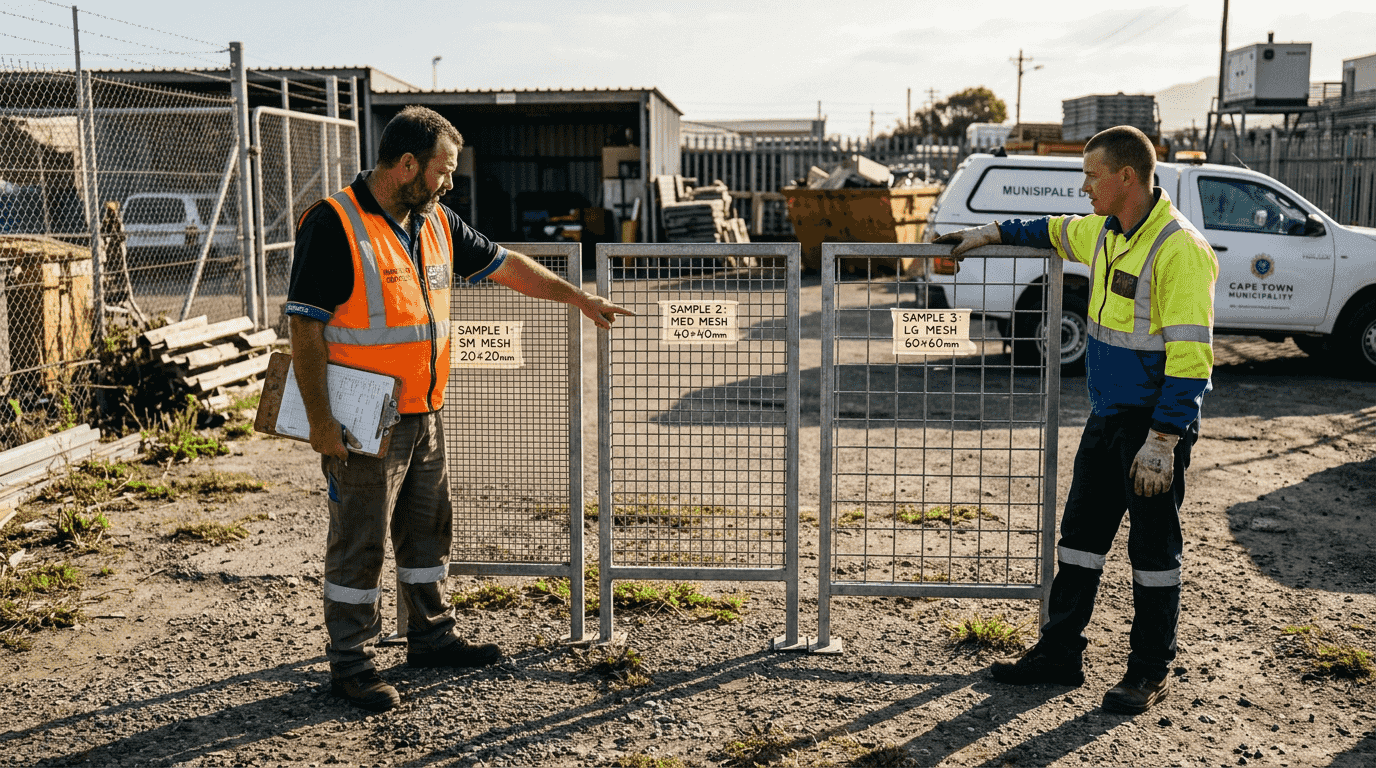
Pro Tip: Conduct a site-specific risk assessment before selecting aperture size. Properties facing high intrusion risk prioritize smaller apertures, while facilities requiring extensive monitoring benefit from slightly larger dimensions that enhance visibility.
Consider these visibility and security trade-offs:
| Aperture Size | Anti-Climb Security | Surveillance Visibility | Best Application |
|---|---|---|---|
| ≤12.5mm | Excellent | Limited | High-security perimeters |
| 20mm to 30mm | Good | Moderate | Balanced security needs |
| >30mm | Fair | Excellent | Surveillance-priority areas |
The security fencing terminology explained guide details how these dimensions interact with other fence characteristics. Your aperture choice should align with whether preventing unauthorized access or maintaining clear surveillance takes priority for your specific property requirements.
Materials and durability: maintaining effective apertures over time
Material selection directly impacts whether your fence apertures maintain their security-critical dimensions throughout years of environmental exposure. Galvanized steel and PVC coatings improve durability, preventing the rust and deformation that compromise aperture integrity over time.
Galvanized steel resists corrosion effectively in South Africa’s diverse climate conditions. The zinc coating protects underlying steel from moisture and oxidation, preventing rust that weakens mesh structure and potentially enlarges apertures. This corrosion resistance ensures your fence maintains its designed anti-climb properties for decades rather than deteriorating within years.
PVC-coated mesh adds an additional protective barrier against environmental wear. The polymer coating shields metal from direct exposure to rain, UV radiation, and temperature fluctuations. This protection prevents aperture warping or distortion caused by material degradation, maintaining consistent security performance.
Key material considerations for aperture longevity include:
- Corrosion resistance preventing rust-driven aperture enlargement
- Coating integrity maintaining aperture shape under UV exposure
- Material gauge ensuring mesh resists physical deformation
- Climate compatibility matching materials to local environmental stresses
Pro Tip: Inspect fence apertures annually for signs of enlargement or distortion. Early detection of material degradation allows targeted repairs before security performance becomes compromised.
Proper fencing materials complete guide implementation ensures apertures don’t gradually expand through corrosion or mechanical stress. Regular maintenance combined with quality materials supports sustained aperture effectiveness, preserving the security investment you make in perimeter protection.
Anti-climb and anti-cut mesh aperture standards and practices
South African security standards establish specific aperture requirements that fences must meet to qualify as genuinely anti-climb installations. Anti-climb fences require apertures ≤12.5mm to eliminate the footholds and handholds intruders need for scaling attempts.
These standards exist because controlled aperture dimensions physically prevent climbing by removing potential grip points. When mesh openings stay at or below 12.5mm, human fingers cannot penetrate sufficiently to gain purchase. Toes similarly cannot insert into gaps small enough to support body weight during climbing attempts.
Security rating systems emphasize aperture size alongside other anti-intrusion features. Compliance with these benchmarks ensures your fence delivers recognized protection levels rather than providing false security through inadequate specifications.
Key standard requirements include:
- Maximum 12.5mm aperture for certified anti-climb classification
- Minimum wire gauge specifications preventing aperture enlargement under load
- Coating requirements ensuring long-term aperture dimension stability
- Installation standards maintaining aperture consistency across fence sections
Property owners benefit from standards-compliant fencing through several mechanisms. Insurance providers often require certified security measures, making compliant installations potentially eligible for premium reductions. Standards also provide objective benchmarks for comparing fencing options rather than relying solely on supplier claims.
| Standard Element | Requirement | Security Benefit |
|---|---|---|
| Aperture size | ≤12.5mm | Eliminates climbing footholds |
| Wire gauge | Minimum 4mm | Prevents aperture deformation |
| Coating type | Hot-dip galvanized + PVC | Maintains aperture dimensions |
| Installation spacing | Maximum 3m post centers | Ensures consistent aperture integrity |
Compliance ensures maximum protection while maintaining fence durability over extended service life. Jumalu fencing products adhere to these specifications, delivering security performance that meets industrial fencing requirements and security rating fencing south africa benchmarks consistently.
Balancing environmental factors: wind resistance and visibility
Wind load calculations reveal how aperture size dramatically affects fence structural performance and longevity. Large apertures exceeding 30mm reduce wind pressure by up to 40% compared to smaller mesh configurations. This reduction decreases stress on fence posts and panels, extending operational lifespan while reducing maintenance requirements.
Smaller apertures create greater wind resistance by presenting more solid surface area to air movement. While this increased resistance doesn’t typically compromise properly installed fencing, it does elevate stress on mounting hardware and foundations. Gauteng’s seasonal wind patterns make this consideration particularly relevant for exposed properties.
Environmental factors requiring aperture consideration include:
- Seasonal wind velocities affecting structural loading
- UV exposure influencing coating degradation rates
- Temperature fluctuations causing expansion and contraction cycles
- Precipitation patterns impacting corrosion risk
Balancing wind resistance with security needs requires evaluating your property’s exposure characteristics. Properties in sheltered locations can prioritize smaller apertures for maximum anti-climb security. Exposed sites experiencing consistent strong winds benefit from slightly larger apertures that reduce structural stress while maintaining adequate security.
Visibility considerations also interact with wind resistance decisions. Larger apertures simultaneously improve sight lines and reduce wind load, making them attractive for surveillance-priority applications. Smaller apertures sacrifice some visibility while maximizing both anti-climb security and wind resistance challenges.
The optimal balance depends on weighing these competing factors against your specific security requirements and site conditions. Properties prioritizing intrusion prevention accept higher wind loads from smaller apertures. Facilities emphasizing surveillance and structural longevity lean toward larger dimensions that ease environmental stresses.
Common misconceptions about fence mesh aperture
The belief that smallest apertures always deliver superior security represents the most widespread fencing misconception. While small openings excel at preventing climbing, they can create blind spots that undermine surveillance effectiveness. 60% of security failures were linked to compromised surveillance visibility in installations prioritizing minimal apertures without considering monitoring needs.
Oversimplifying aperture selection ignores how fencing functions as part of integrated security systems. Surveillance cameras, lighting, and human monitoring all depend on adequate visibility through perimeter fencing. Excessively small apertures that block sight lines can paradoxically weaken overall security by preventing effective threat detection.
Common misunderstandings include:
- Assuming smallest aperture automatically means best protection
- Overlooking visibility requirements for surveillance systems
- Ignoring environmental factors affecting aperture performance
- Believing aperture size alone determines security effectiveness
- Expecting fencing to function independently of monitoring systems
Proper fencing design integrates aperture dimensions with complementary security measures rather than treating mesh openings as isolated variables. A fence with moderate apertures supporting excellent camera visibility often outperforms installations with minimal apertures creating surveillance dead zones.
Another misconception suggests all aperture standards apply universally across property types. Industrial facilities, residential properties, and commercial sites face different threat profiles requiring customized aperture specifications. Cookie-cutter approaches fail to address site-specific security challenges effectively.
Informed aperture selection prevents these common pitfalls by balancing anti-climb requirements against surveillance needs, environmental conditions, and integrated security system capabilities. Understanding the definition of mesh fencing in context produces better security outcomes than blindly pursuing minimal aperture dimensions.
Choosing the right mesh aperture for your property
Selecting optimal aperture dimensions requires systematic assessment of your property’s unique security profile and operational requirements. Follow this structured approach to identify specifications matching your actual needs.
- Assess security risk level by evaluating crime statistics, property value, and potential threats your facility faces.
- Define surveillance requirements including camera placement, monitoring frequency, and visibility distance needs.
- Evaluate environmental conditions such as wind exposure, coastal proximity, and UV intensity at your location.
- Review compliance requirements for insurance, industry regulations, and local security standards.
- Consult fencing specialists who can translate these factors into specific aperture recommendations.
Pro Tip: Document your security requirements in writing before consulting suppliers. Clear specifications prevent being oversold features you don’t need or undersold protection your property requires.
Different property types benefit from tailored aperture specifications:
| Property Type | Recommended Aperture | Primary Consideration |
|---|---|---|
| High-security industrial | ≤12.5mm | Maximum anti-climb protection |
| Commercial with surveillance | 20mm to 25mm | Balance security and visibility |
| Residential perimeter | 25mm to 30mm | Aesthetics with adequate security |
| Public facilities | 20mm to 30mm | Visibility for monitoring |
Local environmental factors in Gauteng influence material and coating requirements supporting long-term aperture integrity. Coastal properties need enhanced corrosion protection, while inland sites prioritize UV-resistant coatings. Wind exposure levels determine whether reduced aperture dimensions create acceptable structural loading.
Standards compliance ensures your selected aperture meets South African security benchmarks. Review 7 essential types of mesh fencing to understand how different configurations serve distinct security objectives.
ClamberPrufe Clear View fencing exemplifies optimized aperture design balancing anti-climb security with surveillance visibility. These systems integrate tested aperture dimensions with quality materials delivering sustained performance in Gauteng conditions.
Explore high-security mesh fencing solutions with Jumalu Fencing
Now that you understand how aperture dimensions affect security performance, exploring professionally engineered solutions helps translate this knowledge into effective perimeter protection. Jumalu Fencing offers mesh fencing configurations specifically designed for Gauteng’s security challenges, with aperture specifications meeting local standards.
Our 7 essential types of mesh fencing guide details how different aperture configurations serve distinct security objectives. Each option balances anti-climb protection with visibility requirements using tested specifications. Professional installation ensures aperture consistency across your entire perimeter, maintaining security integrity.
ClamberPrufe Clear View Fencing exemplifies aperture optimization, combining dimensions that eliminate climbing footholds while preserving surveillance sight lines. Quality materials with appropriate coatings maintain aperture integrity throughout years of environmental exposure. Jumalu fencing specialists help match aperture specifications to your property’s specific security profile, ensuring protection that actually works rather than just looks secure. Review our security fencing terminology explained resource for additional technical insights supporting informed decisions.
Frequently asked questions
What is fence mesh aperture and why is it important?
Fence mesh aperture measures the size of openings within security fencing mesh, typically expressed in millimeters. This dimension directly determines whether intruders can gain footholds for climbing while simultaneously affecting visibility for surveillance monitoring. Proper aperture selection balances these competing security requirements effectively.
How does aperture size affect fence security in Gauteng?
Smaller apertures measuring 12.5mm or less eliminate climbing opportunities by removing handholds and footholds intruders need for scaling attempts. These dimensions comply with South African anti-climb standards, delivering recognized security performance. Properties facing high intrusion risk benefit most from minimal aperture specifications.
Can larger apertures compromise surveillance and security?
Larger apertures enhance visibility for monitoring but reduce anti-climb protection by creating potential footholds. This trade-off requires balanced selection matching your property’s threat profile. Surveillance-priority facilities accept slightly reduced climb resistance for improved monitoring capabilities, while high-security sites prioritize small apertures despite visibility limitations.
What materials best maintain fence apertures in Gauteng’s climate?
Galvanized steel with PVC coating provides optimal corrosion resistance and aperture stability in local conditions. The zinc galvanization prevents rust that enlarges apertures over time, while polymer coating shields mesh from UV degradation. These materials maintain designed security performance throughout decades of environmental exposure.
Where can I learn more about fence mesh options and standards in South Africa?
Jumalu Fencing’s comprehensive guides cover 7 essential types of mesh fencing, industrial fencing requirements, and security rating fencing south africa specifications. These resources provide detailed technical information supporting informed aperture selection and standards compliance for Gauteng properties.