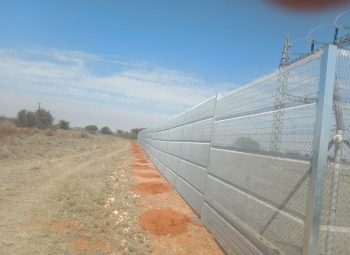
Commercial properties across Gauteng face a persistent threat. Break-ins continue despite standard fencing, costing businesses thousands in losses and downtime. Yet 68% of surveyed Gauteng facilities experienced fewer break-ins within 6 months after installing high-security fencing. This guide walks you through selecting, installing, and maintaining effective perimeter security that protects your property and enhances its professional appearance.
Table of Contents
- Prerequisites And Compliance Requirements
- Choosing The Right High-Security Fencing Material
- Step-By-Step Installation Process
- Troubleshooting And Common Mistakes
- Expected Timelines And Outcomes
- Secure Your Gauteng Property With Jumalu Fencing Solutions
- Frequently Asked Questions About High-Security Perimeter Fencing
Key takeaways
| Point | Details |
|---|---|
| Compliance is mandatory | SANS 10400 standards require minimum 2.4-meter height for commercial properties in South Africa |
| Material selection matters | ClamberPrufe Clear View fencing offers superior anti-climb, anti-cut protection with unobstructed visibility |
| Installation timeline | Professional installation takes 1 to 3 weeks with minimal operational disruption |
| Measurable security gains | Facilities report 68% reduction in break-ins within six months of proper installation |
| Long-term durability | Quality materials last over 15 years with basic maintenance protocols |
Prerequisites and compliance requirements
Before breaking ground, you need to understand the legal framework governing commercial fencing in South Africa. Fence height should comply with SANS 10400 standards, with minimum 2.4 meters height recommended for commercial security. This isn’t just about ticking boxes. Proper compliance protects you from municipal fines and ensures your insurance remains valid if a security incident occurs.
Start with a comprehensive site survey. You need accurate boundary measurements verified against your property deed. Soil assessment comes next because foundation stability depends on understanding what’s beneath the surface. Sandy soil requires different foundation approaches than clay-heavy ground. Understanding your property boundaries and security needs is crucial for effective fencing solutions.
Your security assessment should be specific to your industry. A pharmaceutical warehouse faces different threats than a retail parking lot. Consider these factors:
- Current vulnerability points like unmanned gates or low-visibility corners
- Foot traffic patterns around your perimeter
- Vehicle access requirements for deliveries and emergency services
- Integration needs with existing alarm systems or CCTV
- Budget allocation for materials, labor, and ongoing maintenance
Pro Tip: Schedule your site survey during operating hours to observe real-world traffic patterns and identify security gaps you might miss on weekends.
Financing doesn’t have to be a roadblock. Many suppliers offer payment plans that spread costs over 12 to 24 months. Factor in the cost of doing nothing. A single break-in can cost more than proper security fencing in Gauteng through stolen goods, property damage, and increased insurance premiums. Understanding perimeter fencing benefits helps justify the investment.
Choosing the right high-security fencing material
Material selection determines whether your fence is a serious deterrent or just an obstacle. Standard chain link might look secure, but experienced intruders cut through it in seconds. You need something better.
ClamberPrufe Clear View fencing’s 2.8mm wire diameter and 12.7mm mesh openings provide superior anti-climb and anti-cut protection, enhancing visibility and longevity. That thicker wire resists bolt cutters far better than standard 2mm alternatives. The tight mesh spacing makes climbing nearly impossible without specialized equipment.
Here’s how leading materials compare:
| Material | Anti-Climb Rating | Cut Resistance | Weather Resistance | Visibility | Typical Cost/Meter |
|---|---|---|---|---|---|
| ClamberPrufe Clear View | Excellent | Excellent | 15+ years | Unobstructed | ZAR 800-1,200 |
| Standard Chain Link | Poor | Poor | 5-8 years | Good | ZAR 200-400 |
| Welded Mesh | Good | Moderate | 8-12 years | Moderate | ZAR 500-700 |
| Palisade Steel | Good | Good | 10-15 years | Limited | ZAR 700-1,000 |
Weather resistance matters in Gauteng’s climate. Summer storms and UV exposure degrade inferior materials quickly. Galvanized steel with powder coating withstands these conditions far longer than basic galvanizing alone. Rust equals weakness, and weakness invites break-ins.
Aesthetics influence how clients and visitors perceive your business. A prison-like perimeter sends the wrong message. Clear view fencing benefits include maintaining professional appearance while maximizing security. The transparent design lets natural surveillance work in your favor. Passersby and security patrols can spot suspicious activity easily.
Pro Tip: Request material samples from suppliers and test them yourself with common tools. If you can bend or cut the sample with household items, it won’t stop determined intruders.
Gate compatibility deserves attention during material selection. Your fence is only as strong as its access points. Choose materials that integrate seamlessly with automated gate systems and access control hardware. Clear View fencing in Gauteng installations typically include matching gate frames for consistent security levels.
Step-by-step installation process
Proper installation transforms quality materials into effective security. Skip steps and you compromise everything. Here’s the proven sequence:
- Foundation preparation: Excavate post holes to minimum 600mm depth, deeper for sandy soil. Pour concrete footings and allow 48 hours curing time. Rushed foundations lead to leaning posts within months.
- Post installation: Set corner and gate posts first using laser levels for perfect vertical alignment. Space intermediate posts according to panel specifications, typically 2.5 to 3 meters apart. Overspacing creates weak points.
- Panel mounting: Attach panels starting from corners, working toward center sections. Use manufacturer-specified brackets and fasteners. Generic hardware fails under stress.
- Tensioning: Apply uniform tension across all panels using tensioning bars and clamps. Loose panels sag and create climb points. Overtightened panels warp and weaken.
- Gate fitting: Install gate frames with heavy-duty hinges rated for commercial use. Align gates for smooth operation without dragging or binding. Test multiple times before final securing.
- Security enhancements: Add razor wire or electric fencing along top rails where regulations permit. Install anti-lift brackets on gate bottoms to prevent lifting attacks.
- Final inspection: Check every connection point, verify post stability, and test gate operation. Document with photos for warranty purposes.
Pro Tip: Schedule installation during dry weather. Concrete doesn’t cure properly in rain, and wet ground makes accurate leveling nearly impossible.
Installation completed within 1-3 weeks aligns with industry standards, optimizing cost and minimizing disruption. Phased installation lets you maintain operations while securing your perimeter section by section. Start with highest-risk areas first.
Safety protocols protect your workers and your timeline. Require proper PPE including gloves, safety glasses, and steel-toed boots. Power tool accidents cause most installation injuries. Brief your team daily on specific hazards for that day’s work.
Post-installation, walk the entire perimeter checking for gaps, loose fasteners, or alignment issues. Address problems immediately because minor issues become major vulnerabilities quickly. Review the ClamberPrufe Clearview fencing installation guide for detailed specifications. Regular checks following the fencing maintenance guide ensure long-term effectiveness.
Troubleshooting and common mistakes
Even experienced installers make errors that compromise security. Recognizing these mistakes early prevents expensive fixes later.
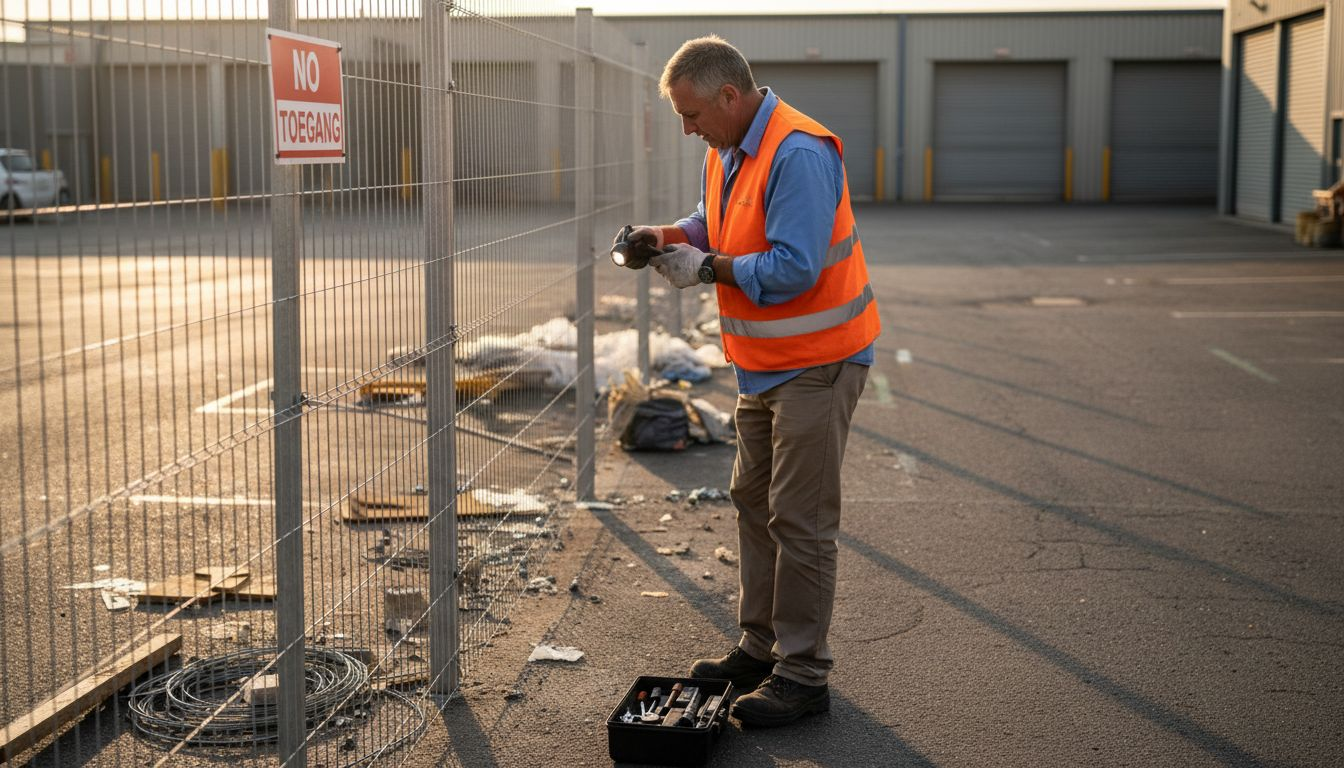
Ignoring local regulations and improper foundation are top causes of fencing failure leading to increased security risks. Municipal inspectors can order removal of non-compliant fencing, wasting your entire investment. Verify industrial fencing regulations before purchasing materials.
Foundation failures stem from inadequate soil analysis. Clay soil expands and contracts with moisture changes, shifting posts unless foundations extend below the frost line. Sandy soil requires wider footings to distribute weight. Professional soil testing costs a few hundred rand but prevents thousands in reconstruction.
Incorrect mesh tensioning creates vulnerability. Loose panels allow intruders to spread wires and squeeze through. They also collect wind load unevenly, stressing attachment points until failure. Use tensioning tools, not brute force, to achieve manufacturer specifications.
Skipping anti-corrosion treatments guarantees premature rust. Galvanized steel needs powder coating for full weather protection. Cut edges where panels are trimmed expose raw metal that rusts first. Touch up all cuts with zinc-rich paint immediately after installation.
Common installation errors include:
- Installing posts in existing holes from old fencing instead of fresh excavation
- Using mismatched hardware that corrodes at different rates
- Failing to account for ground slope, creating gaps at bottom
- Placing gates in high-traffic corners where vehicles clip them
- Neglecting underground utility marking before digging
Safety shortcuts cause injuries and project delays. Never work alone when handling large panels. Wind turns panels into sails that can knock workers off ladders. Secure all materials before leaving the site overnight because theft of installation materials is common.
Expected timelines and outcomes
Realistic expectations help you plan properly and measure success. Commercial fencing projects typically span 1 to 3 weeks depending on perimeter length and complexity. A 200-meter perimeter with two vehicle gates takes about 10 working days in good weather.
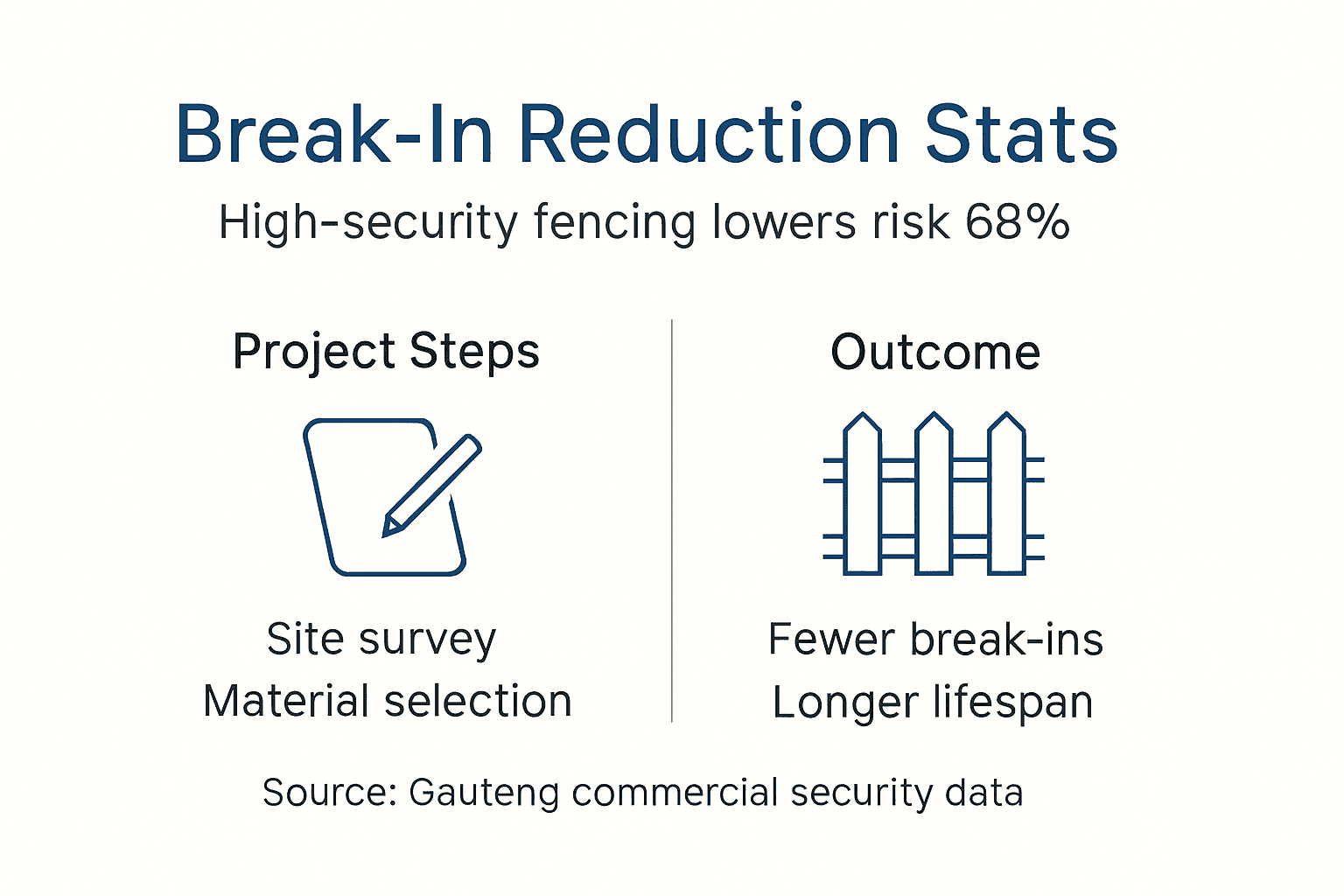
Security improvements are measurable. Standard installation timelines range 1-3 weeks with a 68% reduction in break-ins within 6 months post-installation. You should see immediate deterrent effects as visible security discourages opportunistic criminals. Organized attempts drop significantly once word spreads about improved perimeter security.
Fence materials show no corrosion or degradation within 15 years with proper maintenance. That longevity makes high-security fencing a sound investment compared to cheaper alternatives requiring replacement every 5 to 7 years.
Cost expectations:
| Component | Price Range (ZAR/meter) | Notes |
|---|---|---|
| ClamberPrufe panels | 600-900 | Varies with height specification |
| Post and concrete | 150-200 | Includes labor for installation |
| Gates (per unit) | 8,000-15,000 | Depends on width and automation |
| Razor wire addition | 80-120 | Optional security enhancement |
| Installation labor | 200-300 | Professional crews with warranty |
Your total project cost depends on perimeter length and feature selection. A typical 300-meter industrial perimeter with three access gates runs between ZAR 240,000 and ZAR 360,000. Financing options make this manageable through monthly payments of ZAR 4,000 to ZAR 6,000 over three years.
Key performance indicators to track:
- Security incident frequency before and after installation
- Response time improvements from better visibility
- Insurance premium changes reflecting reduced risk
- Maintenance costs compared to previous fencing
Combining physical barriers with electronic security multiplies effectiveness. CCTV coverage becomes more valuable when intruders can’t quickly breach the perimeter. Motion sensors trigger faster because fence climbing takes time, giving security personnel warning. Understanding commercial security fencing benefits helps you maximize your investment.
Secure your Gauteng property with Jumalu fencing solutions
You now understand what effective perimeter security requires. Implementation is the next step. Jumalu ClamberPrufe Clear View fencing delivers the anti-climb, anti-cut protection this guide emphasizes, manufactured to exceed SANS 10400 requirements. Every panel undergoes quality control testing before leaving the factory.
Our installation teams have secured over 500 commercial properties across Gauteng since 2015. We handle everything from initial site survey through final compliance certification. You get a single point of contact managing permits, materials, and labor. No coordination headaches for you.
Wondering which specification fits your property? Compare Clear View fencing options to see detailed technical specifications and application recommendations. Our professional fencing installation services include 12-month workmanship warranty and ongoing maintenance support. Request a free site assessment and quote today.
Frequently asked questions about high-security perimeter fencing
What is the minimum legal fencing height for commercial properties in Gauteng?
South African fencing compliance requirements specify 2.4 meters minimum for commercial perimeter security under SANS 10400. Some municipalities require additional height for specific industries like pharmaceutical or fuel storage. Always verify local building codes before ordering materials.
Why is ClamberPrufe Clear View fencing better than standard chain link?
ClamberPrufe uses 2.8mm wire diameter compared to 2mm in standard chain link, providing 40% greater cut resistance. The 12.7mm mesh spacing prevents finger and toe holds that make chain link easy to climb. Powder coating over galvanizing extends lifespan to 15+ years versus 5-8 years for basic chain link.
How long does professional installation take and will it disrupt operations?
Typical commercial installations complete in 1 to 3 weeks depending on perimeter length. We schedule work in phases to maintain access to your facility. Most businesses continue normal operations with minor adjustments to delivery routes during installation.
What maintenance does high-security fencing require?
Inspect your fence quarterly for loose fasteners, rust spots, or damage. Tighten hardware, touch up any coating damage with zinc-rich paint, and clear vegetation within 500mm of fence line. Annual professional inspection catches issues before they compromise security. Properly maintained ClamberPrufe fencing requires minimal intervention over its lifespan.
Should I integrate automated gates with my new perimeter fencing?
Automated gates enhance security by controlling access and creating audit trails of entry and exit. They eliminate the security gap created when staff prop gates open for convenience. Integration with access control systems lets you grant temporary access to contractors without physical key distribution. Most commercial properties see ROI within 18 months through reduced security staffing needs.
Recommended
- Why Use Security Fencing in Gauteng Today – Jumalu Fencing
- Enhance Security with Clear View Fencing in Gauteng – Jumalu Fencing
- Fencing and Urban Security – Impact on South African Spaces – Jumalu Fencing
- Commercial Security Fencing Benefits: Complete Guide South Africa – Jumalu Fencing
- Wie Sie eine WordPress-Website vor Hackern schützen! – Webdesign Rosenheim Frank Reinecke