TL;DR:
- A modern metal fence from steel alloys provides security and a sleek visual profile. Proper selection, installation, and maintenance are essential to maximize lifespan and property value. Site-specific assessment ensures the fence system matches the security threat level and environmental conditions.
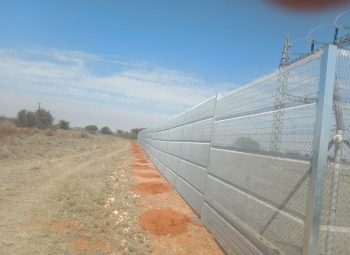
A metal modern fence is defined as a boundary enclosure constructed from steel or other metal alloys, engineered to deliver measurable security performance alongside a clean, contemporary visual profile. The industry term for this category is “security perimeter fencing,” and it covers systems ranging from welded mesh panels to vertical steel palisades. Professionally installed metal fencing recovers 50–85% of its cost in increased property value. That figure alone makes the choice of fencing type a financial decision, not just a security one. For property owners and facilities managers in South Africa, selecting the right system means weighing SANS 10400 structural standards, local climate conditions, and site-specific risk levels before a single post goes into the ground.
What are the main types of metal modern fence and their security features?
Three fence types dominate the South African market for contemporary metal fencing: Clear View mesh, 358 anti-climb mesh, and Palisade fencing. Each serves a different security tier and aesthetic requirement.
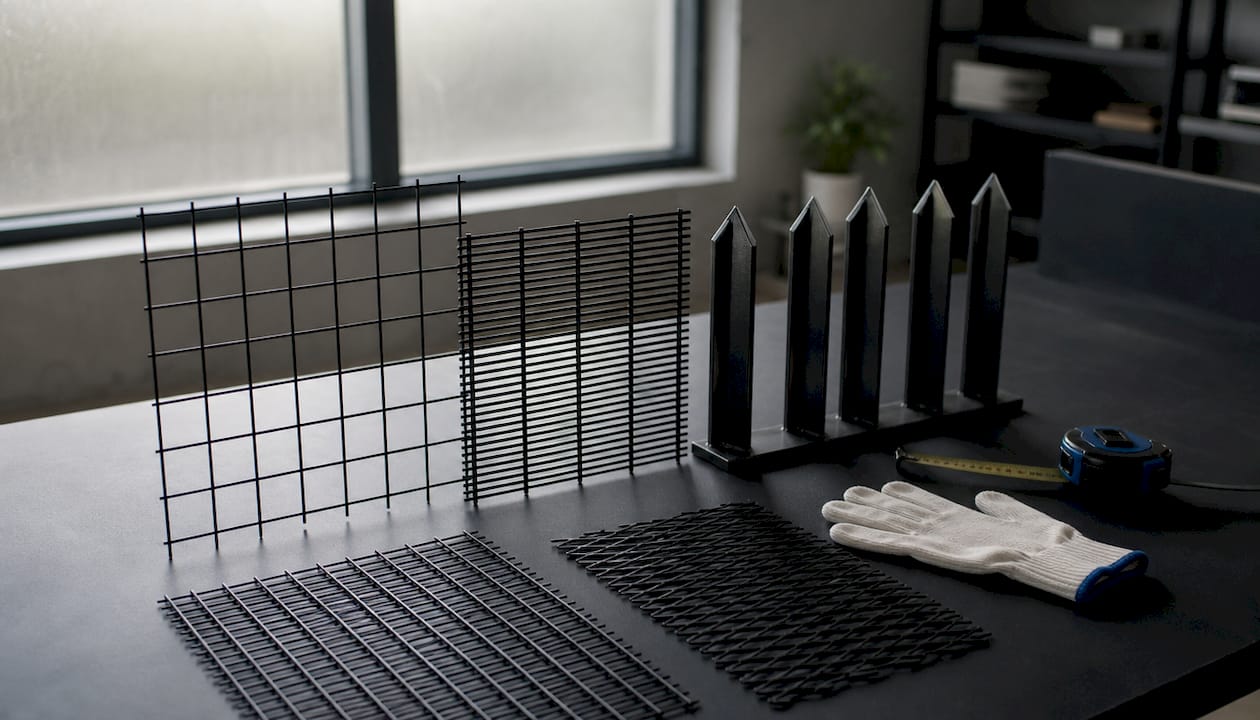
Clear View fencing uses welded wire mesh panels with a relatively open aperture, giving security personnel and cameras an unobstructed line of sight across the perimeter. Jumalutech’s ClamberPrufe Clear View Fencing is built on this principle, combining visibility with anti-climb geometry. Clear View fencing lasts 15–20 years, compared to 8–12 years for standard chain-link. That extended lifespan reduces total cost of ownership significantly over a 20-year facility plan.
358 anti-climb mesh takes security further. Its mesh openings measure approximately 7x12mm with a 4mm wire diameter, making it resistant to cutting and climbing. The tight aperture prevents fingers and standard bolt cutters from gaining purchase. Optional razor wire topping raises the deterrence level further. This system suits prisons, substations, data centers, and any site where forced entry is a credible threat.
Palisade fencing offers a different approach. Vertical steel pales with pointed or spear tops create a strong visual deterrent. Palisade heights range from 1.8m to 3.6m, covering everything from residential boundaries to industrial perimeters. The system costs less than 358 mesh but provides a lower anti-cut rating, making it better suited to medium-risk sites.
| Fence type | Security level | Typical lifespan | Visibility | Best use case |
|---|---|---|---|---|
| Clear View mesh | High | 15–20 years | Excellent | Commercial, residential, schools |
| 358 anti-climb mesh | Very high | 20+ years | Good | High-security industrial, government |
| Palisade | Medium to high | 15–25 years | Partial | Residential, medium-risk commercial |
- Clear View: best balance of aesthetics and security for most properties
- 358 mesh: maximum anti-cut and anti-climb protection
- Palisade: cost-effective deterrence for medium-risk sites
Pro Tip: Request a site security assessment before specifying a fence type. A 358 mesh system on a low-risk residential boundary is over-engineering. A Clear View system on a high-risk industrial site may be under-engineering. Match the product to the threat level.
How to choose the right metal modern fence for your property
Selecting the correct contemporary metal fence starts with an honest assessment of your site’s risk profile. A residential property in a low-crime suburb has different requirements than a logistics depot or a school campus. The fence type, height, and finish must all align with that risk profile.
The key factors to evaluate are:
- Security risk level. High-risk sites need 358 mesh or reinforced Clear View with anti-climb topping. Medium-risk sites perform well with standard Clear View or Palisade.
- Property type and terrain. Sloped ground requires raked or stepped panel installation. Flat industrial sites allow standard panel runs with maximum post spacing.
- Budget. Palisade costs less upfront. Clear View and 358 mesh cost more initially but deliver lower maintenance costs over a 15–20 year lifespan.
- Environmental conditions. Coastal properties face accelerated corrosion from salt air. Hot-dip galvanizing plus powder coating is the minimum finish specification for any fence within 5km of the ocean.
- Gate and access integration. A perimeter fence is only as secure as its weakest access point. Automated sliding gates and pedestrian turnstiles must be specified at the same time as the fence to avoid mismatched security ratings.
For a detailed comparison of Clear View and Palisade systems, including cost and security trade-offs, Jumalutech publishes a complete guide covering both options. When terrain is complex or the site spans multiple risk zones, consulting a professional installer before finalizing specifications prevents costly redesigns after installation begins.
Installation best practices for structural integrity and longevity
Correct installation determines whether a metal fence performs to its rated specification or fails prematurely. The most common installation errors involve post placement, wire tensioning, and non-compliance with SANS 10400 structural requirements.
Follow these installation steps to meet South African commercial standards:
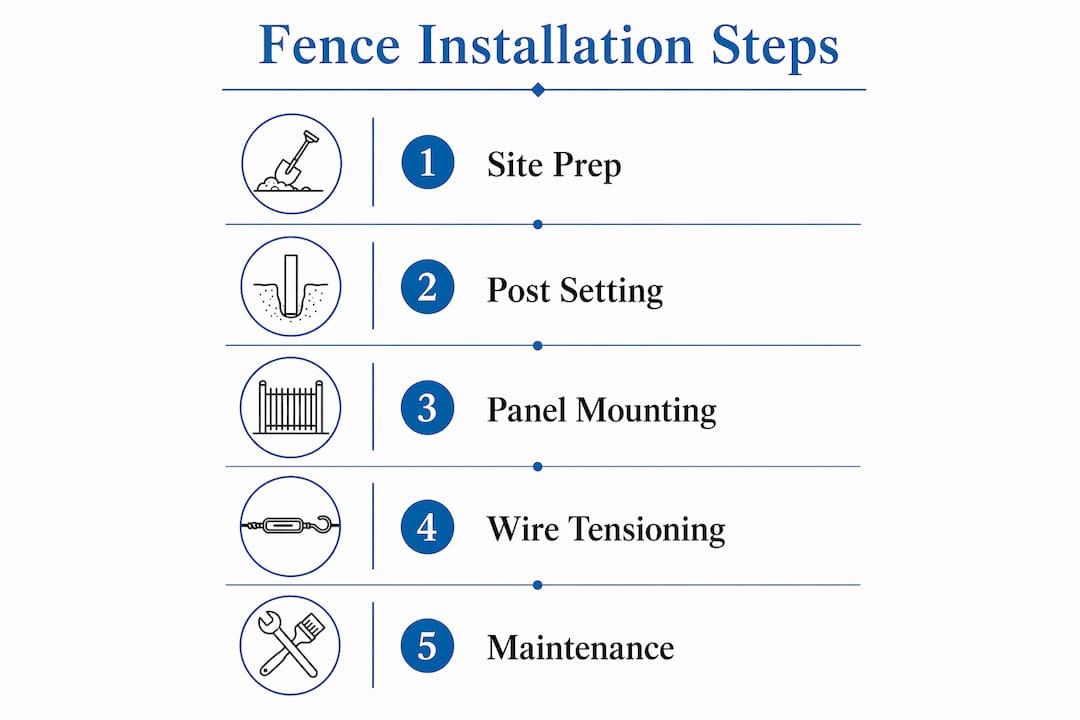
- Survey the perimeter and mark straining post positions. Straining posts must be placed at every corner, at each gate opening, and at maximum 200m intervals on straight runs. Exceeding 200m between straining posts allows the fence line to bow under wind load and wire tension.
- Set concrete footings to the correct depth. Post depth depends on soil type and fence height. Sandy or loose soils require deeper footings and may need concrete collars to prevent lateral movement.
- Install braces at all straining posts. Diagonal braces transfer tension load from the fence wire into the ground rather than into the post itself. This is a SANS 10400 requirement for commercial installations.
- Tension woven mesh wire to 1.5 kN per wire. The optimal wire tension is 1.5 kN, with a hard maximum of 2.0 kN. Exceeding 2.0 kN risks wire snapping during winter thermal contraction.
- Stagger tensioning across the mesh panel. Tensioning one wire fully before moving to the next creates uneven stress distribution and distorts the mesh geometry. Work progressively across the full panel width.
- Inspect all connections and fixings before signing off. Check that all clamps, ties, and panel fixings meet the torque specifications for the fence system. Loose fixings are the primary cause of panel rattle and early corrosion at contact points.
Pro Tip: Never tension steel wire fencing to its maximum specification in autumn. Thermal contraction during winter reduces wire length, and a wire already at 2.0 kN will snap. Set tension at 1.5 kN and allow for seasonal adjustment.
Industrial fencing installation standards for secure sites go into further detail on post spacing, concrete mix ratios, and SANS 10400 compliance requirements. Facilities managers overseeing large perimeter projects should review those standards before issuing a tender.
Maintenance and longevity: how to preserve your fence’s performance
A metal garden fence or commercial perimeter system requires scheduled maintenance to reach its rated lifespan. Neglected fences lose structural integrity years before their expected end of life, creating both security gaps and unnecessary replacement costs.
The core maintenance tasks are:
- Monthly visual inspection. Walk the full perimeter and check for loose panels, broken wires, coating damage, and signs of rust. Early detection of coating failure prevents corrosion from spreading to the base metal.
- Quarterly tension check. Wire tension changes with seasonal temperature variation. Check and adjust tension to the 1.5 kN specification every three months, particularly after winter.
- Biannual hinge and gate lubrication. Gate hinges, locking mechanisms, and automated drive units need lubrication every six months. Dry hinges accelerate wear and create noise that signals a maintenance backlog to site visitors.
- Annual coating inspection and touch-up. Powder-coated surfaces chip at impact points and at fixing locations. Touch up bare metal within 30 days of identifying damage to prevent rust formation beneath the coating.
- Avoid over-tightening during maintenance. The most common maintenance error is re-tensioning wire beyond 2.0 kN after a visual inspection suggests slack. Always use a tension gauge rather than estimating by hand.
Pro Tip: Keep a maintenance log for each fence section, recording tension readings, coating condition, and any repairs. This log supports warranty claims and provides evidence of due diligence if a security breach occurs.
For a structured maintenance schedule specific to ClamberPrufe systems, Jumalutech’s fencing maintenance guide covers inspection intervals, lubrication specifications, and coating repair procedures in detail.
Key takeaways
A metal modern fence delivers its full security and lifespan value only when the correct type is specified for the site’s risk level, installed to SANS 10400 standards, and maintained on a scheduled basis.
| Point | Details |
|---|---|
| Match fence type to risk level | Use 358 mesh for high-security sites and Clear View or Palisade for medium-risk properties. |
| Specify the right finish | Coastal sites require hot-dip galvanizing plus powder coating to resist salt-air corrosion. |
| Follow SANS 10400 on post spacing | Place straining posts at corners, gates, and every 200m maximum to prevent fence distortion. |
| Control wire tension precisely | Set tension at 1.5 kN per wire and never exceed 2.0 kN to prevent seasonal snapping. |
| Schedule regular maintenance | Quarterly tension checks and annual coating inspections extend fence lifespan to its rated 15–20 years. |
Why I think most property managers underestimate fence specification
After years of observing fencing projects across southern Africa, the pattern I see most often is not a bad product choice. It is a mismatch between the fence specification and the actual site conditions. A facilities manager selects a Clear View system because it looks right on paper, but nobody checks whether the coastal salt air requires a heavier galvanizing specification. Two years later, the coating is failing and the warranty is void.
The second mistake I see regularly is treating the fence as a standalone decision. Gates, access control, and CCTV camera placement all interact with the fence geometry. A fence with excellent anti-climb properties but poorly positioned camera angles still has blind spots. Security is a system, and the fence is one component of it.
My honest view is that the investment in a professional site assessment before specification pays for itself within the first maintenance cycle. The cost of correcting a misspecified fence, whether through early replacement or emergency repairs, always exceeds the cost of getting it right the first time. Jumalutech’s approach of combining product supply with professional installation and site-specific advice reflects exactly this principle. The fence you see in a brochure and the fence that performs on your specific site are not always the same product.
— Jaline
Jumalutech’s metal fencing solutions for South African properties
Jumalutech supplies, manufactures, and installs the full range of modern metal fencing systems described in this article, with particular depth in ClamberPrufe Clear View Fencing for residential, commercial, and industrial sites across Gauteng and South Africa.
The ClamberPrufe product range covers three security tiers: ClamberPrufe HiSecure for maximum perimeter protection, ClamberPrufe SimpliSecure for commercial and residential applications, and ClamberPrufe EconoSecure for budget-conscious projects without compromising core security. Each system is available with professional installation, ensuring SANS 10400 compliance from day one. For property owners and facilities managers who want to understand the full range of fencing terminology and product specifications before requesting a quote, Jumalutech’s security fencing terminology guide is the most thorough reference available for the South African market.
FAQ
What is a metal modern fence?
A metal modern fence is a security perimeter system built from steel or metal alloys, designed to combine anti-climb or anti-cut protection with a clean contemporary appearance. Common types include Clear View mesh, 358 anti-climb mesh, and Palisade fencing.
How long does a metal fence last in South Africa?
Clear View fencing lasts 15–20 years under normal conditions, compared to 8–12 years for standard chain-link. Lifespan depends on finish quality, maintenance frequency, and environmental exposure, particularly in coastal areas.
What wire tension is correct for metal mesh fencing?
The optimal tension is 1.5 kN per wire, with a hard maximum of 2.0 kN. Exceeding 2.0 kN risks wire snapping during winter thermal contraction, which is a common and avoidable installation failure.
Does a metal fence increase property value?
Professionally installed metal fencing recovers 50–85% of its installation cost in increased property value. The actual return depends on fence type, installation quality, and the property’s location and use.
How often should a metal fence be inspected?
Visual inspections should occur monthly, tension checks quarterly, and full coating inspections annually. Gate hinges and automated access components require lubrication every six months to maintain reliable operation.