TL;DR:
- Choosing the right fence requires careful planning of purpose, regulations, and materials to ensure long-term security and compliance.
- Proper installation, gate quality, and maintenance significantly impact a fence’s durability, security, and property value.
Choosing the right fence for your property involves far more than selecting a style you like and calling a contractor. The things to consider before fencing span legal requirements, material performance, installation complexity, long-term maintenance costs, and security specifications that most property owners underestimate until something goes wrong. A fence installed without proper planning can fail structurally, violate local bylaws, create neighbour disputes, or deliver far less security than expected. This guide covers every critical factor, in the order you need to address them, so your fencing investment delivers lasting value.
Table of Contents
- Key takeaways
- 1. The things to consider before fencing: defining your purpose
- 2. Legal, regulatory, and neighbourhood requirements
- 3. Types of fencing materials: comparing your options
- 4. Installation considerations: site challenges, gates, and professional vs. DIY
- 5. Fence maintenance advice and long-term cost factors
- 6. Decision framework: matching your priorities to the right fencing solution
- My perspective: what most property owners get wrong
- Fencing solutions designed for security and longevity
- FAQ
Key takeaways
| Point | Details |
|---|---|
| Define your purpose first | Your primary goal, whether security, privacy, or boundary marking, determines height, material, and design before anything else. |
| Verify regulations before purchasing | Permit requirements, height restrictions, and HOA rules can void or require removal of non-compliant fences at your expense. |
| Match material to function and climate | Each fencing material carries distinct trade-offs in strength, weather resistance, lifespan, and total cost of ownership. |
| Gates are your weakest link | Gate post sizing, hardware quality, and operational discipline determine whether your fence actually delivers security. |
| Plan for lifetime costs, not just installation | Maintenance demands and repair cycles affect the true cost of a fence far more than the initial material price. |
1. The things to consider before fencing: defining your purpose
Before comparing materials or requesting quotes, you need to articulate precisely what the fence must accomplish. The purpose shapes every subsequent decision in your fence planning guide, from height and opacity to material grade and gate placement.
Common fencing purposes include:
- Security and intrusion deterrence: Requires height, anti-climb features, visibility for surveillance, and structural rigidity against forced entry.
- Privacy: Calls for solid panels or dense mesh, though this comes with a trade-off in surveillance capability.
- Boundary definition: Often a lighter, more aesthetic option suffices where security is not the primary concern.
- Pet and child containment: Demands attention to gap sizing, digging prevention at the base, and gate latch positioning.
- Aesthetic enhancement: Prioritises style and finish compatibility with the property and neighbourhood character.
Security-focused installations benefit significantly from anti-climb fencing design, which limits footholds and integrates deterrent features directly into the fence structure. It is also worth noting that open mesh fencing improves surveillance visibility while solid panels reduce it, meaning privacy and security goals sometimes pull in opposite directions.
For properties where both privacy and security matter, a layered approach works well. Some landscape professionals advocate for living fences with layered plantings as a complementary front boundary treatment, providing aesthetic softness without sacrificing perimeter integrity where security fencing runs along the rear and sides.
Pro Tip: Write down your top two purposes before approaching any supplier. If a contractor cannot address both clearly, their solution is probably not right for your property.
2. Legal, regulatory, and neighbourhood requirements
This is the area where the most expensive mistakes happen. Understanding fencing regulations to know before you commit to any purchase protects you from forced removal, fines, and neighbour disputes that can escalate into legal proceedings.
Key regulatory considerations include:
- Permits and fees: Most jurisdictions require permits for fences exceeding 6 feet in backyards and 3 to 4 feet in front yards, with permit fees ranging from R450 to R3,600 (approximately $25 to $200 USD) depending on the municipality and project scope.
- Height restrictions: Many municipalities limit fence height to 6 feet or less, which can conflict with high-security specifications requiring 8-foot panels with anti-climb toppers.
- HOA approval: Homeowners’ associations frequently govern material type, colour, and style. Submit your plan for written approval before ordering materials.
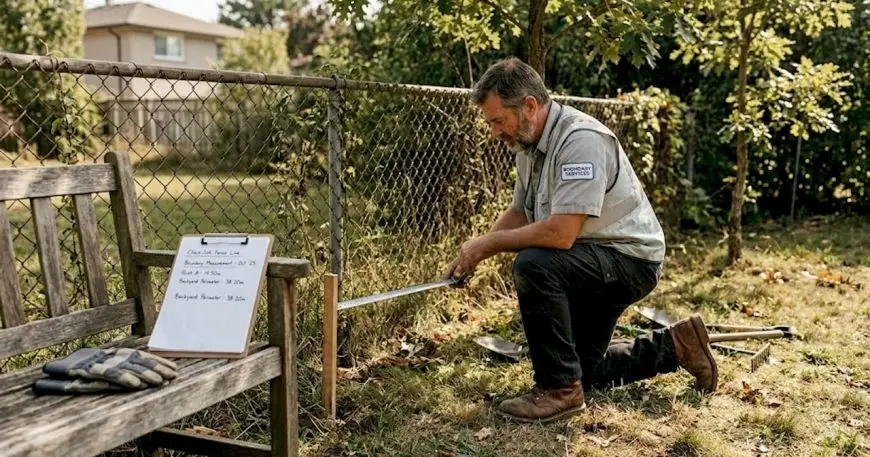
- Setback requirements: Most local codes require fences to be set back a defined distance from the property boundary or road reserve. A professional property survey confirms the exact boundary before installation.
- Pool safety regulations: Pool enclosure fences must include self-closing, self-latching gates with latch releases positioned at least 54 inches above grade, with gates swinging outward away from the pool area.
Pro Tip: Contact your local municipality’s building control department before requesting quotes. Ask specifically about setback distances, height limits, and whether your intended material requires a building plan submission. This single step saves weeks of delays mid-project.
Neighbour engagement is also underrated. A brief conversation before you start work, explaining your plans and timeline, prevents the majority of objections that would otherwise surface mid-installation.
3. Types of fencing materials: comparing your options
Selecting from the available types of fencing materials requires you to weigh security performance, aesthetic outcome, climate resilience, and total cost of ownership against each other. No single material excels in every category.
| Material | Security rating | Maintenance demand | Typical lifespan | Cost range (per linear metre) |
|---|---|---|---|---|
| Timber / wood | Low to medium | High (sealing, painting) | 10 to 20 years | Moderate |
| Chain-link | Medium | Low to medium | 20 to 30 years | Low |
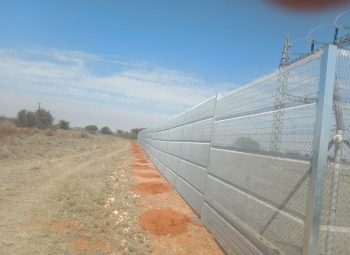
| Clear view mesh panel | High | Low | 25 to 40+ years | Medium to high |
| Vinyl / PVC | Low to medium | Very low | 20 to 30 years | Medium |
| Ornamental iron | Medium to high | Medium (rust prevention) | 30+ years | High |
| Palisade steel | High | Low to medium | 25+ years | Medium to high |
Maintenance requirements vary significantly by material. Wood fencing requires regular sealing or painting, metal mesh may need rust prevention treatment in coastal or high-humidity environments, and vinyl offers comparatively low upkeep. For security applications, clear view mesh panels and palisade steel are preferred because they combine structural rigidity with visibility, which supports CCTV and guard monitoring without creating blind spots.
Effective security fences delay intruder entry and integrate with monitoring systems. This means the material must be structurally resistant to cutting, climbing, and forced deformation, qualities that wood and basic chain-link cannot reliably provide in higher-risk applications.
For a detailed breakdown of aesthetic and security fencing options that balance visual appeal with protection, Jumalutech provides practical comparisons suited to South African property and climate conditions.
4. Installation considerations: site challenges, gates, and professional vs. DIY
Installation is where planning errors become physical and costly. Several site-specific and technical factors govern whether your fence will perform as specified over its intended lifespan.
Site and terrain factors
Sloped properties require either stepped or racked fence panels. Racked fencing follows the ground contour continuously but demands more complex fabrication. Stepped fencing uses level panels at different heights, which creates gaps at the base on slopes. Neither approach is universally superior, but both require deliberate planning. Ignoring terrain results in gaps that compromise security and aesthetics simultaneously.
Gate construction and hardware
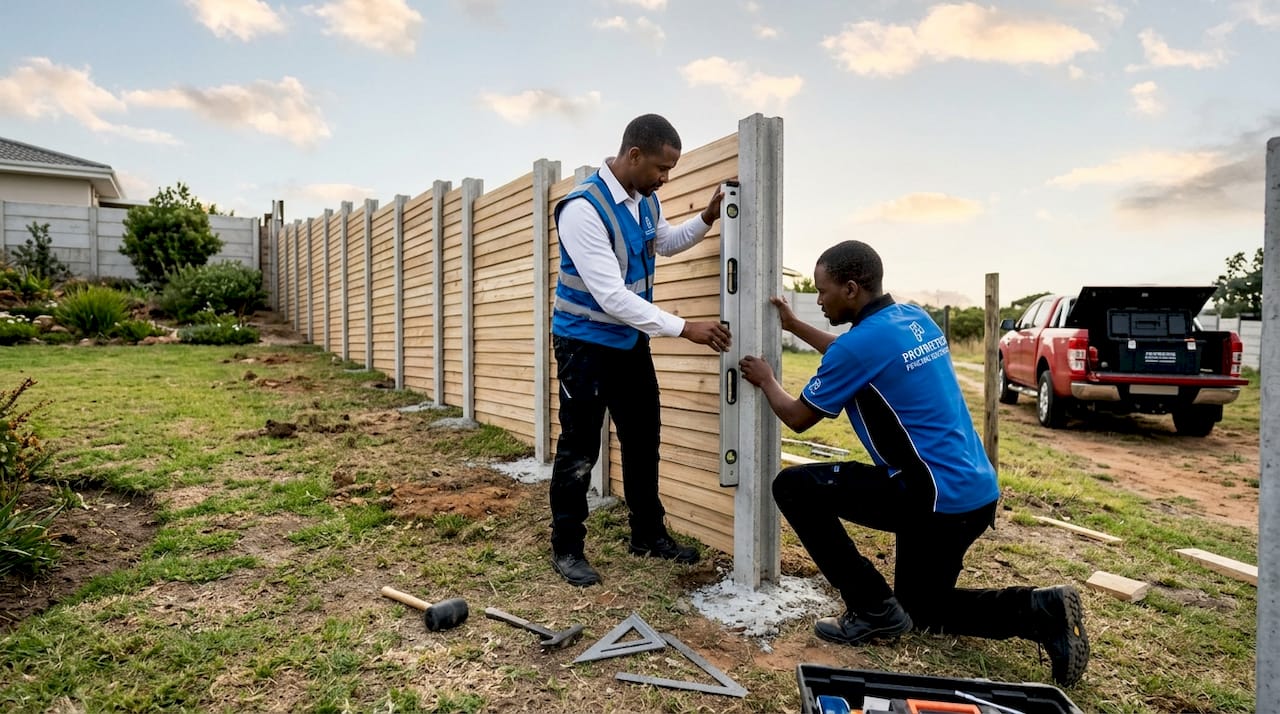
Gates are the most mechanically demanding component of any fencing system. Gate posts carry significantly higher load and moment forces than standard line posts, requiring larger post sizes and deeper embedment in the ground. Standard residential gate posts are 100x100mm set at least 900mm deep; wider or heavier gates require 150x150mm steel posts or larger. Hardware selection, including hinges, latch systems, and anti-lift devices, directly determines long-term gate alignment and security integrity.
Automatic gate operators must comply with UL 325 safety standards, including secondary entrapment protection devices. Installation involves coordination between electrical and fencing contractors, along with permits and inspections that influence project timelines.
Professional vs. DIY installation
The cost factors for fencing shift considerably depending on whether you install professionally or independently. Chain-link fencing costs approximately $10 to $20 per linear foot for professional installation, while wood fences range from $17 to $45 per linear foot. Total project costs for professional installation range from $1,500 to $8,000 depending on scope and material.
DIY installation reduces labour costs but increases the risk of:
- Incorrect post depth and spacing leading to structural failure
- Misaligned panels affecting both aesthetics and security
- Non-compliant gate installation creating safety and legal issues
- Voided material warranties due to improper installation methods
For high-security applications, professional installation is not optional. The security fence installation process for perimeter protection involves precise post placement, panel tensioning, and integration with access control systems that require specialist knowledge.
Pro Tip: Always obtain a written specification from your installer that details post diameter, embedment depth, panel fastening method, and gate hardware grade. This document protects you if quality disputes arise after installation.
5. Fence maintenance advice and long-term cost factors
Fence maintenance advice that focuses only on the first year misses the point. The real cost factors for fencing reveal themselves over a five to ten year horizon, when materials begin showing wear, rust, or structural degradation.
Material-specific maintenance expectations:
- Timber: Requires sealing or repainting every two to three years to prevent moisture penetration, warping, and rot. Pest treatment may be necessary in termite-prevalent regions.
- Chain-link: Galvanised chain-link resists rust reasonably well but may require periodic inspection for bent sections, loose ties, and gate alignment drift.
- Clear view mesh panels: Heavy galvanised or powder-coated mesh panels require minimal intervention. Periodic inspection for physical damage and fastener integrity is sufficient in most climates.
- Vinyl: Cleaning with water and mild detergent is the primary maintenance requirement. Vinyl becomes brittle in sustained high UV exposure over time.
- Ornamental iron: Regular inspection for rust, particularly at welds and cut ends, with touch-up painting prevents structural deterioration in humid conditions.
A well-maintained fence recovers 50 to 70 percent of its installation cost at property sale, making it a genuine investment in property value rather than a purely operational expense. Budget annually for maintenance from the outset. Deferred maintenance compounds, and repairs to structurally compromised fence sections always cost more than the preventive treatment that would have avoided them.
6. Decision framework: matching your priorities to the right fencing solution
With all considerations defined, the final step in how to choose a fence is mapping your specific priorities against the realistic performance of each option.
| Priority | Recommended material | Key trade-off |
|---|---|---|
| Maximum security | Clear view mesh panel / palisade steel | Higher upfront cost, specialist installation |
| Affordable perimeter | Chain-link | Lower deterrent value, minimal aesthetic appeal |
| Privacy and aesthetics | Timber / vinyl | Higher maintenance, limited security |
| Industrial perimeter | Welded mesh / palisade | Requires professional specification and installation |
| Balanced security and style | Ornamental iron / clear view | Medium to high cost, long service life |
Decision tips for conflicting priorities:
- Where budget and security conflict, prioritise gate hardware and post embedment over panel grade. A weak post or flimsy gate undermines even the best panel system.
- Where aesthetics and security conflict, clear view fencing resolves the tension directly by providing unobstructed visibility, anti-climb geometry, and a clean visual profile without compromise.
- Where privacy and surveillance conflict, consider using clear view panels along the primary perimeter and adding dense planting or screen panels in specific zones where privacy is most valued.
The visibility and surveillance trade-off in fencing deserves more attention than most property owners give it during the planning phase. Getting this balance wrong means either leaving blind spots in your CCTV coverage or creating a perimeter that feels oppressive and reduces natural light.
My perspective: what most property owners get wrong
I have reviewed enough fencing projects, both before and after installation, to identify the pattern of where things go wrong. It is almost never the fence panel itself.
The gate is where most security perimeters actually fail. Property owners invest in high-specification panel systems and then specify a gate with inadequate post sizing, lightweight hinges, and no anti-lift device. A fence’s security depends heavily on gate discipline, meaning the gate must remain closed and latched consistently. If your gate sags within two years because the post was undersized, you have wasted a significant portion of your investment.
The second most common error is treating the fence as a standalone security solution. A fence delays and deters. It does not prevent determined intrusion without complementary measures such as lighting, CCTV, and monitored access control. Property owners who understand this from the start make better material choices, because they are selecting a fence that integrates with a system rather than replacing one.
My third observation is about neighbour relations. Projects that begin with a brief, respectful conversation with adjacent property owners almost never end in disputes. Projects that do not almost always create friction, even when the fence is technically compliant.
Plan deliberately, specify precisely, and treat the gate as the most critical component in the entire system.
— Jaline
Fencing solutions designed for security and longevity
If your assessment points toward high-security fencing with clean aesthetics and minimal maintenance, Jumalutech’s product range addresses exactly these requirements. The ClamberPrufe Clearview fencing system delivers anti-climb, anti-cut perimeter protection with unobstructed visibility for surveillance integration. For premium specifications, the ClamberPrufe HiSecure range provides advanced deterrent features suited to high-risk commercial and industrial sites.
Jumalutech also manufactures custom security gates matched to each fencing system, addressing the gate vulnerability described above with correctly specified posts, hardware, and access control integration. Contact Jumalutech directly to discuss your site requirements and receive a tailored installation proposal for your property.
FAQ
What permits do I need before installing a fence?
Most municipalities require permits for fences exceeding 6 feet in the backyard or 3 to 4 feet in the front yard, with fees ranging from $25 to $200. Contact your local building control department before purchasing materials to confirm height limits and setback requirements for your specific zone.
Which fencing material offers the best security?
Clear view welded mesh panels and palisade steel consistently deliver the highest security performance because they resist climbing, cutting, and forced deformation while maintaining surveillance visibility. The gate and its hardware must match the panel specification to avoid creating a weaker point in the perimeter.
How do I choose between DIY and professional fence installation?
For boundary marking and low-risk applications, competent DIY installation is feasible with the right tools and preparation. For security fencing, automated gates, and sloped terrain, professional installation is necessary to meet structural, safety, and warranty requirements.
What is the most low-maintenance fencing material?
Vinyl and powder-coated clear view mesh panels require the least ongoing maintenance. Vinyl needs only periodic cleaning, while heavy galvanised mesh panels require little more than annual inspections for physical damage and fastener integrity in most South African climates.
Does a fence add value to a property?
A well-specified and maintained fence recovers 50 to 70 percent of its installation cost at point of sale, and security fencing specifically adds measurable value in areas where buyers prioritise safety. The return is highest when the fence complements the property’s aesthetic and requires minimal remediation at time of sale.