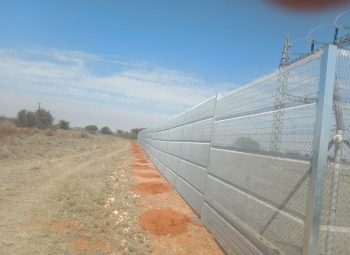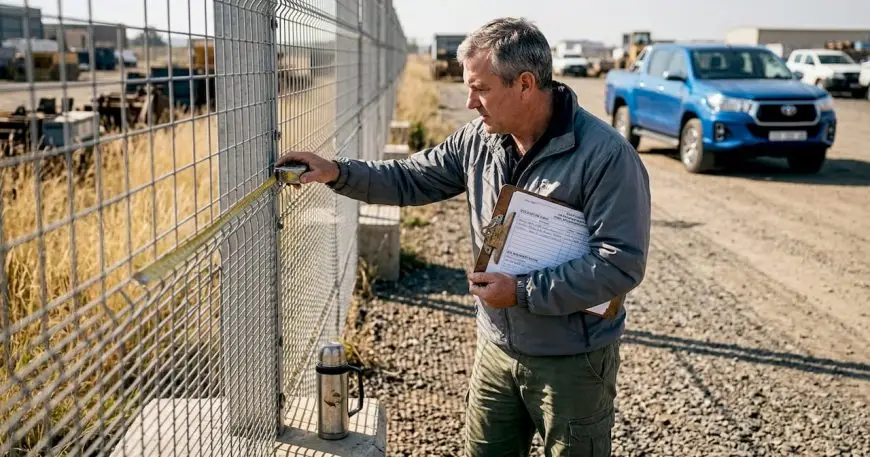
TL;DR:
- Selecting an appropriate mesh size for security fencing involves balancing intrusion resistance, visibility, cost, and regulatory compliance to ensure long-term performance. The aperture size directly influences fence height requirements, structural design, and safety standards, making early specification critical to avoid costly redesigns. Proper assessment of mesh aperture, wire gauge, and weld quality creates a system that effectively deters intrusion while aligning with site-specific threat levels and regulation frameworks.
Specifying a mesh size for a security fence sounds straightforward until the project reaches the compliance review stage and the entire design needs to change. The role of mesh size in security is more complex than most buyers anticipate: aperture size controls intrusion resistance, determines regulatory fence height categories, influences climbing deterrence, and interacts directly with wire diameter and weld quality to define overall barrier strength. Property managers, security professionals, and contractors who understand these interdependencies make better procurement decisions, avoid costly retrofits, and select fencing systems that perform reliably over the long term.
Table of Contents
- Key takeaways
- Role of mesh size in security: fundamentals
- How mesh size affects security performance
- Safety compliance and mesh size regulations
- Material standards and engineering specifications
- Selecting the right mesh size for your application
- My perspective on mesh size and security decisions
- Jumalutech’s mesh fencing solutions
- FAQ
Key takeaways
| Point | Details |
|---|---|
| Aperture size drives regulatory category | Mesh openings above 13 mm trigger minimum fence height requirements that affect your entire structural design. |
| Smaller is not always better | Tighter apertures increase cost and restrict visibility; the correct size depends on threat level and site context. |
| System-level design determines security | Wire diameter, weld integrity, and corrosion protection work with aperture size to determine real-world barrier performance. |
| Early coordination prevents costly redesigns | Changing mesh aperture late in the design phase can force post spacing, rail, and height specification changes. |
| Standards govern compliant specifications | ASTM F2781 and ISO 9001:2015 certifications confirm that mesh panels meet tested performance benchmarks. |
Role of mesh size in security: fundamentals
Mesh size refers to the dimensions of the individual openings, or apertures, within a woven or welded wire panel. It is typically expressed as the aperture width and height in millimetres, such as 50×50 mm, or as a count of openings per linear inch. These two measurement conventions are related but not interchangeable; a mesh count of 1 per inch produces a much larger opening than a count of 4 per inch, and the practical security implications differ significantly.
Typical apertures range from 6.35 mm (1/4 inch) at the fine end up to 100 mm and beyond for general utility applications, with the most commonly specified security fencing dimensions sitting between 50×50 mm and 75×75 mm. Understanding where a given specification falls within this range is the starting point for any serious security assessment.
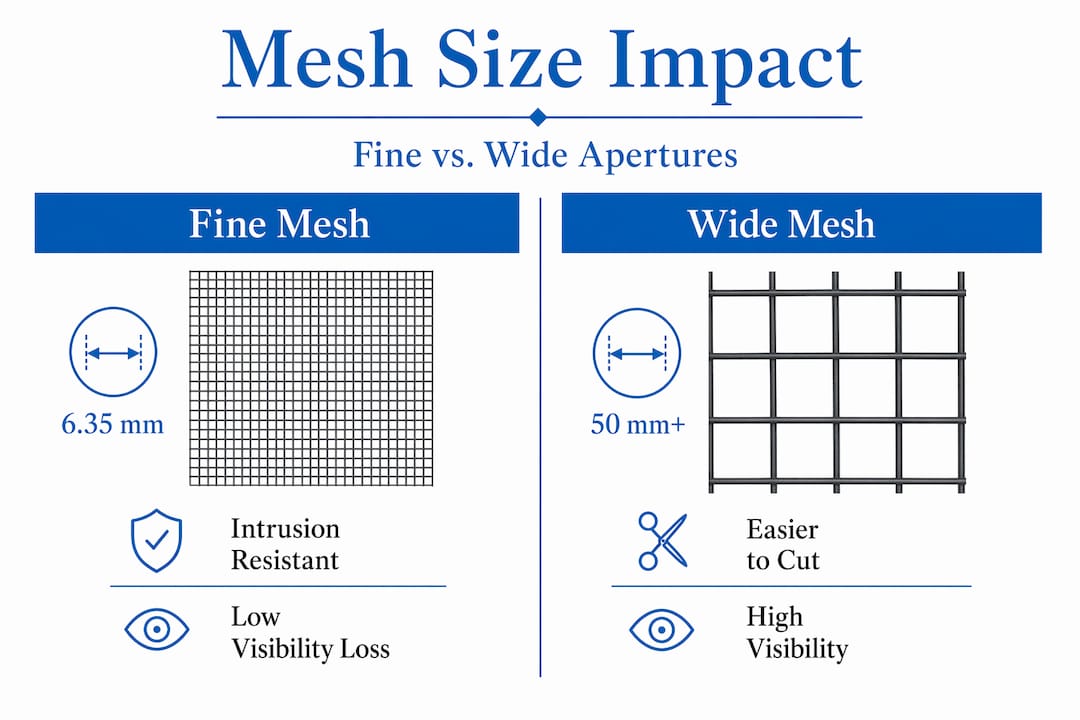
The table below illustrates how aperture size relates to typical applications and security implications:
| Aperture size | Typical application | Security implication |
|---|---|---|
| 6.35 mm to 13 mm | Pool barriers, child safety fencing | Highest intrusion and climb resistance; lower fence heights permitted |
| 13 mm to 50 mm | Medium-security perimeters, commercial sites | Good resistance; fence height requirements increase |
| 50 mm to 75 mm | Industrial perimeters, warehouses | Standard security; dependent on wire diameter |
| 75 mm to 100 mm | Agricultural, low-risk boundary | Reduced intrusion resistance; maximum visibility |
| Above 100 mm | General farm or stock fencing | Insufficient for security barrier classifications |
Wire diameter interacts directly with aperture size to determine the structural behaviour of the panel. A 50×50 mm aperture fabricated from 4.0 mm wire behaves very differently from the same aperture in 2.0 mm wire. The heavier gauge resists deformation under load, cutting attempts, and sustained physical pressure. Wire diameters for security fencing typically range from 4.0 mm to 6.0 mm, balancing strength against panel weight and handling practicality.
Key dimensional variables to specify when selecting mesh fencing include:
- Aperture width and height (expressed in millimetres, e.g., 50×50 mm or 75×100 mm)
- Wire diameter at the longitudinal and transverse wires
- Panel thickness, which reflects wire diameter and weld protrusion
- Mesh count per linear metre, derived from aperture size and wire diameter combined
Understanding security fencing terminology before specifying a product prevents the common error of purchasing on aperture size alone without considering the full dimensional specification.
How mesh size affects security performance
The mesh size impact on security becomes most apparent when a fence is subjected to a deliberate intrusion attempt. Smaller apertures reduce the opportunity for a hand or tool to gain purchase on the mesh, making climbing significantly more difficult. A 50×50 mm opening does not accommodate a boot toe, whereas a 100×100 mm opening may. This mechanical reality is why security-grade fencing products are consistently specified at apertures no larger than 75×75 mm for medium to high-risk perimeters.
Smaller mesh openings increase intrusion resistance and provide higher strength per unit area, while larger openings reduce material cost and increase outward visibility. This trade-off is the central tension in any security mesh specification decision. Larger apertures are not inherently deficient; they may be entirely appropriate where threat levels are low or where clear sightlines for CCTV coverage take priority over physical barrier strength.

The pairing of aperture size with wire diameter and weld quality determines the real cutting resistance of a panel. High-tensile welded mesh with 50×50 mm aperture and 4 to 5 mm wire is engineered for maximum intrusion deterrence, resisting cutting, climbing, and deformation under sustained load. The precision of the weld joint at each mesh intersection determines whether a panel holds its geometry under stress or separates under targeted attack.
Beyond physical resistance, the influence of mesh size on protection extends to visibility and surveillance integration. Tighter mesh reduces the sightlines available to security cameras positioned outside the perimeter, which may require cameras to be repositioned or supplemented. Larger mesh improves external CCTV coverage but reduces physical deterrence. These competing factors make mesh size a variable that security consultants and facility managers need to weigh against the full site security plan rather than selecting in isolation.
Pro Tip: When specifying mesh for a perimeter where CCTV coverage is a primary detection layer, consider apertures in the 50×75 mm range rather than defaulting to 50×50 mm. You gain improved camera sightlines without meaningfully compromising physical barrier performance, provided wire diameter remains at 4.0 mm or above.
System-level security depends on pairing mesh aperture with wire diameter, weld integrity, corrosion protection, and anti-tamper fasteners. Aperture size alone does not determine security performance, and specifying a tight mesh on a thin wire panel with poor weld quality produces a fence that looks secure on paper but fails under physical pressure.
Safety compliance and mesh size regulations
Regulatory frameworks that govern safety barriers, including pool fencing and child protection barriers, make the link between mesh size and fence height explicit and non-negotiable. These requirements illustrate how closely the importance of mesh size is tied to structural design decisions.
The compliance hierarchy works as follows:
- Apertures of 13 mm or less allow a minimum effective fence height of 1200 mm for compliant barrier classification.
- Apertures between 13 mm and 100 mm require a minimum fence height of at least 1800 mm to meet the same barrier standard.
- Apertures exceeding 100 mm are disallowed entirely in regulated safety barrier applications.
- The aperture threshold determines whether additional strainer wire arrangements are required at top and bottom rails.
- Non-compliant aperture specification triggers a redesign of post spacing, rail placement, and overall fence height, all of which carry cost implications.
The practical implication is that changing aperture size can mandate fundamentally different fence structures. A project that begins specification at 50×50 mm and switches to 25×25 mm mid-design is not simply ordering a different mesh panel. It may be reclassifying the fence into a different regulatory height category, which alters every supporting structural element.
| Aperture threshold | Minimum fence height | Additional structural requirements |
|---|---|---|
| Up to 13 mm | 1200 mm | Standard posts and rails sufficient |
| 13 mm to 100 mm | 1800 mm | Additional strainer wire arrangements likely |
| Above 100 mm | Not permitted in safety barriers | Full redesign required |
Pool fencing is the clearest example of this dynamic. Pool fencing mesh apertures of 9.5 mm with 1 mm wire diameter are commonly used to satisfy climbing prevention and barrier height requirements. The tight aperture permits a lower fence height classification, reducing material and installation cost while meeting the regulatory standard.
Pro Tip: Before finalising any mesh specification, cross-reference the aperture size against the applicable safety barrier regulation for your jurisdiction. Changing the aperture by even a few millimetres across the 13 mm threshold carries direct structural and cost consequences that are far more significant than the mesh material cost difference.
The architectural risk assessment process for projects with regulated barriers, such as those described in federal project compliance frameworks, consistently identifies mesh size as a primary variable that drives downstream structural and compliance decisions.
Material standards and engineering specifications
Selecting the correct aperture size is necessary but not sufficient. The materials and engineering standards that accompany the mesh specification determine whether a fence delivers its intended security performance over the intended service life.
Security mesh products commonly use 4.0 to 5.0 mm high-tensile steel wire with apertures of 50×50 mm or 75×75 mm, complying with ASTM F2781 and ISO 9001:2015 standards. These certifications confirm that the product has been tested for load capacity, dimensional accuracy, and corrosion resistance under controlled conditions. Specifying a product without certification documentation introduces performance uncertainty that is difficult to audit post-installation.
The key material and engineering variables that complement aperture size in a complete specification include:
- Wire tensile strength, expressed in megapascals, which determines resistance to cutting and deformation
- Hot-dip galvanising as the primary corrosion protection layer, with a minimum zinc coating weight appropriate to the site exposure classification
- Polyester powder coating as a secondary finish layer, improving both corrosion resistance and aesthetic integration with the site
- Weld shear strength at each mesh intersection, which determines whether the panel holds its geometry under physical load or point attack
- Anti-tamper fixings at post attachment points, preventing removal of panels without specialised tools
The table below summarises how wire diameter and finish specification interact with aperture for security fencing:
| Wire diameter | Corrosion protection | Suitable aperture range | Application |
|---|---|---|---|
| 2.0 mm to 3.5 mm | Electro-galvanised | 25 mm to 50 mm | Low-risk boundary, temporary barriers |
| 4.0 mm to 5.0 mm | Hot-dip galvanised + powder coat | 50 mm to 75 mm | Medium to high-security perimeters |
| 5.0 mm to 6.0 mm | Hot-dip galvanised + powder coat | 50 mm to 75 mm | Critical infrastructure, high-risk sites |
The 7 essential types of mesh fencing document produced by Jumalutech provides a detailed breakdown of how aperture, wire diameter, and corrosion considerations interact across the full range of security fencing product types available for South African conditions.
Selecting the right mesh size for your application
Translating the technical knowledge above into a practical specification decision requires a structured approach to site-specific risk assessment. The security applications of mesh size vary significantly between an industrial plant boundary, a residential estate perimeter, and a sensitive government facility, and the selection process should reflect that variation.
The primary factors that govern optimal mesh size selection are:
- Threat classification: Opportunistic intrusion requires different mesh than organised, tool-assisted forced entry
- Regulatory category: Safety barrier classifications, pool fencing codes, and industrial site standards each impose aperture limits
- Visibility requirements: Surveillance integration and sightline management influence the acceptable upper aperture limit
- Environmental exposure: Coastal, industrial, or harsh inland conditions affect the required corrosion protection specification, which in turn influences the minimum practical wire diameter
- Budget constraints: Tighter apertures and heavier wire gauges increase material cost; the correct specification optimises security per rand rather than defaulting to the most restrictive available option
Mesh size and risk assessment are connected most directly at the threat classification stage. A warehouse perimeter in a high-crime area requires a demonstrably different specification than the boundary fence of a low-traffic storage yard. Documenting the threat assessment before specifying mesh aperture gives the decision a defensible technical basis and assists in justifying the specification to procurement stakeholders.
Changing aperture specification often requires coordination between fencing engineers and compliance stakeholders to avoid costly retrofits. This is particularly relevant in South African industrial and commercial projects, where regulatory compliance, municipal by-laws, and client security policies may each impose different aperture constraints that need reconciliation before the specification is finalised. The industrial fencing installation guide published by Jumalutech addresses this coordination process in detail for high-security site applications.
My perspective on mesh size and security decisions
I have seen many projects where the mesh aperture specification was treated as a minor detail to be confirmed at the end of the design process. In almost every case where this happened, it caused problems. Either the chosen aperture pushed the fence into a higher regulatory height category that the site layout could not accommodate, or the client discovered post-installation that the mesh they selected did not meet the standard their insurer or compliance officer required.
What I have found in practice is that the aperture decision is actually a gateway decision. It locks in fence height, structural requirements, post spacing, and in some cases the entire perimeter layout. Treating it as a routine selection rather than a design-determining variable is where most specification errors originate.
There is also a persistent assumption that tighter mesh always means better security. It does not. I have seen 25×25 mm mesh installed on 2.5 mm wire that was physically weaker than a properly specified 50×50 mm panel on 5.0 mm high-tensile wire. The aperture is one variable in a system. Security professionals who evaluate mesh on aperture alone are not doing a complete assessment.
My consistent advice to facility managers and security procurement teams is to engage a fencing engineer at the point when mesh aperture is first being discussed, not after the structural design is complete. The cost of that early consultation is a fraction of the cost of a specification error discovered at the compliance review stage.
— Jaline
Jumalutech’s mesh fencing solutions
When mesh size selection requires precision engineering and compliance expertise, Jumalutech’s range of security fencing solutions provides a reliable starting point. Every specification is developed with an understanding of South African regulatory requirements, site-specific threat classifications, and material performance over the long term.
Jumalutech’s ClamberPrufe Clearview Fencing combines anti-climb geometry with high-tensile wire construction and verified corrosion protection to deliver measurable perimeter security without compromising visibility. For clients needing a complete technical resource before committing to a specification, the mesh fencing types overview covers aperture, wire gauge, and finish options across the full product range. Contact Jumalutech directly to discuss your site requirements and receive a specification-level quotation.
FAQ
What aperture size is considered standard for security fencing?
Security fencing most commonly uses apertures of 50×50 mm or 75×75 mm paired with 4.0 to 5.0 mm high-tensile wire, as these dimensions balance intrusion resistance with structural practicality and comply with ASTM F2781 standards.
Does mesh size affect the required fence height?
Yes. Regulations specify that apertures above 13 mm require a minimum fence height of 1800 mm for safety barrier compliance, while apertures of 13 mm or less permit a minimum height of 1200 mm.
Can mesh aperture size be changed after installation?
Changing aperture size post-installation is technically possible but typically requires replacement of the full mesh panel and may trigger structural redesign of posts, rails, and fence height to meet the new regulatory category.
Is a tighter mesh aperture always more secure?
Not necessarily. A tight aperture on a low-gauge wire with weak weld joints delivers less physical security than a correctly specified 50×50 mm panel on heavy-gauge high-tensile wire with certified weld shear strength.
When should a fencing engineer be consulted on mesh size?
A fencing engineer should be consulted at the point when mesh aperture is first being selected, not after structural design is finalised, as the aperture decision directly determines height requirements, post spacing, and regulatory compliance category.