TL;DR:
- Effective perimeter protection in South African industrial sites requires an interconnected system of physical barriers, detection technology, and response protocols to prevent costly breaches. Proper planning, zone segmentation, and continuous system verification are essential to maintain security efficacy, especially during high-risk after-hours periods. Human factors, legal compliance, and ongoing operational practices ultimately determine the system’s success beyond hardware installation.
Industrial sites in South Africa face perimeter breaches that cost far more than stolen equipment. They disrupt operations, compromise worker safety, trigger insurance consequences, and expose facility managers to legal liability. This industrial perimeter protection guide addresses those realities directly, covering threat modelling, physical barrier selection, sensor and camera deployment, alarm configuration, and the operational disciplines that determine whether your perimeter holds when it matters. Whether you manage a Gauteng manufacturing plant, a logistics hub, or a remote mining facility, the steps here are practical, sequenced, and specific to the South African security environment.
Table of Contents
- Understanding perimeter protection essentials
- Preparing your industrial site for perimeter protection
- Executing an effective perimeter security installation
- Verifying and maintaining your perimeter security system
- Common pitfalls and expert tips for industrial perimeter security
- Rethinking perimeter protection beyond hardware
- Explore Jumalu fencing solutions for industrial perimeter security
- Frequently asked questions
Understanding perimeter protection essentials
Effective perimeter protection is not a single product or technology. It is a system of interconnected components that together achieve three objectives: early detection of intrusion attempts, delay of any breach long enough for a response, and a fast, documented response that neutralises the threat. Perimeter protection combines physical barriers, detection, delay, and response to secure a facility’s boundaries effectively.
The components that make up a complete system include:
- Physical barriers: High-tensile perimeter fencing, anti-climb mesh, electric fencing, crash-rated gates, and security booms
- Detection technology: Passive infrared sensors, fibre-optic fence detection, ground radar, microwave barriers, and AI-enabled CCTV
- Access control: Biometric or card-based entry at all gate points, visitor management systems, and turnstile integration
- Lighting: Perimeter lighting zones that eliminate shadow areas and support camera performance after dark
- Monitoring and response personnel: Control room operators, armed response units, and on-site security officers working from defined workflows
Understanding perimeter fencing basics is the right starting point before evaluating any technology layer. The physical barrier is the foundation everything else builds on, and a weak fence undermines every sensor, camera, and alarm connected to it.
Preparing your industrial site for perimeter protection
With a clear concept of what perimeter protection requires, the next step is structured planning before a single pole is sunk or a camera mounted. This preparation phase is where most industrial sites either succeed or fail, because poor planning produces a system that looks complete but performs poorly under real conditions.
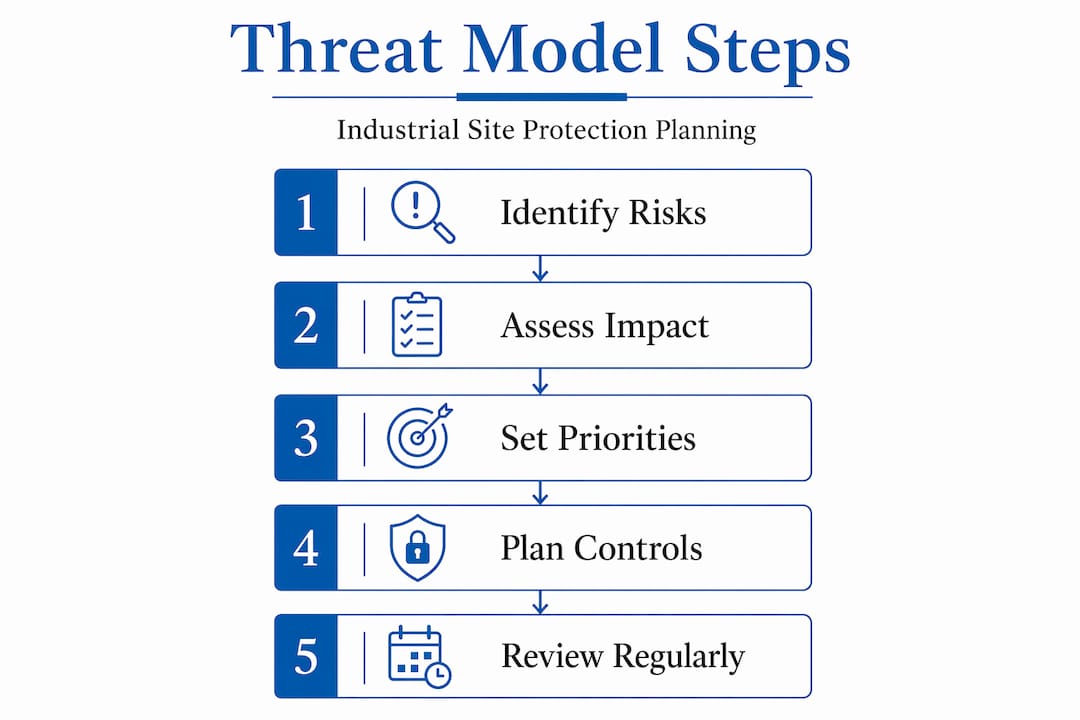
Step 1: Define your threat model
Identify the specific risks your site faces. Unauthorised pedestrian access, vehicle ram attacks, insider threats, copper cable theft, and equipment tampering each require different countermeasures. Industrial perimeters require zone-based rules, threat models, escalation matrices, and operational readiness reporting. A distribution centre near a densely populated area has a different threat profile than an isolated pumping station.
Step 2: Segment your perimeter into criticality zones
Not every metre of your perimeter carries equal risk or equal consequence if breached. Divide the boundary into zones:
- Zone A: High-criticality areas such as server rooms, fuel storage, or high-value inventory
- Zone B: Operational areas including loading bays, transformer yards, and plant access roads
- Zone C: Lower-risk boundaries such as open land or undeveloped buffers
- Zone D: Remote linear assets such as pipelines or power lines requiring periodic patrols rather than continuous monitoring
Step 3: Budget with accuracy
Budget estimates that ignore certification and integration costs create project delays. South African electric fencing projects budget per-metre installation plus fixed certification and integration costs. The table below reflects the primary cost categories you must account for:
| Cost category | Budget consideration |
|---|---|
| Perimeter fencing (per metre) | Varies by fence type, height, and ground conditions |
| Electric fence energizer and cabling | Depends on energizer output rating and fence length |
| Gate automation and access control | Per gate point, including motors, readers, and intercoms |
| CCTV installation | Camera count, cable runs, NVR hardware, and storage |
| Certification and compliance (SANS 10222) | Fixed fee per installation, mandatory for electric fencing |
| Security officer integration | Monthly operational cost, not a once-off capital item |
Step 4: Confirm permit and compliance requirements
Review industrial fencing requirements for your municipality and sector. Electric fencing requires certification under SANS 10222, and certain industrial zones carry additional building line and height restrictions. Factor these into your timeline, not as an afterthought. A well-structured installation planning guide will help you sequence compliance steps alongside construction milestones.
Pro Tip: Adjust detection sensitivity by shift. After-hours risk on most industrial sites is significantly higher, and the same alarm threshold that works during a busy day shift will either flood operators with alerts or miss genuine threats at 2 AM. Define separate escalation rules for each time window.
Executing an effective perimeter security installation
After planning, putting your perimeter protection into action requires sequenced installation decisions that align hardware, detection technology, and alarm logic.
Step 1: Select fencing appropriate to your security rating
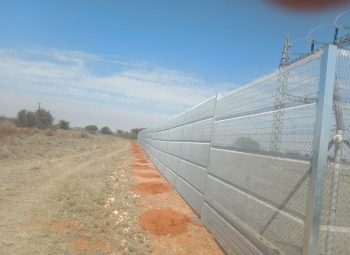
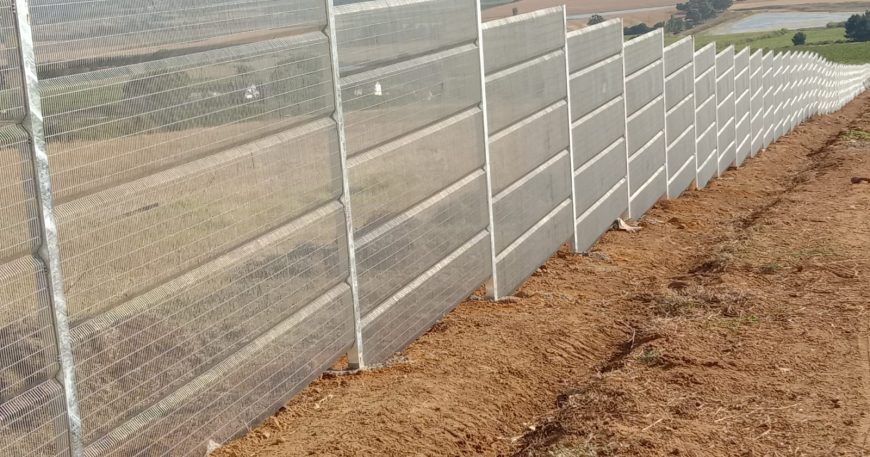
Clear view fencing benefits include unobstructed visibility for camera surveillance, anti-climb construction, and weather-resistant durability that suits the South African climate. For sites requiring additional impact resistance, galvanized fencing offers heavy corrosion protection suited to coastal or high-humidity environments.
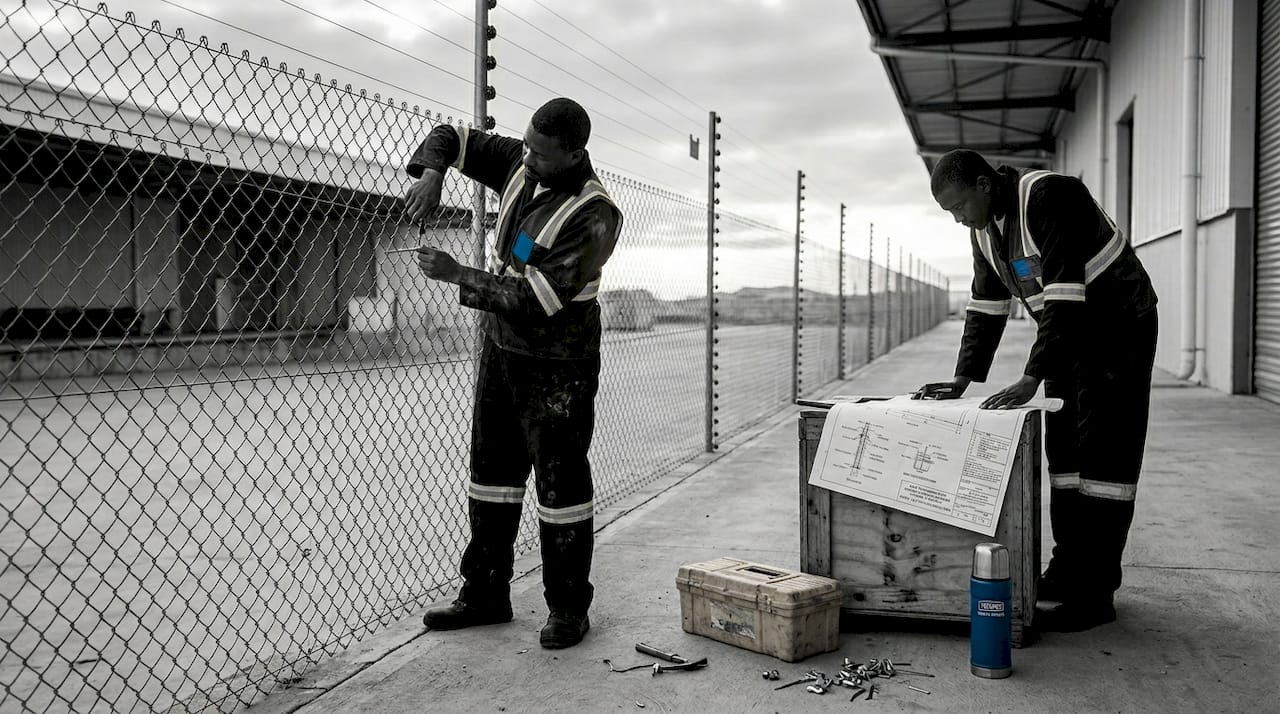
Step 2: Integrate electric fencing with your alarm infrastructure
Electric fences act as active deterrents integrated with alarm systems to significantly reduce breach incidents. Wire the energizer output to your control room monitoring platform so every alarm zone triggers a time-stamped event log, not just an audible siren.
Step 3: Design your camera layout to eliminate blind zones
Engineering detail like managing blind zones and terrain is essential for effective AI and CCTV perimeter design. Use camera placement simulation tools before installation and conduct physical field checks at night as well as during the day. Thermal cameras, AI and CCTV integration platforms, and PTZ units with auto-tracking are particularly effective for long linear boundaries.
Step 4: Configure zone-based alarm escalation
The comparison below illustrates how alarm configuration should differ by zone:
| Parameter | Zone A (high criticality) | Zone C (low criticality) |
|---|---|---|
| Alarm threshold | Immediate alert | Delayed confirmation alert |
| Response type | Armed response dispatch | Control room verification first |
| Camera action | Auto-PTZ lock-on | Manual operator review |
| Documentation | Full evidence pack | Basic event log |
| Night shift adjustment | Stricter threshold | Moderate threshold |
Pro Tip: Video analytics that classify events by object type (person, vehicle, or animal) reduce false alarms by up to 90% compared with basic motion detection. Prioritise analytics at Zone A and Zone B camera positions before adding more cameras.
Verifying and maintaining your perimeter security system
Once installed, maintaining and verifying your system ensures perimeter protection remains reliable and effective, not just on commissioning day but throughout its operational life.
Operational readiness, including monitoring camera uptime and audit-ready evidence trails, is critical to prevent perimeter security failures. The components of an ongoing verification programme include:
- Camera uptime SLAs: Track uptime per perimeter zone on a weekly basis. Any camera below 95% uptime triggers an immediate service call, not a monthly review.
- Evidence packs for all incidents: Every alarm event should produce a linked package containing the video clip, sensor log, operator notes, and closure reason. This is essential for insurance claims and PSIRA compliance.
- Readiness reporting: Schedule weekly reports that identify blind zones created by equipment failures, vegetation growth, or structural damage to barriers.
- Staff verification drills: Test your team’s response to simulated intrusion events. Measure the time from detection to physical response against your zone-specific SLAs.
The table below outlines the recommended verification schedule for industrial perimeters:
| Verification activity | Recommended frequency |
|---|---|
| Camera uptime review | Weekly |
| Electric fence output test | Monthly |
| Gate mechanism and interlock test | Monthly |
| Full perimeter walk-down inspection | Quarterly |
| Penetration test or red team exercise | Annually |
| Compliance and certification renewal | Per SANS 10222 schedule |
Review the fencing security rating impact on your site periodically. Ratings can degrade over time as fence integrity is affected by weather, corrosion, or minor physical damage that accumulates unnoticed between formal inspections.
Pro Tip: Set stricter alarm thresholds during night shifts automatically using your monitoring platform’s time-based rules engine. This avoids alert fatigue in operators managing quiet periods and ensures genuine events receive immediate attention.
Common pitfalls and expert tips for industrial perimeter security
Having covered verification, the following are the most consequential mistakes observed in industrial perimeter deployments across South Africa, along with the corrections that matter.
- Ignoring terrain and blind zones in camera design: Many installations are planned on flat site maps without accounting for slopes, structures, or vegetation. Validate every camera angle with a physical field check, including at night with lighting active.
- Treating alarm volume as a sign of performance: High alarm counts without corresponding incidents indicate a poorly calibrated system. Prioritise event quality over quantity, and use context-aware detection that requires more than a single pixel movement to trigger.
- Missing the detect-respond-document chain: Perimeter security failures often arise from stopping at detection without linking detection to response and documentation workflows. Detection without a defined escalation path produces no security value.
- Underestimating after-hours risk: Night-time incidents on industrial sites account for a disproportionate share of losses. Thermal imaging cameras, stricter alarm thresholds, and additional mobile patrols during low-activity hours significantly improve outcomes.
- Neglecting legal compliance as a security layer: Unregistered or untrained security personnel create legal exposure that can void insurance coverage and complicate prosecution of offenders. PSIRA registration and SANS 10222 certification are not administrative formalities; they are functional components of a defensible security programme.
“Detection without a defined response workflow is not security. It is documentation of a failure.”
Pro Tip: Review urban perimeter security insights specific to South Africa’s built environment challenges. Urban industrial sites face unique constraints including dense pedestrian traffic adjacent to the perimeter and higher incidence of organised, sophisticated intrusion attempts that require layered detection rather than single-sensor reliance.
Rethinking perimeter protection beyond hardware
There is a persistent tendency among facility managers to treat perimeter security as a procurement decision. Select the fence, install the cameras, sign the contract, and consider the problem solved. This approach produces systems that appear impressive on paper and fail predictably in operation.
Most perimeter security failures stem from stopping at detection without a defined operating workflow linking detect, respond, and document. The hardware is necessary but insufficient. What actually secures the perimeter is the human and procedural layer built around it.
In South Africa, this operational layer carries specific legal weight. Security officers operating on industrial sites must be registered with PSIRA and trained to the appropriate grade for the tasks they perform. Facilities that deploy unregistered personnel, even temporarily, operate in a legal gap that can affect insurance validity and limit recourse after an incident. The security rating importance of your physical barriers compounds this point: a high-rated fence with untrained responders is less secure than a moderate fence backed by a disciplined, well-trained team working from defined escalation matrices.
The security strategies that consistently perform well over time share a common characteristic: they treat the perimeter as a living system requiring continuous measurement, adjustment, and improvement, not a capital asset to be installed and forgotten. Proactive deterrence, visible barrier quality, and predictable response times communicate to potential intruders that your site is not worth the attempt. That deterrent effect is the outcome all the hardware and procedure is ultimately designed to create.
Explore Jumalu fencing solutions for industrial perimeter security
Understanding best practices is the first step. Putting them into practice requires a fencing partner with documented experience in industrial installations, South African compliance requirements, and the technical capacity to deliver solutions that perform under real-world conditions.
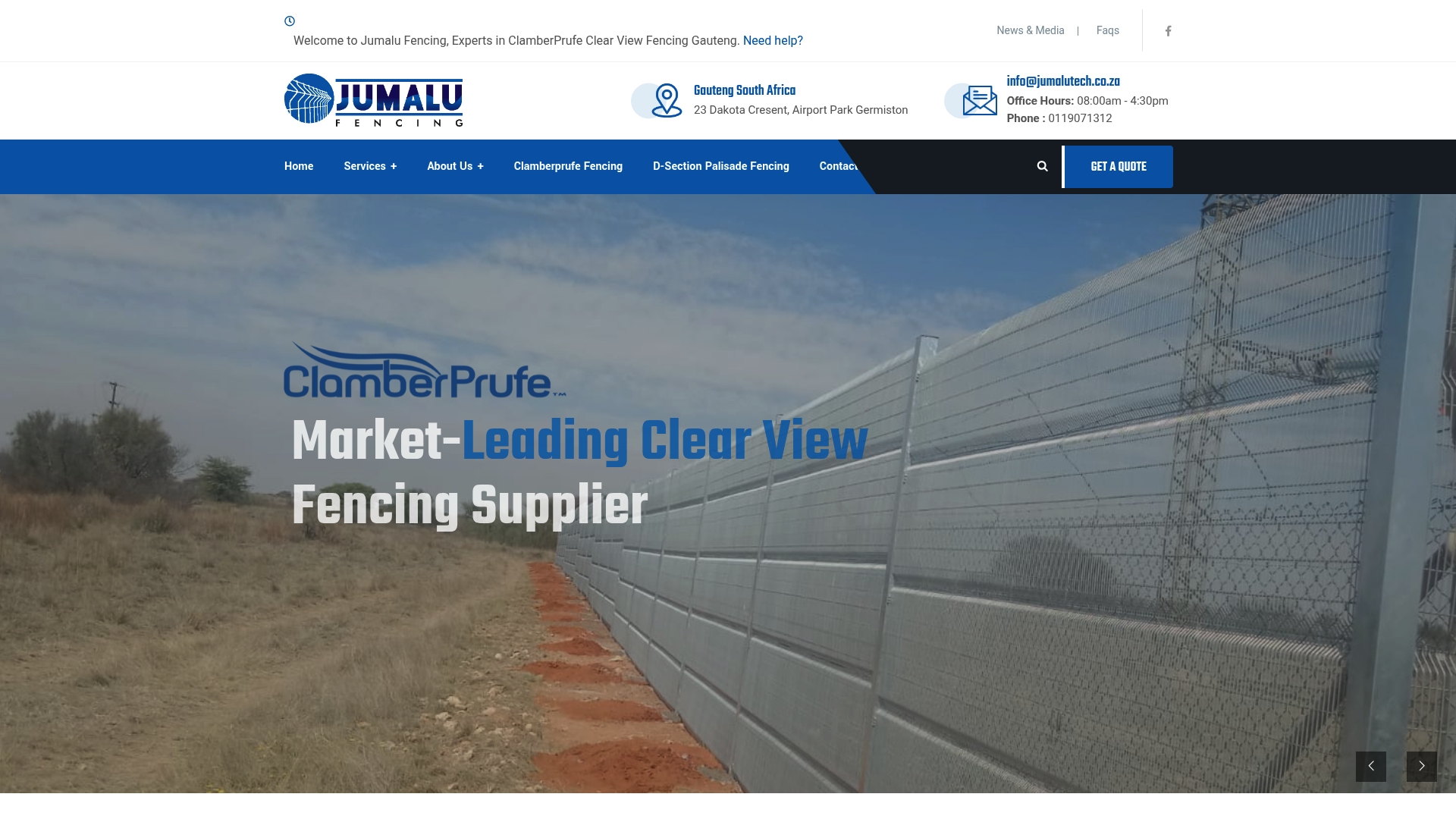
Jumalu Tech manufactures, supplies, and installs high-security fencing solutions for industrial clients across Gauteng and South Africa. Their range includes ClamberPrufe Clear View Fencing, galvanized mesh, and custom gate systems designed for anti-climb and anti-cut performance. Start with their security fencing terminology guide to align your specification language, explore types of mesh fencing to compare material and construction options, and use their industrial fencing installation guide to understand the full project process from site survey to certification.
Frequently asked questions
What are the key zones to consider in industrial perimeter protection?
Industrial sites typically segment perimeters into zones based on risk, such as outer fences, restricted areas, operational hotspots, and remote linear assets. Perimeter zones with different criticality allow consistent detection logic and escalation rules tailored to each area’s actual threat level.
How can false alarms in perimeter security be reduced?
Use context-aware detection that classifies events by object type rather than relying on motion-only sensors, and apply zone-based escalation rules. Context classification and time-window thresholds significantly reduce nuisance alarms without lowering genuine detection rates.
Is electric fencing a safe and legal option for industrial sites in South Africa?
Yes, electric fencing is legal when installed with the required SANS 10222 certification, mandatory warning signage, and applicable permits. Electric fences must meet safety regulations including voltage limits and signage requirements, and a compliant installation functions as both a deterrent and an alarm trigger.
Why is operational readiness monitoring important for perimeter protection?
Equipment failures, vegetation growth, and structural damage can silently degrade your perimeter coverage between formal inspections. Readiness monitoring including weekly uptime reporting and downtime alerting ensures cameras and sensors protect the site continuously rather than only on commissioning day.
How does integrating cameras with radar or sensors improve perimeter security?
Integration enables earlier detection, better threat classification, and visual verification before dispatching response teams, which reduces both false alarms and response delays. Radar integrated with AI PTZ cameras enables faster event verification and performs reliably in challenging low-light or adverse weather conditions.