Securing urban properties in Gauteng often means confronting deep-rooted concerns about crime and property protection. Urban security fencing has emerged as a powerful response, shaped by South African history and modern safety needs. For facility managers and property developers, understanding the role of perimeter protection and advanced fencing technologies is crucial when designing spaces that deter unauthorised access while supporting community well-being.
Table of Contents
- Defining Urban Security Fencing In SA
- Types Of Security Fencing In Urban Settings
- How Security Fencing Deters Crime
- Legal And Regulatory Aspects In Gauteng
- Comparing Fencing To Alternative Security Measures
- Costs, Risks, And Implementation Challenges
Key Takeaways
| Point | Details |
|---|---|
| Urban security fencing | Represents a complex response to historical security challenges, integrating robust physical barriers with advanced technological solutions for effective property protection. |
| Psychological deterrence | The presence of strong fencing communicates safety and preparedness, discouraging potential criminal activity before it occurs. |
| Legal compliance | Understanding local regulations is crucial for effective fencing implementation to ensure both protection and adherence to by-laws, avoiding potential legal disputes. |
| Holistic security strategies | Combining physical fencing with community engagement and social programmes fosters long-term safety and cohesion in urban settings. |
Defining Urban Security Fencing in SA
Urban security fencing in South Africa represents more than a physical barrier – it is a complex social and spatial response to historical security challenges. Emerging prominently in the late apartheid period, these security measures reflect deep-rooted societal anxieties about personal safety and property protection.
The landscape of urban security fencing in South Africa is fundamentally shaped by historical and socio-economic contexts. Key characteristics include:
- Robust physical barriers designed to prevent unauthorized entry
- Integration of technological security elements like electric fencing
- Strategic property boundary demarcation
- Psychological deterrence of potential criminal activities
Historically, these fencing systems have been more than mere physical obstacles. Fences serve as legal and physical tools asserting property rights while simultaneously revealing complex spatial dynamics rooted in colonial and apartheid legacies.
Modern urban security fencing in South Africa incorporates advanced technologies and design principles. Perimeter protection now involves sophisticated systems that go beyond traditional wall and fence constructions, integrating electronic surveillance, sensor technologies, and intelligent monitoring solutions.
The evolution of urban security fencing reflects broader societal transformations, balancing the need for personal safety with principles of social inclusivity and spatial justice. Property owners and urban planners must carefully consider how security infrastructure can protect communities without reinforcing historical divisions.
Pro tip: When designing urban security fencing, prioritize solutions that balance physical protection with aesthetic integration and community openness.
Types of Security Fencing in Urban Settings
Security fencing in South African urban settings encompasses a diverse range of technological and physical barriers designed to protect properties and enhance safety. Advanced security fencing systems integrate multiple defensive technologies that go beyond traditional boundary markers.
Key types of urban security fencing in South Africa include:
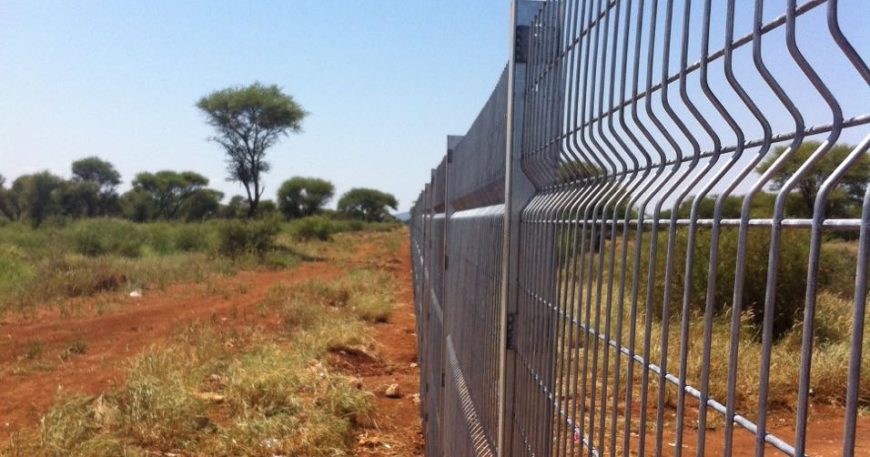
- Mesh Panel Fencing: Provides transparent visibility with high durability
- Electrified Perimeter Fencing: Delivers immediate deterrence through electrical barriers
- Palisade Fencing: Offers robust physical obstruction with strong visual intimidation
- Razor Wire Fencing: Creates additional layers of complex intrusion prevention
- Smart Sensor-Integrated Fencing: Combines physical barriers with electronic monitoring
Each fencing type serves specific urban security requirements, addressing unique spatial and architectural challenges in different South African contexts. Technological integration has transformed traditional fencing from simple boundary markers to sophisticated security ecosystems that can detect, deter, and respond to potential threats.
Modern urban security fencing solutions prioritise not just physical protection but also aesthetic considerations. Property owners now seek fencing that balances security imperatives with architectural elegance, moving beyond the stark, fortress-like approaches of previous decades.
The selection of appropriate security fencing depends on multiple factors including property type, location, risk profile, and budgetary constraints. Urban planners and property managers must carefully evaluate these elements to design comprehensive perimeter protection strategies.
This table summarises key factors influencing urban security fencing selection in South Africa.
| Factor | Impact on Fencing Choice | Typical Considerations |
|---|---|---|
| Property Type | Determines design and strength | Residential vs industrial requirements |
| Location Risk Profile | Guides security level needed | High-crime vs low-crime areas |
| Budget | Limits advanced tech adoption | Premium vs cost-effective options |
| Community Aesthetics | Influences visual integration | Balancing openness and security |
Pro tip: Always conduct a professional security assessment before selecting your urban security fencing to ensure optimal protection tailored to your specific environment.
How Security Fencing Deters Crime
Crime Prevention Through Environmental Design strategies reveal that security fencing plays a critical role in urban crime deterrence. By creating physical and psychological barriers, these systems fundamentally alter potential criminals’ risk-assessment calculations, making unauthorized property access significantly more challenging.
Key mechanisms of crime deterrence through security fencing include:
- Establishing clear territorial boundaries
- Creating visible physical obstacles
- Signalling enhanced property protection
- Reducing opportunistic criminal approaches
- Enabling controlled access points
However, the effectiveness of security fencing is nuanced. Security barriers can restrict unauthorized access while potentially complicating natural surveillance, presenting a complex security dynamic that requires strategic implementation.

Psychological Deterrence emerges as a crucial aspect of security fencing. The mere presence of robust, well-designed fencing communicates a strong message of preparedness and protection, often discouraging potential intruders before they attempt any criminal activity.
Successful crime prevention through fencing demands a holistic approach. Property owners must combine physical barriers with strategic environmental design, community engagement, and complementary security measures to create truly effective protective ecosystems.
Pro tip: Combine security fencing with integrated lighting and visible surveillance technologies to maximise crime deterrence potential.
Legal and Regulatory Aspects in Gauteng
The Fencing Act provides comprehensive legal frameworks that govern property boundary regulations and security fencing requirements in Gauteng. This legislation establishes critical guidelines for property owners, defining their responsibilities and rights regarding boundary demarcations and security infrastructure.
Key legal considerations for security fencing in Gauteng include:
- Shared cost responsibilities for boundary fences
- Mandatory compliance with municipal by-laws
- Specific height and material restrictions
- Safety feature requirements
- Dispute resolution mechanisms
Regulatory Compliance demands careful navigation of multiple legal layers. Urban security fencing in Gauteng falls under complex regulatory environments that integrate national legislation with localised municipal regulations.
Property owners must understand that fencing regulations are not uniform across different municipalities. Each local authority may impose unique specifications regarding fence construction, materials, height restrictions, and safety features, requiring thorough research and consultation with local building departments.
The legal landscape surrounding security fencing emphasises not just property protection but also public safety considerations. Regulations aim to balance individual property rights with broader community safety requirements, ensuring that security measures do not inadvertently create additional hazards.
Pro tip: Always consult local municipal authorities and review current by-laws before installing security fencing to ensure full legal compliance.
Comparing Fencing to Alternative Security Measures
Urban fortification strategies extend beyond physical barriers, requiring comprehensive approaches to security that address root causes rather than merely installing defensive infrastructure. Traditional security measures must evolve to incorporate more holistic prevention techniques.
Key differences between fencing and alternative security measures include:
- Physical obstruction versus social prevention
- Immediate deterrence versus long-term systemic solutions
- Individual property protection versus community-wide safety strategies
- Technological intervention versus social intervention
- Reactive defence versus proactive crime reduction
Security Ecosystem Approaches recognise that effective urban safety requires multifaceted strategies. While security fencing provides an essential first line of defence, it cannot singularly resolve complex social dynamics that contribute to criminal behaviour.
Alternative security measures such as community policing, social development programmes, urban design interventions, and economic empowerment initiatives offer complementary approaches to crime prevention. These strategies aim to address underlying socio-economic factors that create environments conducive to criminal activities.
Successful urban security demands an integrated model that combines physical infrastructure like fencing with broader social interventions. Property owners and municipal authorities must collaborate to develop comprehensive security strategies that balance immediate protection with long-term community development goals.
Here’s a quick comparison between physical security fencing and alternative urban security strategies.
| Approach | Immediate Effect | Long-Term Impact | Community Involvement |
|---|---|---|---|
| Fencing | Rapid deterrence | May reinforce divisions | Minimal engagement |
| Community Policing | Gradual change | Reduces root causes | High participation |
| Urban Design Changes | Slow improvement | Enhances surveillance | Moderate engagement |
| Social Programmes | Indirect prevention | Builds cohesion | Intensive involvement |
Pro tip: Combine physical security measures with community engagement programmes to create more sustainable and effective urban safety solutions.
Costs, Risks, and Implementation Challenges
Security fencing implementation involves complex financial and social considerations that extend far beyond initial material and installation expenses. Property owners must carefully evaluate the multifaceted implications of urban security infrastructure.
Key challenges in security fencing implementation include:
- High upfront capital investment
- Ongoing maintenance and repair costs
- Potential legal complexities with shared boundaries
- Risk of social exclusion and community fragmentation
- Technological integration and compatibility expenses
Financial Burden Analysis reveals that security fencing represents a significant long-term investment. Urban fencing projects face substantial stakeholder coordination challenges requiring careful strategic planning and comprehensive risk assessment.
Implementation risks extend beyond financial constraints. Property owners must consider potential unintended consequences such as creating urban environments that paradoxically reduce perceived safety by limiting natural surveillance and community interaction. The psychological impact of security infrastructure can sometimes outweigh its physical protective capabilities.
Successful security fencing implementation demands a holistic approach that balances technical requirements, budgetary constraints, social dynamics, and long-term urban development objectives. Collaboration between property owners, municipal authorities, and community stakeholders becomes essential in developing nuanced, contextually appropriate security solutions.

Pro tip: Conduct a comprehensive cost-benefit analysis and community consultation before implementing security fencing to ensure balanced and effective urban security strategies.
Secure Your Urban Space with Advanced Fencing Solutions
South African urban areas face unique security challenges that require more than simple boundary markers. As highlighted in the article, balancing robust physical protection with clear visibility and social inclusivity is critical. Whether you are concerned about crime deterrence, legal compliance, or integrating sophisticated technologies, Jumalu Tech offers tailored options that address these specific needs.
Discover our range of High Security Fencing – Jumalu Fencing designed to provide anti-climb and anti-cut features alongside weather resistance and lasting durability. For those prioritising unobstructed views without compromising safety, our specialist Clearview Fence Installation – Jumalu Fencing solutions deliver exactly that, combining security with aesthetic appeal.

Don’t let the complexities of urban security fencing hold you back. Visit https://jumalutech.co.za today to explore professional fencing installations that secure your property while respecting local regulations and community dynamics. Request a customised quote now and take the first step towards safer, smarter urban living.
Frequently Asked Questions
What is urban security fencing?
Urban security fencing is a comprehensive response to safety concerns that includes physical barriers, technological integration, and psychological deterrents aimed at preventing unauthorized access and enhancing property protection.
How does security fencing help deter crime?
Security fencing deters crime by establishing clear territorial boundaries, creating visible physical obstacles, signaling enhanced protection, and reducing opportunities for opportunistic criminal approaches.
What are the different types of security fencing available for urban settings?
Common types of urban security fencing include mesh panel fencing for visibility, electrified perimeter fencing for immediate deterrence, palisade fencing for strong physical obstruction, razor wire fencing for extra intrusion prevention, and smart sensor-integrated fencing for advanced monitoring.
What factors should I consider when choosing security fencing for my property?
Key factors to consider include the property type, the location’s risk profile, your budget, and how the fencing will integrate aesthetically with the surrounding community.
Recommended
- Why Use Security Fencing in Gauteng Today – Jumalu Fencing
- Commercial Security Fencing Benefits: Complete Guide South Africa – Jumalu Fencing
- Complete Guide to Fencing Materials and Choices – Jumalu Fencing
- Industrial Fencing Requirements in South Africa – Jumalu Fencing
- Role of Protective Coatings in Critical Infrastructure