TL;DR:
- Clearview panels are welded mesh security fences that provide high visibility and toughness for high-risk sites. Proper installation of foundations and anchorage is crucial for system security, as weak points can compromise the entire perimeter.
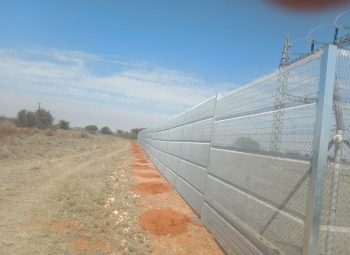
Clearview panels are transparent, welded mesh security fencing panels engineered to deliver both unobstructed visibility and strong physical protection for high-risk properties. Known in the industry as clear view fencing, these systems are the preferred choice for property developers, facility managers, and security-conscious site owners who cannot afford blind spots in their perimeter. Products like ClamberPrufe Clear View Fencing from Jumalutech combine anti-climb and anti-cut features with a modern aesthetic, making them a practical alternative to solid barriers across South Africa and beyond.
What security features make clearview panels effective for high-risk sites?
Clearview panels deliver security through their welded mesh construction, which physically resists climbing and cutting attempts. The small aperture size of the mesh grid prevents footholds and handholds, making it significantly harder to scale than traditional palisade or chain-link fencing. This design is the foundation of anti-climb fencing performance on sites where perimeter integrity is non-negotiable.
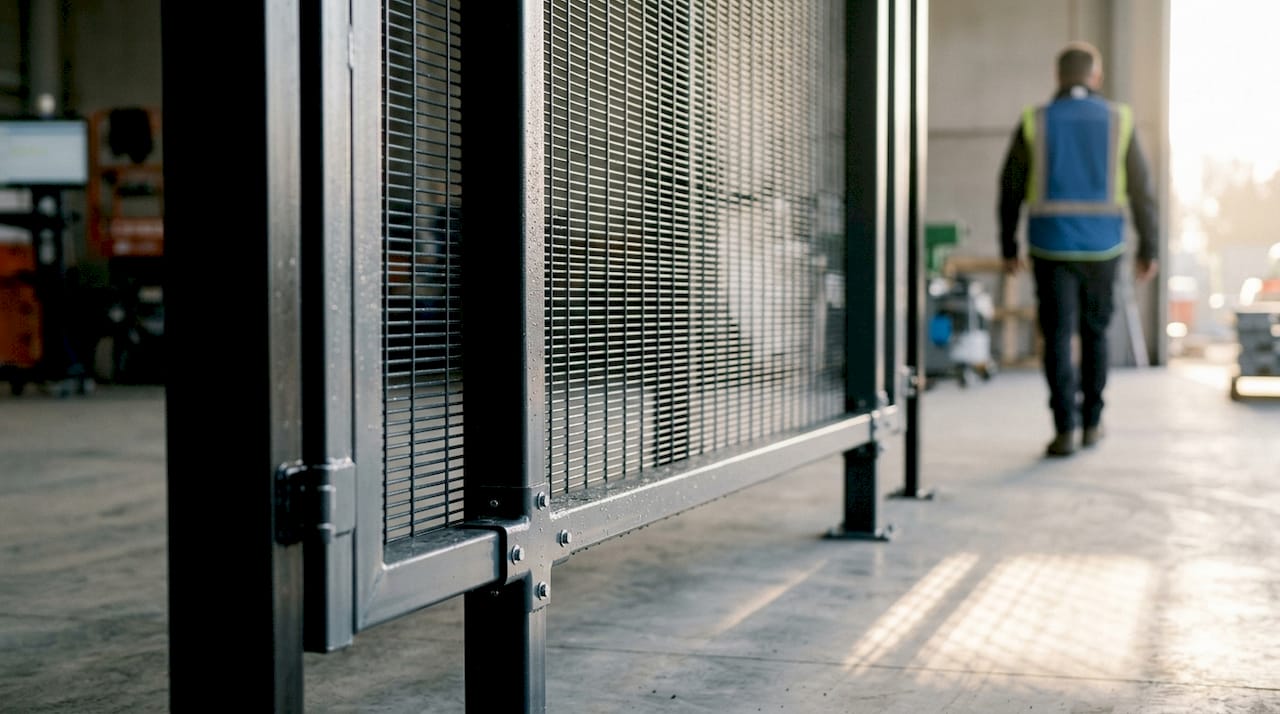
The materials used in quality clear view fencing panels are galvanized steel wire, often finished with powder coating for added weather resistance. Heavy galvanization protects the wire core from corrosion in outdoor environments, while powder-coated finishes extend the service life further and allow color customization. ClamberPrufe Clear View Fencing panels are typically 3 meters wide with heights ranging between 1.8m and 3m, giving facility managers flexibility across different site perimeters.
System-level security is what separates a reliable installation from a weak one. GG Defense Systems validates security performance on the full system rather than on the panel alone, confirming that anchorage, frames, and foundations must all perform together for the perimeter to hold against forced entry. A panel that meets high tensile strength standards but is anchored poorly will fail at the weakest point.
Key security features to specify when procuring clearview panels:
- Welded mesh aperture size: Smaller apertures reduce climb and cut risk.
- Wire diameter and tensile grade: Higher tensile wire resists cutting tools more effectively.
- Frame and post specification: Heavy-gauge posts and horizontal rails prevent panel flex under load.
- Galvanized and powder-coated finish: Protects against corrosion and maintains structural integrity over time.
- Tamper-proof fixings: Anti-tamper bolts and clamps prevent panel removal from outside the perimeter.
Pro Tip: Always request a full system specification from your supplier, not just a panel data sheet. The post, rail, and foundation design determines real-world security performance.
How do clearview panels compare to palisade and opaque panels?
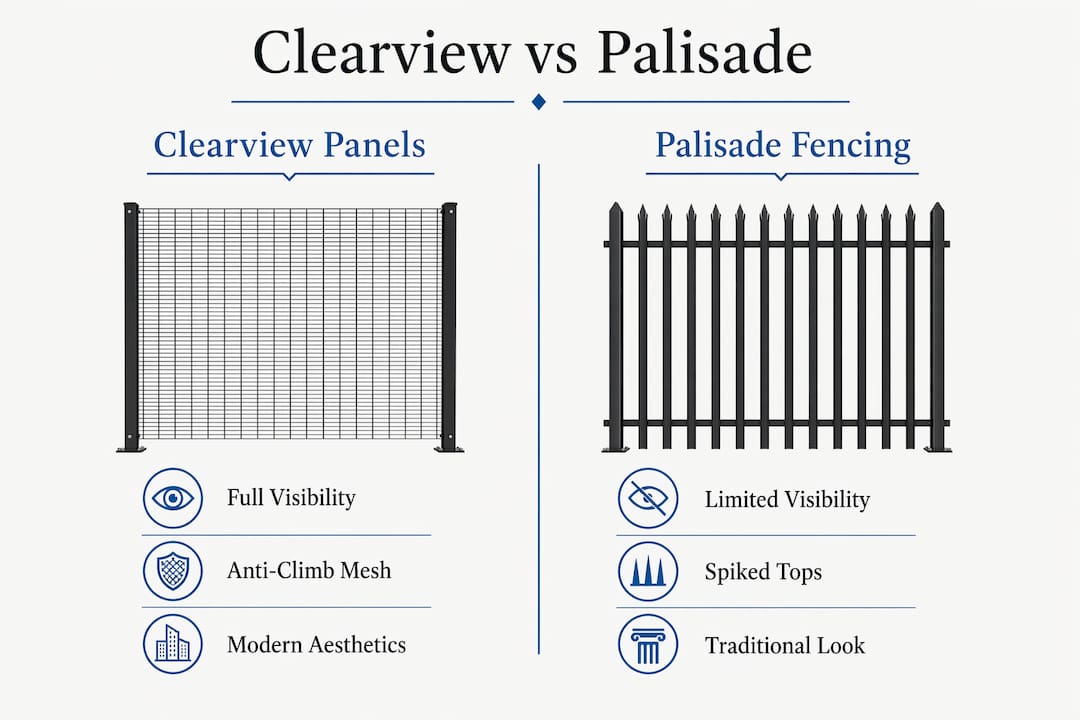
Clearview versus palisade fencing is the most common comparison property developers face when specifying a perimeter. Palisade fencing uses vertical steel pales spaced apart, creating a heavy, imposing barrier with visible gaps. Clear view fencing uses a continuous welded mesh face, which eliminates gaps large enough to grip while maintaining full visibility through the panel.
Opaque panels, by contrast, block sightlines entirely. Solid barriers like concrete or steel sheet fencing prevent visual surveillance of the perimeter from inside the property. This creates a security disadvantage: guards and cameras cannot monitor activity on the outside of the fence without physically approaching it. Visibility in fencing is a documented security advantage, not just an aesthetic preference.
The key difference between clearview and palisade fencing is that clearview prioritizes visibility and modern aesthetics with welded mesh, while palisade is a heavier, more solid barrier. Clearview is chosen for environments where visibility, safety, and deterrence are balanced together. Palisade remains appropriate for perimeters where maximum physical mass is the primary requirement.
| Feature | Clearview panels | Palisade fencing | Opaque panels |
|---|---|---|---|
| Visibility through fence | Full | Partial | None |
| Anti-climb performance | High | High | Varies |
| Aesthetic appeal | Modern, minimal | Industrial | Solid, concealing |
| CCTV and guard sightlines | Excellent | Good | Poor |
| Typical application | Commercial, residential, industrial | Industrial, high-security | Privacy-focused sites |
| Maintenance requirements | Low | Moderate | Low to moderate |
Clearview panels are the preferred fence panel option when the site requires both deterrence and surveillance capability. Opaque panels suit applications where privacy is the primary goal, such as residential gardens or secure storage yards where concealment matters more than monitoring.
What material and design options are available for clear view fencing?
Clear view fencing panels are available in a range of standard dimensions and material specifications to suit different security grades and site conditions. Standard panel widths of 3 meters are common, with height options typically spanning 1.8m to 3m for most commercial and industrial applications. Taller panels are available for maximum-security perimeters.
Finish options determine both durability and appearance:
- Hot-dip galvanized: The most durable base coating, providing long-term corrosion resistance for outdoor installations.
- Powder-coated over galvanized: Adds color and an additional protective layer. Common colors include black, green, and charcoal to complement architectural finishes.
- Stainless steel hardware: Marine-grade stainless steel fixings resist salt air and high-humidity environments. ClearView glass railing systems, for example, use marine-grade stainless steel hardware to resist corrosion in demanding conditions.
- Tempered and laminated glass panels: Used in premium transparent fence applications, these panels are tested to withstand significant vertical and horizontal loads, with widths ranging from 12 to 60 inches to accommodate varied installation needs.
Advanced options now include switchable smart glass panels embedded with PDLC technology, which toggle between transparent and opaque states instantly. This technology enhances privacy without blocking natural light or views and is increasingly integrated into modern architectural fencing and indoor glass partitions. Frameless glass privacy screens represent another design direction, using tempered architectural glass with precision fabrication to combine safety and aesthetics in residential and commercial environments.
Pro Tip: For South African coastal or industrial sites, specify hot-dip galvanized wire with a powder-coat topcoat. This dual-layer protection significantly extends the service life of the panel in corrosive environments.
What are the best practices for installing clearview panels securely?
Correct installation determines whether a clearview panel system performs to its rated security level. The following sequence reflects best practice for high-security clear panel installation:
- Conduct a site survey. Assess ground conditions, slope variations, and soil type before specifying foundation depths. Uneven terrain requires leveling hardware or stepped panel runs.
- Design the foundation system. Post foundations must be set to the depth and diameter specified by the panel manufacturer. Undersized foundations allow post movement under lateral load, which compromises the entire panel run.
- Install posts and rails first. Set posts in concrete and allow full cure time before attaching panels. Rushing this stage is the most common cause of post misalignment.
- Use adjustable hardware for uneven surfaces. Leveling screws and adjustable spigots reduce installation time and compensate for unlevel sites. Built-in adjustment mechanisms significantly ease installation over uneven or unlevel surfaces, reducing labor time on complex sites.
- Attach panels with tamper-proof fixings. All panel-to-rail connections must use anti-tamper bolts tightened to the manufacturer’s specified torque. Standard bolts can be removed with common tools.
- Inspect the full system before sign-off. Check post plumb, panel alignment, fixing torque, and gate operation. A full system inspection validates the installation against the security specification.
For installations incorporating smart glass panels, electrical routing requires careful planning. Smart glass panels default to opaque when power is lost, which is a useful safety default. Retrofitting concealed electrical infrastructure after construction is costly and disruptive, so electrical conduit runs must be planned and installed during the rough-in phase.
How to choose the right clearview panel system for your property
Selecting the correct clear view screening system starts with an honest assessment of the site’s security risk level. A residential development in a low-crime area has different requirements than a data center, utility substation, or logistics depot. The security grade of the panel, post spacing, and foundation depth should all match the threat profile of the site.
Key decision factors for property developers and facility managers:
- Security grade required: Match the panel’s wire diameter, aperture size, and tensile rating to the site’s risk classification.
- Visibility versus privacy balance: Clear view fencing maximizes surveillance capability. If the site requires partial or full concealment, consider opaque panels or switchable glass for specific zones.
- Budget and lifecycle cost: Clearview fencing panels cost approximately R750 to R1,800+ per meter depending on height and security grade, excluding installation. Higher-grade panels cost more upfront but require less maintenance over time.
- Aesthetic requirements: Powder-coat color options allow clear view fencing to complement building facades and landscaping, which matters for commercial and mixed-use developments.
- Supplier credentials: Select a supplier with documented installation experience and a track record on comparable projects. Jumalutech’s advantages of clear view fencing resource outlines the key performance criteria to verify before committing to a system.
Property managers increasingly value frameless, transparent fencing for minimizing visual obstruction while meeting safety standards, enhancing both aesthetics and openness on commercial sites. This trend reflects a broader shift away from opaque barriers toward perimeter systems that support CCTV coverage and natural surveillance.
Key takeaways
Clearview panels deliver high-security perimeter protection by combining welded mesh anti-climb construction with full visibility, making them the most effective fence panel option for sites that require both deterrence and surveillance capability.
| Point | Details |
|---|---|
| System-level security matters | Validate anchorage, frames, and foundations together, not just panel strength alone. |
| Visibility is a security asset | Full sightlines through clear view fencing improve CCTV coverage and guard monitoring. |
| Material specification drives durability | Hot-dip galvanized wire with powder-coat topcoat delivers the best corrosion resistance for outdoor sites. |
| Installation sequence is critical | Post foundations must cure fully before panel attachment to prevent misalignment and structural weakness. |
| Budget reflects security grade | Panel costs range from R750 to R1,800+ per meter; higher grades reduce long-term maintenance costs. |
Why I think most buyers underestimate the installation side
Most conversations about clearview panels focus on the panel itself: wire diameter, aperture size, finish. That focus is understandable, but it misses the factor that most often determines whether a perimeter actually holds. The foundation and anchorage system is where installations succeed or fail, and it is the part that gets the least attention in procurement discussions.
I have seen well-specified panels installed on undersized post foundations that shifted within two years. The panels were fine. The installation was not. GG Defense Systems makes this point explicitly: security performance must be validated on the full assembly, not the glass or mesh alone. That principle applies equally to welded mesh clear view fencing.
The other development worth watching is switchable smart glass integration in fencing. The technology is real and the applications are growing, but the electrical infrastructure requirement catches many project managers off guard. Plan the conduit runs at the design stage, not after the posts are in the ground. The cost of retrofitting is significant, and the disruption to a live site is avoidable with early planning.
— Jaline
Jumalutech’s ClamberPrufe clear view fencing solutions
Jumalutech specializes in the manufacture, supply, and installation of ClamberPrufe Clear View Fencing across Gauteng and South Africa. ClamberPrufe systems are engineered for anti-climb and anti-cut performance, with galvanized and powder-coated finishes suited to South African outdoor conditions.
Jumalutech offers a range of clear view fencing options to match different security grades and site requirements, from the ClamberPrufe EconoSecure entry-level range to the ClamberPrufe HiSecure high-security specification. The team provides full installation services, including site assessment, foundation design, and post-installation inspection. Contact Jumalutech directly for a project-specific quotation and technical consultation.
FAQ
What are clearview panels used for?
Clearview panels are used as perimeter security fencing on commercial, industrial, and residential properties where both physical security and visibility are required. Common applications include data centers, logistics depots, schools, and residential estates.
How do clearview panels differ from opaque panels?
Clearview panels use welded mesh that allows full sightlines through the fence, while opaque panels block visibility entirely. Clearview fencing supports CCTV surveillance and natural monitoring; opaque panels prioritize concealment.
What do clearview panels cost in South Africa?
Clearview fencing panels cost approximately R750 to R1,800+ per meter depending on height and security grade, excluding installation. Final pricing varies based on project complexity and the specific supplier.
Are clearview panels difficult to install on uneven ground?
Uneven ground requires adjustable hardware such as leveling screws and spigots, which compensate for slope variations and reduce labor time. Post foundations must still be designed to the correct depth for the specific ground conditions.
Can clearview panels be integrated with smart glass technology?
Smart glass panels using PDLC technology can be integrated into transparent fence systems, toggling between clear and opaque states. Electrical infrastructure for these panels must be planned and installed during construction, as retrofitting is costly.