TL;DR:
- Mesh fencing offers an affordable, flexible perimeter solution that delivers security, visibility, and low maintenance, making it ideal for residential and commercial properties. Its lifespan and performance depend heavily on proper materials, coatings, and installation practices, with hot-dip galvanized and PVC-coated panels proving most durable. Correct specification, installation, and scheduled maintenance are essential to maximize its security, aesthetic appeal, and long-term value.
Mesh fencing, known in the industry as welded or woven wire mesh barrier fencing, is one of the most widely installed perimeter solutions for residential and commercial properties across South Africa. The pros and cons of mesh fencing centre on a core trade-off: affordability and flexibility on one side, and maintenance demands and aesthetic limitations on the other. For homeowners securing a garden boundary and property managers protecting a commercial site, understanding where mesh fencing excels and where it falls short determines whether it is the right investment. This guide covers every key factor, from material coatings to safety codes, so you can make a well-informed decision.
1. What are the main advantages of mesh fencing?
Mesh fencing delivers a practical combination of security, visibility, and cost control that few other fencing types can match at the same price point. The mesh fencing benefits below explain why it remains a top choice for properties across Gauteng and beyond.
- Cost-effectiveness: Mesh fencing carries a lower upfront cost than wrought iron, glass, or palisade alternatives. Pre-fabricated panels reduce labour time, and standard post spacing of 2 to 2.5 metres speeds up installation considerably. Lower material and labour costs translate directly into savings for budget-conscious homeowners.
- Child safety and pool compliance: Removable mesh pool fencing can be configured to meet strict safety codes. Compliant panels must be at least 48 inches tall with a maximum 2-inch bottom clearance and maximum 4-inch vertical openings, preventing a child from passing through or climbing over. This makes certified mesh pool barriers a practical choice for families.
- Visibility and natural surveillance: Mesh fencing allows clear sightlines across a boundary, which supports natural surveillance and deters opportunistic intrusion. Visual openness is a key advantage for residential and commercial spaces that want transparency without sacrificing defined boundaries. It also allows airflow, which matters in South Africa’s warmer climates.
- Flexibility and reconfigurability: Removable mesh panels can be repositioned or replaced without dismantling an entire fence line. This is particularly useful for properties undergoing landscaping changes or temporary access requirements.
- Durability with the right coatings: Hot-dip galvanized mesh with a PVC coating nearly doubles lifespan compared to simple electro-galvanized mesh. Choosing the correct coating from the outset significantly reduces long-term replacement costs.
- Low day-to-day maintenance: Routine cleaning requires only soap and water. Worn mesh sections are inexpensive to replace, and the overall maintenance burden is lower than timber or wrought iron fencing, which requires repainting or retreatment.
Pro Tip: Specify hot-dip galvanizing with a PVC topcoat when ordering mesh panels. The additional upfront cost is recovered within the first few years through reduced maintenance and extended service life.
2. What are the disadvantages of mesh fencing?
Understanding the disadvantages of mesh fencing is as important as recognising its strengths. Several limitations affect performance, particularly when installation quality or material selection is substandard.
- Tension loss over time: Mesh fences can sag if tension is not maintained, creating gaps that fail safety inspections and compromise security. This is not a one-time installation concern; it requires ongoing attention.
- Partial visibility versus full transparency: Mesh provides good sightlines but does not match the unobstructed clarity of frameless glass fencing. For properties where premium aesthetics are a priority, mesh may appear industrial rather than refined.
- Security limitations at larger apertures: Mesh with larger aperture sizes offers better visibility but reduced resistance to cutting and climbing. Wire gauge and mesh size directly determine the security level, meaning a single mesh specification rarely satisfies both maximum visibility and maximum security simultaneously.
- Corrosion in harsh environments: Without premium coatings, mesh fencing in coastal or high-humidity environments degrades faster. Coastal conditions can shorten service life by 20 to 30%, making material selection critical in these regions.
- Installation challenges on uneven terrain: Sloped or uneven sites require careful bottom clearance management to maintain code compliance. Gaps at the base created by uneven ground can become entry points or cause inspection failures, particularly for pool barrier applications.
- Aesthetic limitations compared to premium alternatives: Wrought iron and frameless glass carry a visual prestige that mesh fencing does not replicate. For high-end residential properties where kerb appeal is a primary concern, mesh may not align with design expectations.
Pro Tip: Schedule tension checks every 6 to 12 months and a full post inspection annually. Catching tension loss early prevents the compounding problem of sagging panels that fail safety compliance.
3. How do mesh fencing materials and coatings affect lifespan?
Material and coating selection is the single most consequential decision in the mesh fencing buying process. The hidden determinant of total cost of ownership is coating quality, not the panel price itself.
Electro-galvanized mesh lasts 5 to 10 years outdoors under normal conditions. Hot-dip galvanizing extends that to 10 to 15 years, and up to 20 years in mild inland climates. Stainless steel mesh, particularly grade 316, exceeds 25 years of service life and is the correct specification for coastal properties in areas like the Western Cape or KwaZulu-Natal coastline. The table below summarises the practical trade-offs.
| Material and coating | Expected service life | Relative cost | Best environment |
|---|---|---|---|
| Electro-galvanized steel | 5 to 10 years | Low | Inland, low humidity |
| Hot-dip galvanized steel | 10 to 20 years | Medium | General residential and commercial |
| Hot-dip galvanized with PVC coat | 15 to 25 years | Medium-high | Variable climates, pool barriers |
| Stainless steel 304 | 20 to 25 years | High | Urban, moderate coastal exposure |
| Stainless steel 316 | 25 or more years | Very high | Coastal and high-humidity environments |
Investing in heavier coatings pays off over a 10-year horizon. A property manager who specifies electro-galvanized mesh to save on upfront costs will typically face full panel replacement within a decade, whereas hot-dip galvanized panels with PVC coating remain serviceable well beyond that point. You can explore the full range of fencing material options to compare performance across product categories.
4. Mesh fencing vs wooden fencing and other common types
Comparing mesh fencing against wooden fencing, palisade, wrought iron, and glass reveals where each type is genuinely suited and where it underperforms. The question of whether mesh fencing is worth it depends heavily on the specific property context.
| Fence type | Security | Visibility | Maintenance | Cost | Best use case |
|---|---|---|---|---|---|
| Mesh (welded wire) | Medium to high | Good | Low to medium | Low to medium | Residential, pool barriers, commercial |
| Wooden fencing | Low to medium | None | High | Medium | Privacy, garden boundaries |
| Palisade | High | Partial | Low | Medium | Commercial, industrial perimeters |
| Wrought iron | High | Good | Medium | High | High-end residential, heritage properties |
| Frameless glass | Medium | Excellent | Low | Very high | Premium residential, pool areas |
Mesh fencing occupies a practical middle ground. It offers better visibility than palisade and far lower cost than glass, while outperforming timber on security and longevity. Mesh fencing’s less intimidating appearance compared to palisade makes it well-suited to residential settings where a welcoming boundary is preferred over an overtly industrial barrier. For a detailed side-by-side analysis, the clear view vs palisade comparison covers the key differences in depth.
Wooden fencing scores poorly on security and requires the highest maintenance of any common type, including regular sealing, painting, and rot treatment. Wrought iron delivers strong security and aesthetics but at a cost that places it out of reach for most standard residential projects. Glass fencing is the premium choice for pool areas where aesthetics are paramount, but the cost per linear metre is substantially higher than mesh, and it offers no climb resistance.
5. Practical installation and maintenance best practices
Getting the most from a mesh fence depends as much on correct installation and ongoing care as it does on material selection. The following practices apply directly to homeowners and property managers.
- Prepare the site thoroughly before installation. Uneven or sloped terrain requires careful grading and bottom clearance control. Gaps at the base created by ground irregularities can violate pool safety codes and create intrusion points. Address ground levelling before posts are set.
- Follow standard post spacing. Pre-fabricated mesh panels are designed for post spacing of 2 to 2.5 metres. Deviating from this specification without engineering input can lead to panel sag and reduced tension retention over time.
- Tension panels correctly at installation. Improper tensioning at the point of installation is the leading cause of premature sagging. Panels should be tensioned to manufacturer specification and checked before the installation team leaves the site.
- Conduct tension and post inspections on a fixed schedule. Tension checks every 6 to 12 months and annual post inspections are the minimum standard for maintained compliance and security performance.
- Manage vegetation clearance. Climbing plants and overgrown shrubs place lateral pressure on mesh panels and accelerate corrosion by trapping moisture. Keep a clear zone of at least 300mm on both sides of the fence line.
- Verify pool barrier compliance after any ground movement. Seasonal soil movement, particularly in clay-rich Gauteng soils, can shift posts and alter bottom clearance. Re-inspect pool barriers after significant rainfall or dry spells.
Pro Tip: Selecting a reputable installer with documented experience in mesh fencing significantly reduces the risk of tension and alignment errors that generate costly remediation work within the first two years.
For a detailed walkthrough of the installation process, the fencing installation guide covers site preparation, post setting, and tensioning in practical terms.
Key takeaways
Mesh fencing delivers the best value when material coatings, aperture size, and installation quality are matched precisely to the property’s security requirements and environmental conditions.
| Point | Details |
|---|---|
| Material coating determines lifespan | Hot-dip galvanized with PVC coating lasts 15 to 25 years; electro-galvanized lasts only 5 to 10 years. |
| Tension maintenance is non-negotiable | Inspect tension every 6 to 12 months to prevent sagging and maintain safety compliance. |
| Aperture size affects security and visibility | Smaller apertures improve security; larger apertures improve visibility. Match the specification to the threat level. |
| Pool barriers must meet specific codes | Compliant mesh pool fencing must be at least 48 inches tall with maximum 4-inch vertical openings. |
| Mesh outperforms timber on most criteria | Mesh fencing offers better security, lower maintenance, and longer lifespan than wooden fencing at a comparable cost. |
Why mesh fencing is often the right call, but only when specified correctly
Having worked across numerous fencing projects in Gauteng and surrounding regions, I have seen mesh fencing deliver excellent results and, in equal measure, disappoint when the specification was wrong from the start. The most common mistake is treating mesh fencing as a commodity purchase where the cheapest panel wins. It is not. The difference between electro-galvanized and hot-dip galvanized with PVC coating is not a minor upgrade. It is the difference between a fence that needs replacing in eight years and one that is still performing in twenty.
The second pattern I consistently observe is underestimating the importance of aperture selection. Property owners often choose larger apertures for a cleaner aesthetic, then discover the fence offers insufficient resistance to cutting or climbing. The correct approach is to define the security requirement first, then select the aperture and wire gauge that satisfies it, and finally consider aesthetics within those constraints.
Mesh fencing is genuinely versatile. It works for pool barriers, garden perimeters, commercial boundaries, and industrial sites. But that versatility only holds when the specification is deliberate. A fence chosen on price alone, installed without proper tensioning, and left without scheduled maintenance will underperform within three years. A fence specified correctly, installed by experienced professionals, and maintained on schedule will protect your property reliably for decades.
— Jaline
Jumalutech’s ClamberPrufe mesh fencing solutions
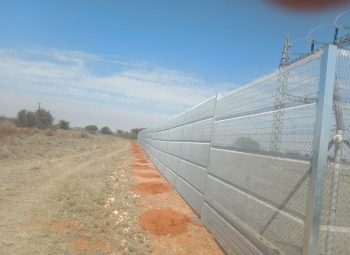
Jumalutech manufactures and installs the ClamberPrufe Clearview range, a high-security mesh fencing system engineered for anti-climb and anti-cut performance without sacrificing visibility. The ClamberPrufe product line includes the HiSecure specification for high-threat perimeters and the SimpliSecure range for cost-effective residential and light commercial applications. Each system is available with heavy galvanized and PVC-coated finishes suited to South Africa’s varied climatic conditions, from the highveld to the coast. Jumalutech provides expert installation across Gauteng, with full site assessment, custom panel sizing, and post-installation compliance checks included as standard. Contact Jumalutech for a quotation tailored to your property’s specific security and aesthetic requirements.
FAQ
What is the lifespan of mesh fencing?
Electro-galvanized mesh lasts 5 to 10 years outdoors, while hot-dip galvanized mesh with a PVC coating can last 15 to 25 years. Stainless steel grade 316 exceeds 25 years, making it the preferred specification for coastal environments.
Does mesh fencing meet pool safety requirements?
Compliant mesh pool fencing must be at least 48 inches tall, with a maximum 2-inch bottom clearance and maximum 4-inch vertical openings to prevent child access. Always verify that the specific product carries the relevant safety certification before installation.
How does mesh fencing compare to wooden fencing on security?
Mesh fencing outperforms wooden fencing on security, longevity, and maintenance demands. Timber requires regular sealing and repainting, is susceptible to rot, and offers no meaningful resistance to forced entry, whereas welded wire mesh with correct wire gauge resists both cutting and climbing.
How often does mesh fencing need maintenance?
Tension checks are required every 6 to 12 months, with a full post inspection annually. Cleaning with soap and water removes surface contamination that accelerates corrosion, and worn mesh sections can be replaced individually without dismantling the full fence line.
Is mesh fencing worth it for residential properties?
Mesh fencing is worth the investment for most residential applications when the correct material and coating are specified. It delivers a practical balance of security, visibility, and cost that timber and palisade alternatives do not match at the same price point.